
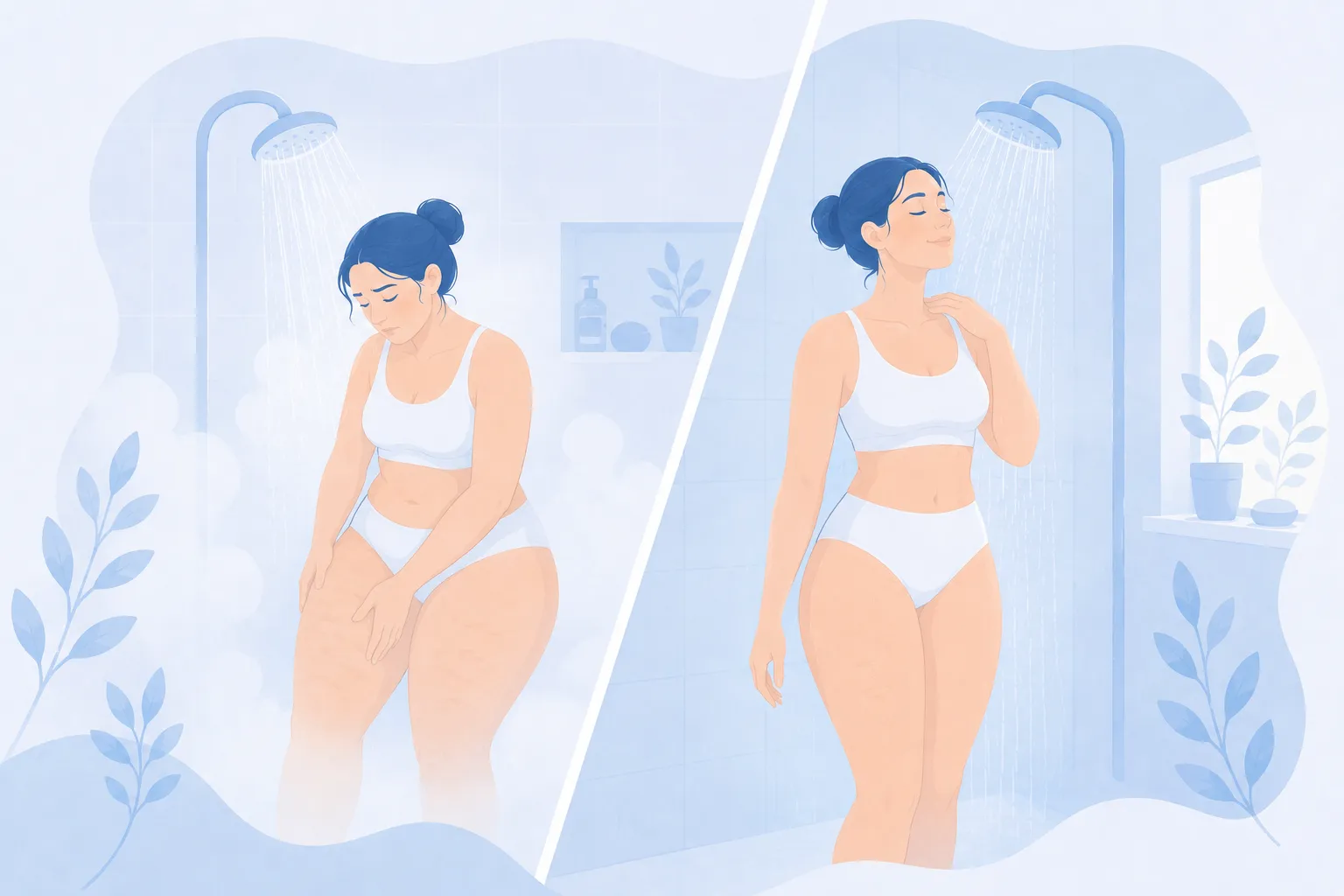
Although a hot shower is not dangerous and does not cause lipedema to progress, heat affects blood vessels and the flow of fluids in the body. Therefore, for many people with lipedema, hot water may temporarily worsen symptoms, while cool water may actually relieve them. So should you give up hot showers? Absolutely not. But it is definitely worth understanding how heat and cold affect the body, so you can choose what makes you feel best.
How does heat affect the body?
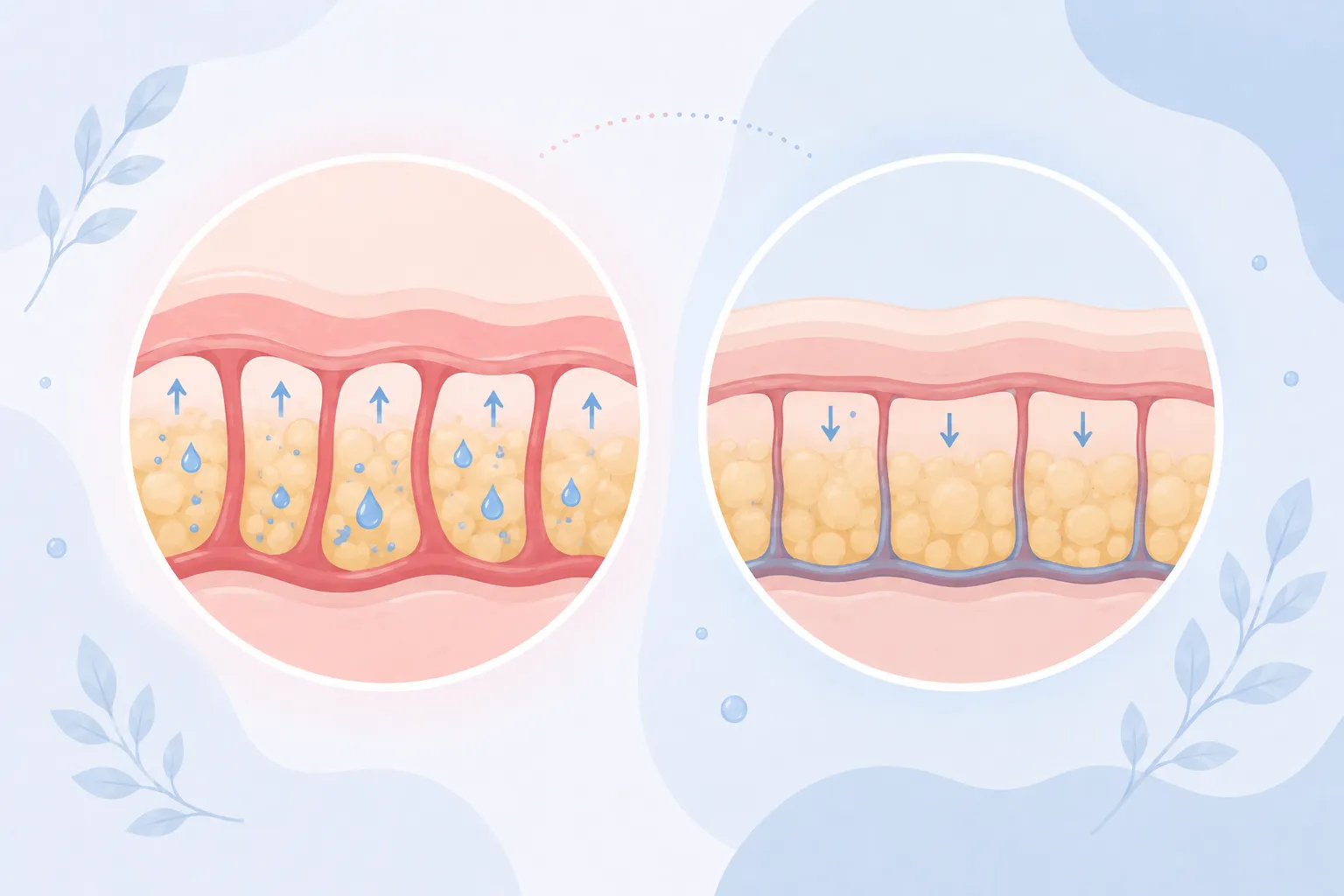
When the body is exposed to heat – whether in a shower, bath, sauna or even on a hot summer day – blood vessels naturally dilate. This is a mechanism designed to help the body regulate body temperature and dissipate heat.
When blood vessels dilate, it is easier for fluids to move out of the blood vessels into the tissues. In most people, the body is able to effectively remove these fluids, but in people with lipedema, there is a tendency for fluid to accumulate in the tissues and sometimes also strain on What Is the Lymphatic System and What Does It Do?. As a result, exposure to heat can temporarily worsen symptoms.
This is also why many people with lipedema feel that summer is the most challenging time of year. On hot days, blood vessels remain dilated for a longer period of time, and the strain on the lymphatic system can increase. Many report that in the summer, their legs feel heavier, the swelling is more pronounced, and sometimes the pain and sensitivity increase. If your symptoms also worsen in the summer months, the heat itself may be one of the causes – and not necessarily a worsening of the disease.
The result may be:
- A feeling of heaviness in the legs or hands.
- Increased swelling.
- Pain or sensitivity to touch.
- A feeling of pressure in the tissues.
- Tired legs at the end of the day.
Why can cold water provide relief?
Many with lipedema say that after a hot day or a hot shower, their legs feel heavier, while a short stream of cool water provides an almost immediate feeling of relief. This feeling is not accidental – and has a physiological explanation.
Unlike heat, cool water causes blood vessels to temporarily constrict. As a result, less fluid leaves the blood vessels and the load on the lymphatic system may be slightly lower.
For some people with lipedema, a cool shower may help:
- Reduce the feeling of heaviness.
- Temporarily relieve swelling.
- Reduce the feeling of heat in the legs.
- Improve the feeling of freshness after prolonged standing or exercise.
- Temporarily relieve pain and sensitivity.
It is important to emphasize that cold showers do not treat lipedema and do not replace medical treatment, lymphatic drainage, exercise, or the use of compression stockings. This is a simple way that may relieve symptoms in some people and be integrated as part of their daily coping routine.
Do you have to shower with freezing water?
Absolutely not.
There is no need to stand under freezing water or make every shower a challenge. In fact, for some people, very cold water can be unpleasant and even cause muscle contractions.
In most cases, cool or lukewarm water is a better choice than very hot water.
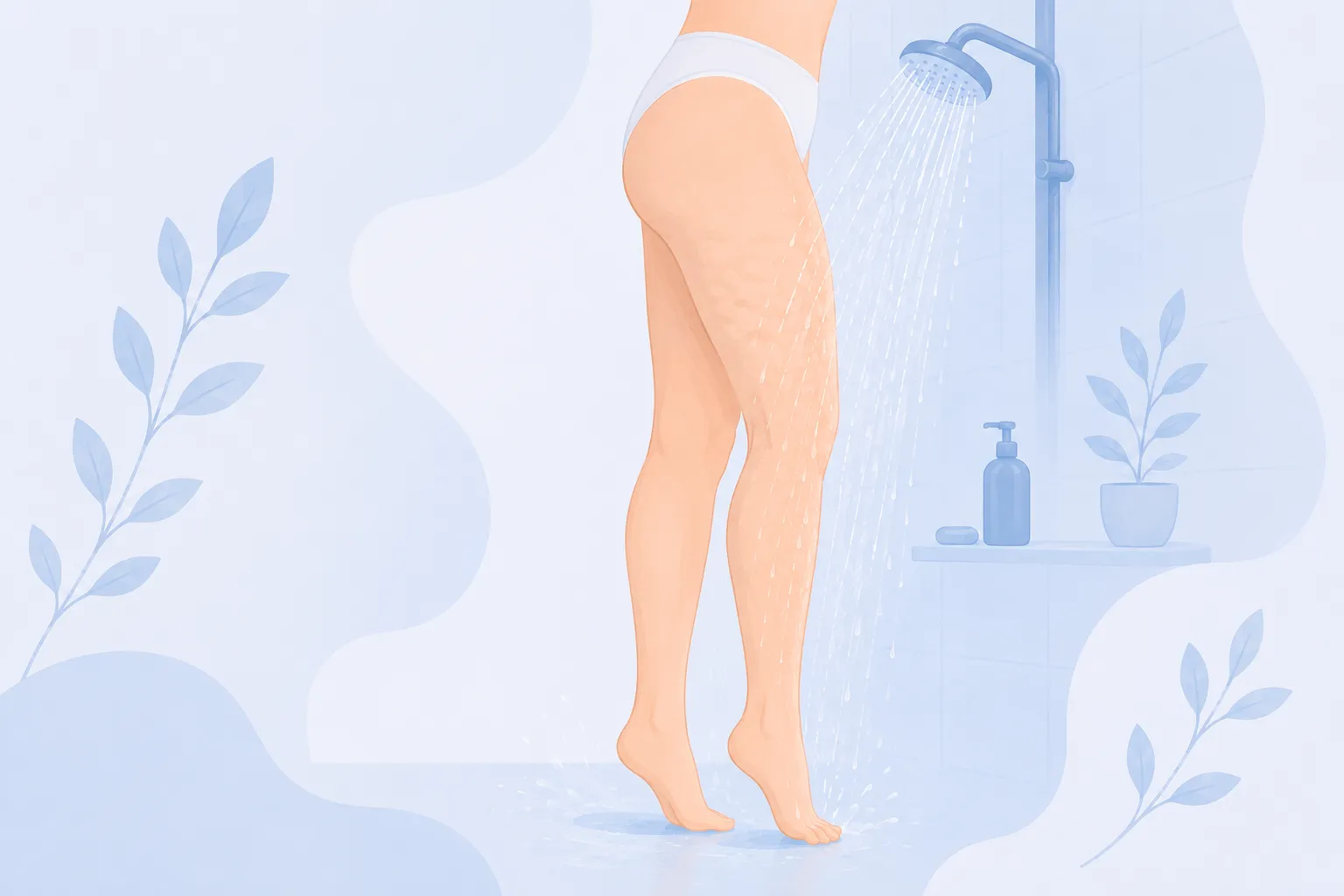
You can also enjoy a shower at a comfortable temperature, and at the end, run a stream of cool water over your feet for about 30 to 60 seconds. For many, this is a simple way to enjoy the benefits of cold, without giving up the pleasure of the shower.
And what about saunas, jacuzzis and hot baths?
The same principle applies to other sources of heat.
Saunas, jacuzzis and very hot baths expose the body to prolonged heat, so in many people with lipedema they can cause a temporary worsening of swelling, heaviness and pain.
You don't have to avoid them completely, but if you notice that your symptoms get worse afterwards, you may want to:
- Shorten the time you spend in the hot tub.
- Avoid extremely high temperatures.
- Make sure to drink water before and after exposure to heat.
- Finish with a cool shower if possible.
Ultimately, your body is the best indicator. If you feel a significantly heavier sensation after a hot tub or bath, you may want to reduce the duration of your exposure or choose a milder temperature.
Does everyone react the same way?
No.
Lipedema does not manifest itself in the same way in every person. Some people feel a significant difference between a hot shower and a cold one, while others experience almost no change at all.
The stage of lipedema, the weather, your activity level during the day, the state of your lymphatic system, and other factors can also affect how you feel after exposure to heat.
Therefore, there is no one-size-fits-all rule. If you feel heavy, swollen, or sore after taking hot showers, it is worth trying to slightly reduce the water temperature for a few days and see if you notice any improvement. Sometimes a small change in your daily routine can make a big difference in how you feel.
Tips for coping with hot days
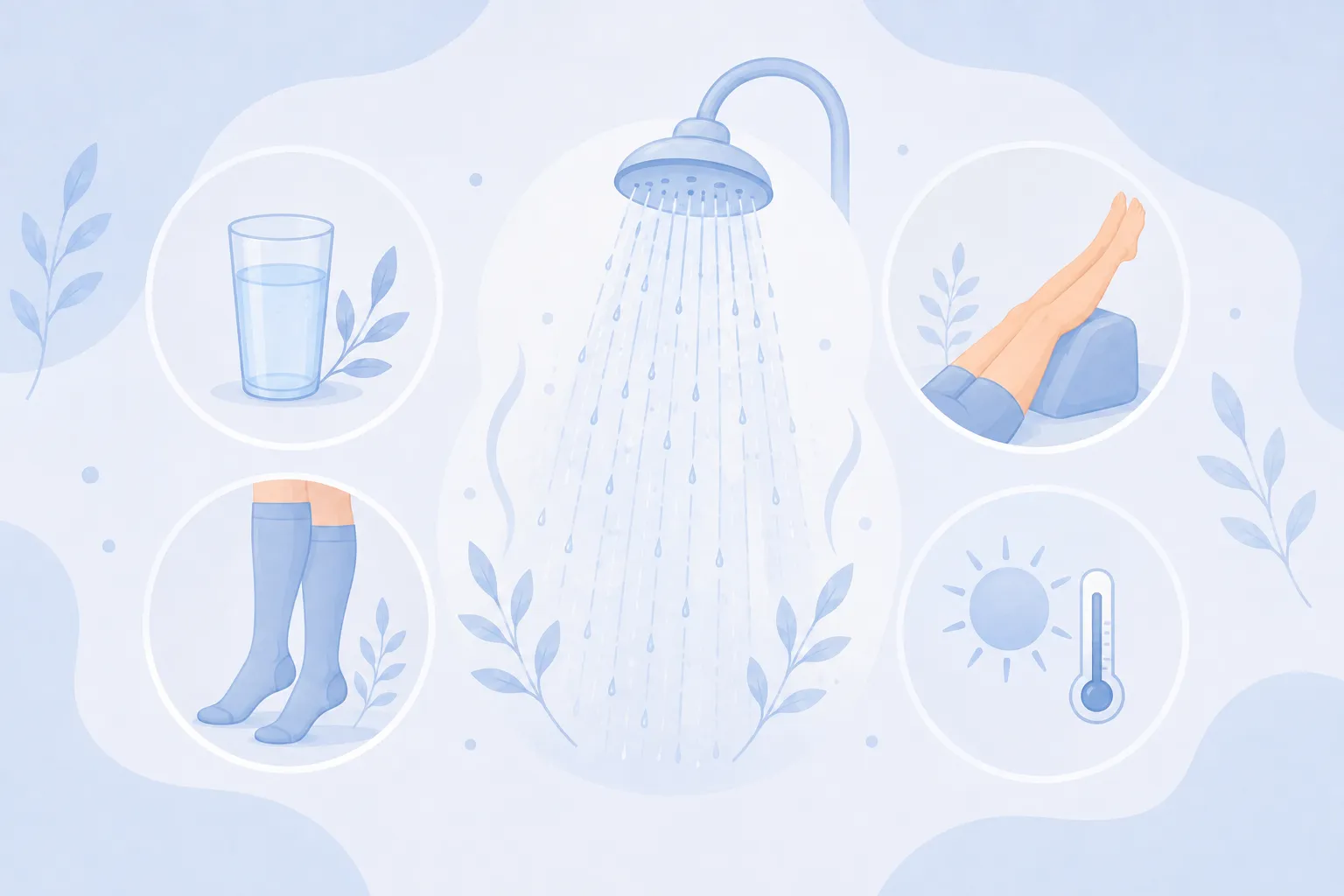
Especially during the summer, when heat can worsen lipedema symptoms, you can adopt a few simple habits that may help ease the feeling:
Prefer lukewarm or cool showers.
End the shower with a stream of cool water on your feet for about half a minute to a minute.
Avoid prolonged stays in hot tubs, jacuzzis, or saunas.
Make sure to drink enough fluids throughout the day.
Perform exercises appropriate during cooler times of the day, such as early morning or evening.
Elevate your legs for a few minutes after a long day or after prolonged sitting.
Use compression stockings if recommended by a professional.
Even small changes can make summer days more pleasant and reduce the feeling of heaviness and swelling.
So which is better – a hot or cold shower?
If the goal is to reduce the symptoms of lipedema, in most cases a cool or lukewarm shower will be the preferred choice. Heat dilates blood vessels and may increase fluid accumulation in the tissues, while cool water may help temporarily reduce the feeling of swelling, heaviness and pain.
However, there is no need to completely give up hot showers if they bring pleasure and do not aggravate the symptoms. Every body reacts a little differently, so it is important to listen to how you feel after a shower. If every time after a hot shower your legs feel heavier, more swollen or more sensitive, it may be worth trying to slightly reduce the water temperature or end the shower with cool water.
A cool shower won't cure lipedema, but it can be part of a broader approach to dealing with symptoms, along with an anti-inflammatory diet. Inflammatory, adapted physical activity, conservative treatments and daily habits that support the body.
Ultimately, lipedema is a life-long process of making countless small decisions—what you eat, how you exercise, how much you move, and even what temperature you shower at. None of these habits is a solution on their own, but together they can impact your quality of life. If taking a slightly cooler shower helps reduce the feeling of heaviness or swelling, it’s a small, simple change worth trying.
Sources
- Standard of care for lipedema in the United States (Phlebology, 2021)US consensus guidelines on the diagnosis and management of lipedema.
- NHS – LipoedemaUK National Health Service overview of lipoedema symptoms and day-to-day self-care.
- Cleveland Clinic – LipedemaClinical overview: signs, causes and treatment options for lipedema.
- Skin blood flow in adult human thermoregulation: how it works, when it does not, and why (Mayo Clinic Proceedings, 2003)How skin blood flow is regulated in heat and cold, and what happens when that control fails.
- Cutaneous vasodilator and vasoconstrictor mechanisms in temperature regulation (Comprehensive Physiology, 2014)Mechanisms of skin blood vessel dilation and constriction in response to temperature change.
- Cold-water immersion (cryotherapy) for preventing and treating muscle soreness after exercise (Cochrane, 2012)Cochrane review on the effect of cold-water exposure on soreness and recovery after exertion.
Reader feedback
Did you find this article interesting?
Share
Comments
0 comments |Read and add your own comment
No comments yet - be the first.