

Lipedema is not just about fat accumulation – for many people it is also accompanied by a feeling of heaviness, tenderness, pain and sometimes increased swelling. Therefore, many people with lipedema notice that when they drink too little, their body feels heavier and less “flowing”. So what exactly is the connection between water and lipedema, and why might hydration be important in this case?
Why is drinking water important for lipedema?
Water plays an important role in almost every system in the body, but in the case of lipedema, its connection to the lymphatic system is especially important.
The lymphatic system is responsible, among other things, for removing excess fluids, proteins, and waste products from tissues. Since lipedema can be accompanied by tissue congestion and changes in fluid flow, drinking enough fluids can support proper lymphatic function and overall well-being.
Think of it a bit like a water flow: When your body doesn’t get enough fluids, everything can work less efficiently. For some people with lipedema, this can manifest as a feeling of heaviness, tightness, or increased swelling throughout the day.
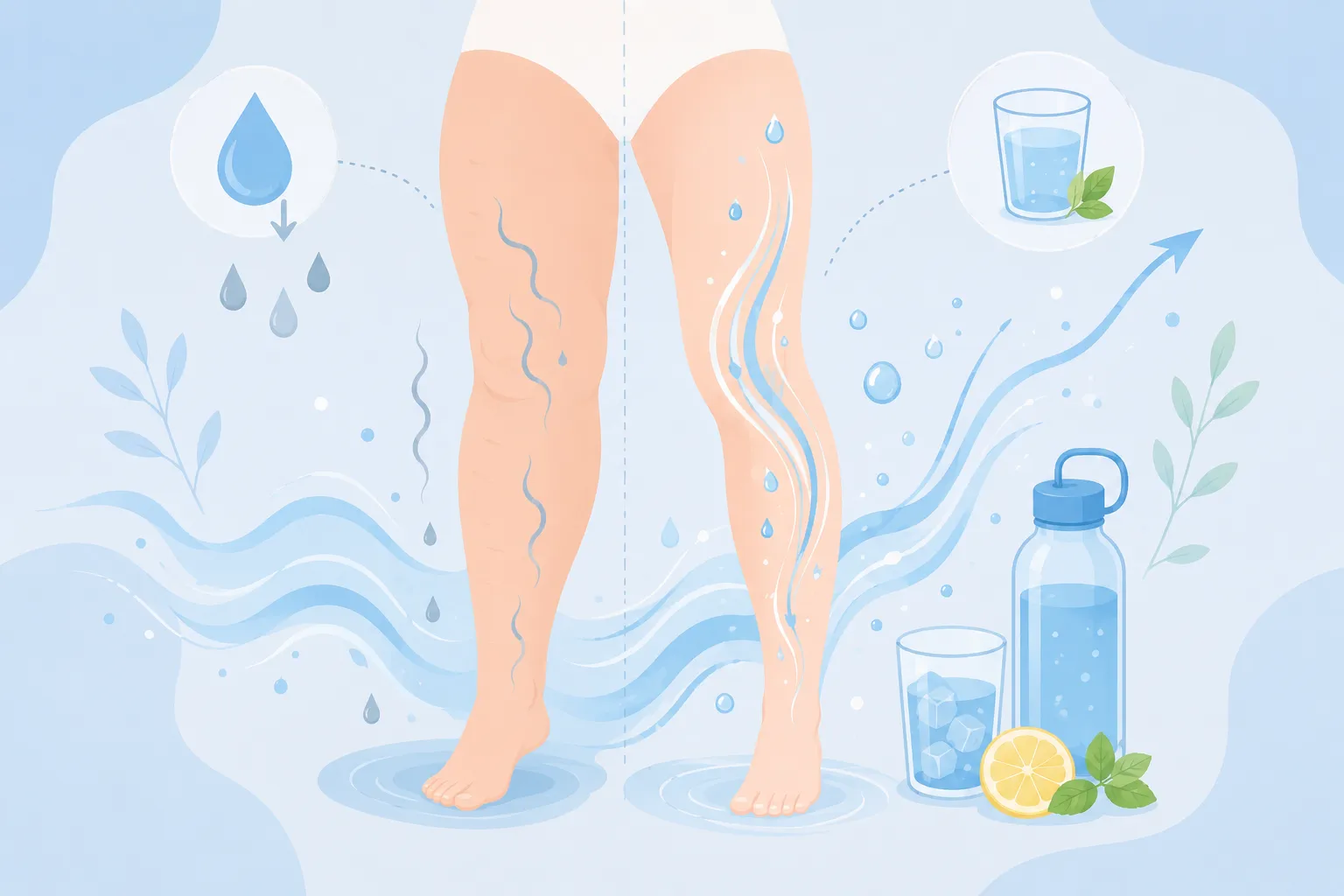
The myth: “If I’m bloated – it’s better to drink less”
This is a common thought, but for some people the opposite happens.
When the body doesn’t get enough water, it may try to conserve more of the fluids it already has as part of its natural balancing mechanisms. Therefore, some people feel that drinking consistently throughout the day helps them feel less “bloated.”
In addition, dehydration may make it difficult for fluids to flow properly in the body – which is less ideal when there is already tissue sensitivity.
However, it is important to remember that the feeling of swelling in lipedema is affected by many other factors, such as diet, hormones, lack of sleep, stress or prolonged sitting. You can read more in Foods to avoid, Anti-inflammatory diet and Link between stress and lipedema.
Can drinking water also affect inflammation?
Lipedema is considered a condition with a certain inflammatory component, so habits that support body balance may be relevant.
When the body is dehydrated, its physiological stress levels may increase. Some studies show that dehydration may be associated with an increase in stress hormones such as cortisol, which may affect inflammatory processes in the body.
Water of course does not “extinguish inflammation,” but good hydration can be integrated as part of a supportive routine that also includes an anti-inflammatory diet, adequate sleep, and appropriate movement.

How much water is really recommended to drink?
There is no magic number that fits everyone.
Water needs vary depending on body weight, weather, activity level, sweating, caffeine intake, and general health. For many, a range of about 2–3 liters per day can be a good starting point, but this varies from person to person – especially in the Israeli summer or during periods of physical activity.
A simple way to check if you are drinking enough is to pay attention to your body's signs: feeling thirsty, dry mouth, headaches, fatigue or relatively dark urine may indicate that you need to drink more. Generally, light yellow urine is considered a good sign of proper hydration.
What is considered good to drink?
Water is of course the main choice, but you don't have to drink only plain water.
Good options for hydration include:
- Water
- Soda
- Sugar-free herbal infusions
- Water with lemon, mint or cucumber
- Homemade iced tea without sugar
On the other hand, high-sugar drinks, large amounts of alcohol or especially salty drinks may be less ideal for people who feel susceptible to swelling.
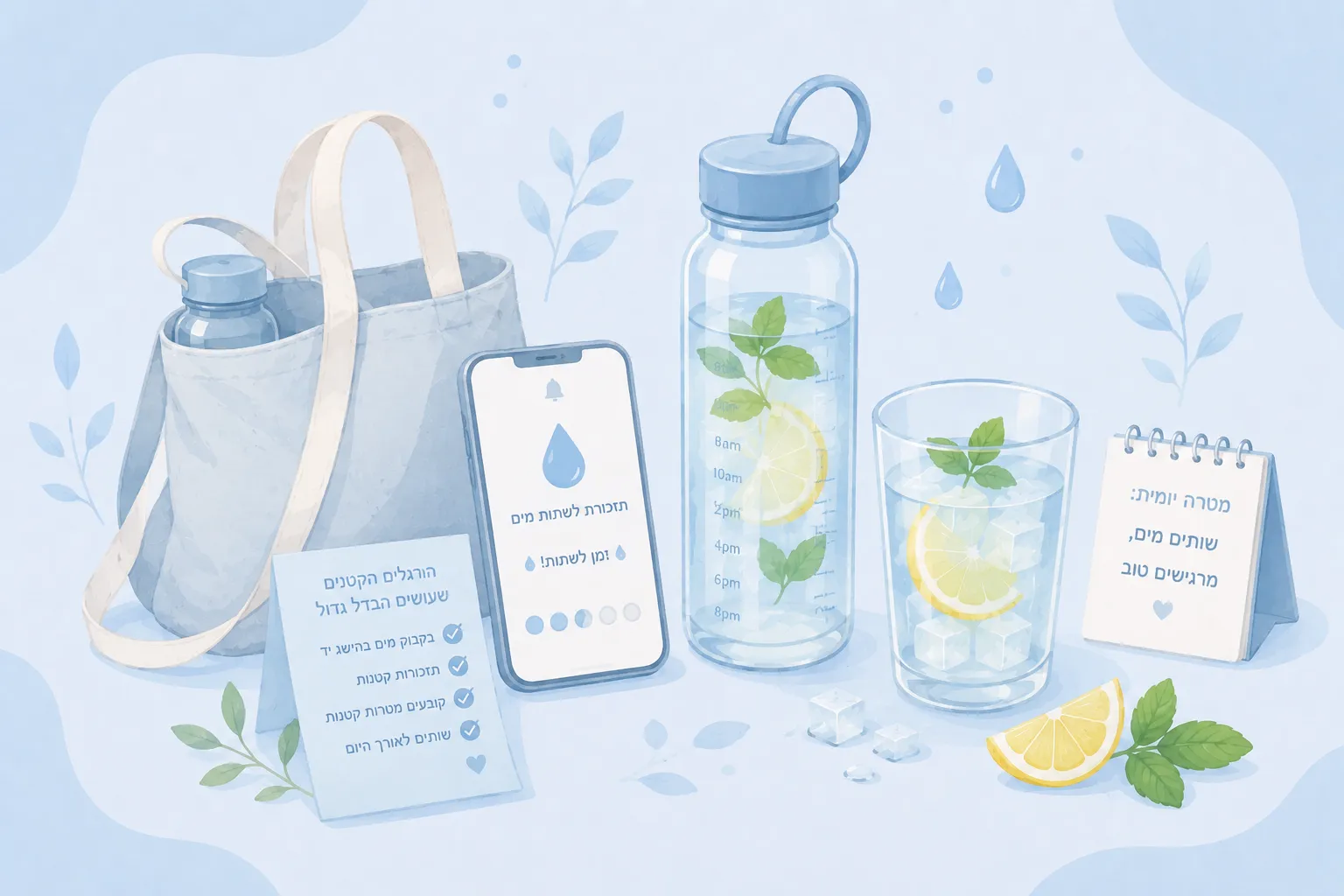
Simple tips to drink more water throughout the day
Sometimes the difficulty is simply remembering.
Some small habits that can help:
- Keep a water bottle near you
- Start your morning with a glass of water
- Add lemon, mint, or ice if plain water is less appealing
- Take water with you on the go, to work, or to work out
- Drink consistently throughout the day, rather than “filling in the gaps” in the evening
Drinking enough can be especially important if you also combine walking, swimming, or other physical activity that supports fluid flow and an overall better feeling.
Sources
- Harvard T.H. Chan School of Public Health – How much water do you need?fluid intake guidance and what counts toward it.
- Cleveland Clinic – The lymphatic systemthe system's role in the body's fluid balance.
- Standard of care for lipedema in the United States (Phlebology, 2021)principles of day-to-day conservative care.
- Current evidence-based clinical nutritional approaches in lipedema — scoping review (Nutrition Reviews)what has been studied in lipedema nutrition.
- NHS – Lipoedemaofficial guidance on day-to-day management.
- Lymphatic Education & Research Network (LE&RN)educational material on lymphatic function.
Reader feedback
Did you find this article interesting?
Share





Comments
0 comments |Read and add your own comment
No comments yet - be the first.