
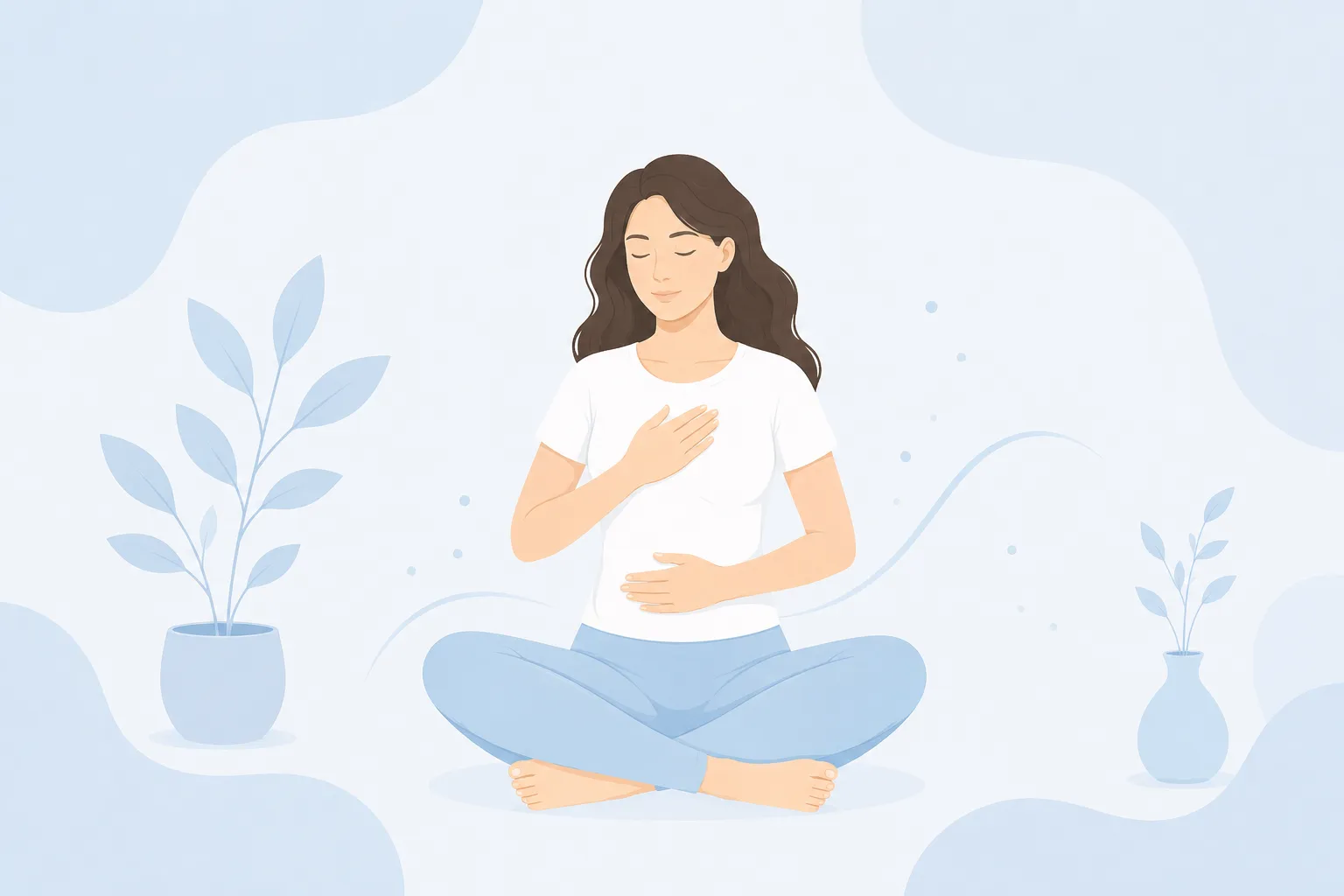
When talking about trauma in the context of lipedema, it is important to understand that it is not just a one-time event. Trauma can also be ongoing stress, a difficult childhood, experiences of rejection, bullying, or long periods of emotional overload. At the same time, living with lipedema can itself become an ongoing trauma. Therefore, the connection between the body and the mind in this matter is much more complex than a question of "yes" or "no".
Can psychological trauma cause lipedema?
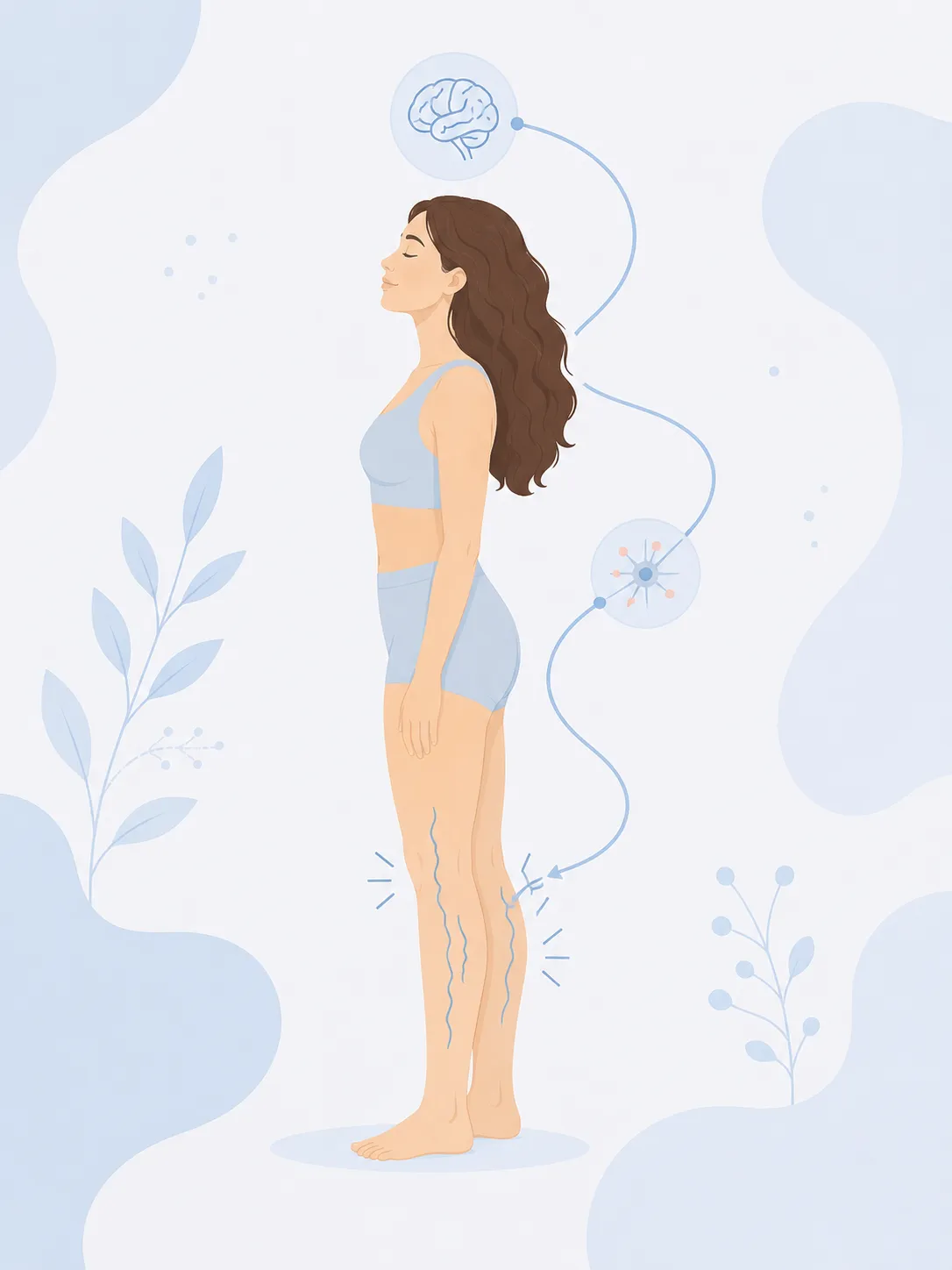
To date, there is no scientific proof that psychological trauma directly causes lipedema. The disease is mainly related to genetic predisposition, hormonal changes, and the characteristics of adipose and connective tissue. However, in recent years, more and more researchers have examined whether chronic stress or emotional trauma may serve as a trigger that encourages the onset of the disease or its worsening in women who already have a genetic predisposition.
When the body is under prolonged stress, it secretes higher amounts of cortisol and other stress hormones. In the short term, this is a natural response that allows us to deal with danger, but when the body remains on “alert” for months or years, this can affect many systems in the body.
Researchers speculate that chronic stress may affect inflammatory processes, the immune system, metabolism, and even the function of the lymphatic system. For this reason, it is possible that in women with a genetic predisposition to lipedema, prolonged stress could be one of the triggers that encourage the appearance of symptoms. It is important to emphasize that this is a hypothesis found in research, and not a relationship that has been unequivocally proven.
Many women say that when they look back, they remember that at the time when the symptoms appeared, they were dealing with loss, anxiety, extreme emotional stress, violence, divorce, or another traumatic event. Personal testimonies cannot prove a causal relationship, but they are certainly one of the reasons why the field continues to be studied.
When lipedema itself becomes a trauma
Even if trauma is not the cause of lipedema, for many women the lipedema itself becomes an emotional trauma over the years.
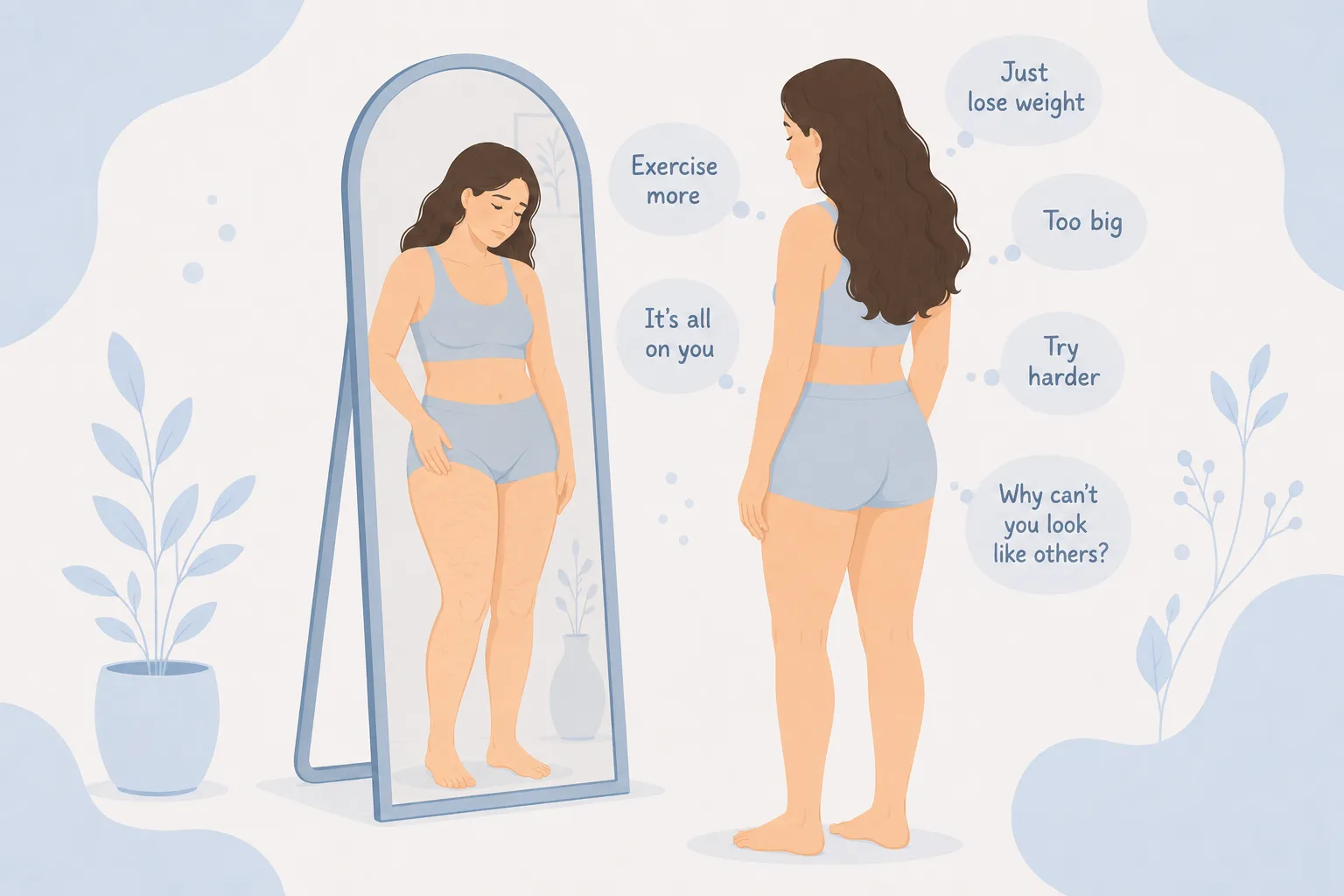
Many say that from a young age they felt that their bodies were different. Some suffered from comments at school, ridicule from other children, criticism from family or a feeling that they were "lazy" or "not taking care of themselves", despite repeatedly trying to lose weight.
Quite a few women describe years of dieting, training and attempts to change their bodies, only to discover that their face, waist or chest change - but their legs or arms hardly change. The feeling of doing "everything right" without seeing the expected result can be very frustrating.
For some women, this coping also damages their self-confidence. Some people avoid wearing shorts, skirts, or swimsuits, others fear stares and comments in public places, and some feel uncomfortable in intimacy or in relationships because of the sense of shame that has accumulated over the years.
Late diagnosis also contributes to this. Many women go years without knowing they have lipedema, and sometimes even hear over and over again that they simply need to eat less or exercise more. When a diagnosis is finally made, many describe a sense of relief – but also anger and sadness at the years in which they felt misunderstood.
Studies have found that women with lipedema report a higher frequency of anxiety, depression, impaired body image, and a decreased quality of life compared to the general population. It is important to remember that these feelings do not indicate weakness, but rather a prolonged struggle with a chronic illness that affects almost all areas of life.
You can read more about the impact of stress in the article:
Lipedema and Stress
A cycle that is difficult to break
One of the most interesting things that emerges from the study is that the connection between trauma and lipedema may be bidirectional.
For some women, prolonged stress may be one of the factors that encourages the appearance of symptoms. Then, dealing with lipedema itself may create even more stress – because of the pain, the lack of proportion in the body, the difficulty finding clothes, the comments from those around you, or the feeling that the disease is not sufficiently understood.
Ongoing stress can affect sleep quality, increase fatigue, affect mood, and make dealing with chronic pain more complex. This can create a cycle in which stress and the disease feed each other, even if stress is not the direct cause of lipedema.
Therefore, the treatment of lipedema does not focus only on the body. In many cases, it is also important to address the mental health, quality of life, and sense of competence of the person dealing with the disease.

And what about physical trauma?
In addition to emotional trauma, there are also reports of women who said that the first symptoms appeared after surgery, an accident, a significant injury, or a serious infection.
Here too, there is currently no proof that such events cause lipedema in themselves. However, some experts believe that physical trauma, similar to significant hormonal changes such as puberty, pregnancy, or menopause, may serve as a trigger in women with a genetic predisposition.
Research on the subject is still developing, so it is important to distinguish between hypotheses based on clinical experience and patient reports and connections that have been proven unequivocally.
How can you break the cycle?
You can't change the past, but you can influence the way you deal with the present.
Stress reduction, quality sleep, appropriate exercise, emotional therapy when needed, and support from family or support groups can help many people cope better with the emotional consequences of the disease. At the same time, treatments that are tailored to the lipedema itself – such as lymphatic drainage, compression stockings, an anti-inflammatory diet, and appropriate exercise – may help reduce symptoms and improve quality of life.
It is important to remember that mental health treatment does not mean that the disease is “all in the head.” Lipedema is a real physical disease, but like many other chronic diseases, it also affects the mind – and the mind in turn affects the quality of life and the ability to cope. Therefore, treatment that looks at both the body and the mind is often the most complete way to deal with the disease.
Sources
- The effect of lipedema on quality of life and psychological status — narrative review (2020)review of evidence on mental health and quality of life in lipedema.
- Difficulties in emotional regulation among females with lipedema (2022)study of emotional regulation in women with lipedema.
- Mental and physical health burden and quality of life in women with lipedema (2025)rates of depressive and anxiety symptoms in this population.
- Depression and appearance-related distress in functioning with lipedema (2018)distress around body image and daily functioning.
- Standard of care for lipedema in the United States (Phlebology, 2021)psychosocial aspects as part of care.
- Lipedema Foundationpatient support and research resources.
Reader feedback
Did you find this article interesting?
Share


Comments
0 comments |Read and add your own comment
No comments yet - be the first.