
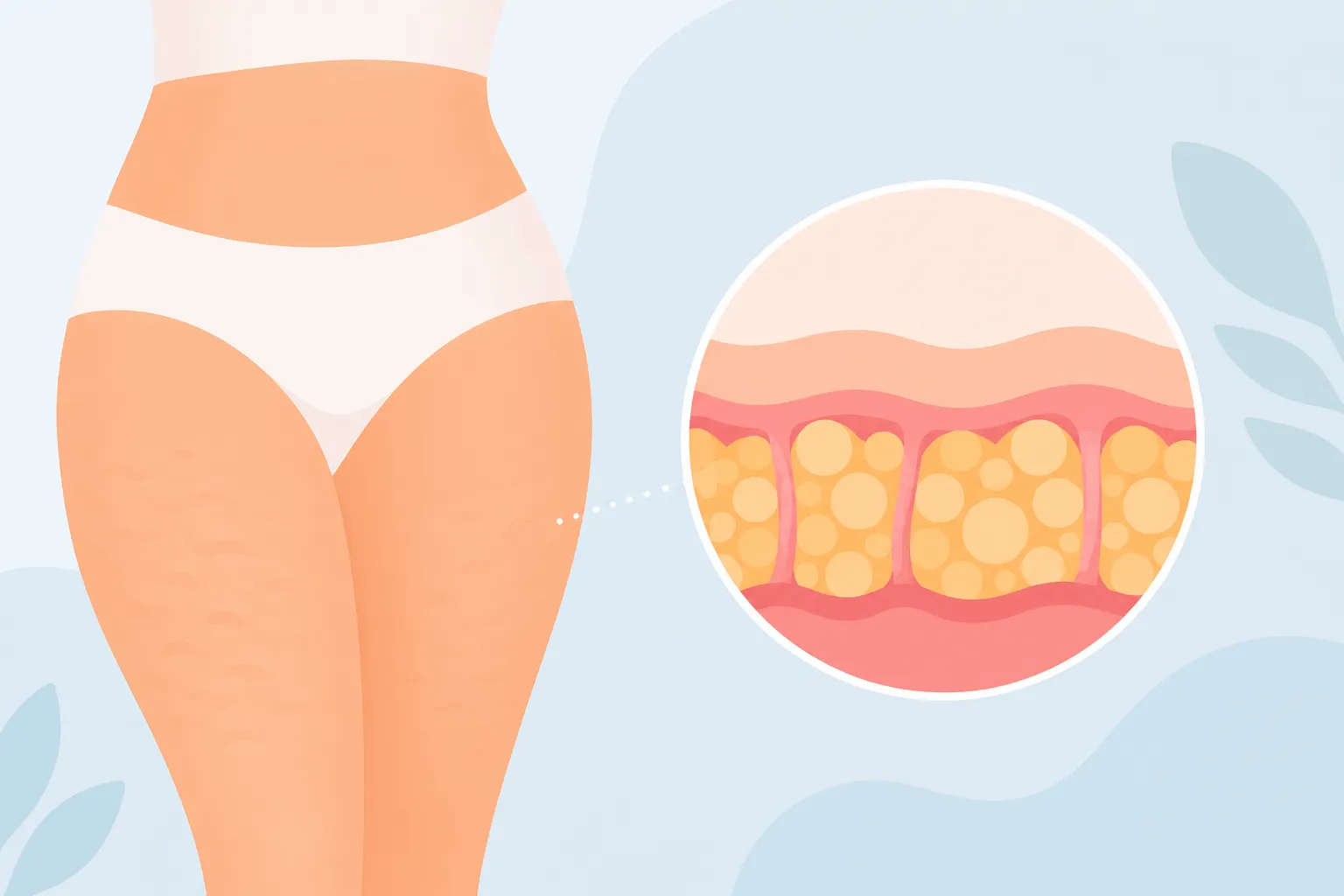
Although an estimated 11% of women live with lipedema, many do not know they have it for years. It is often misdiagnosed as obesity, which can lead to frustration, inappropriate treatment, and delay in receiving proper diagnosis, treatment, and support.
Characteristics
Disproportionate body structure:
Fat tissue accumulates disproportionately, and often creates a situation where the upper body remains smaller or narrower, while the legs and sometimes also the arms grow significantly. One of the prominent signs of lipedema is that fat accumulation stops sharply at the ankles or wrist, so the feet and hands are usually not affected.
Different fat tissue texture:
Fat tissue in lipedema feels different from regular fat — sometimes lumpy, dense, or uneven to the touch. In some women small, harder areas can be felt under the skin, and sometimes fat in certain areas may feel harder over time.
Pain, heaviness, and swelling:
Affected areas tend to be sensitive to touch, heavy, and sometimes painful. Many women describe a feeling of pressure, discomfort, or worsening swelling throughout the day, especially after prolonged sitting or standing.
Tendency toward bruising:
Women with lipedema sometimes tend to develop bruises relatively easily, even after minor injury or without a clear reason.
Types
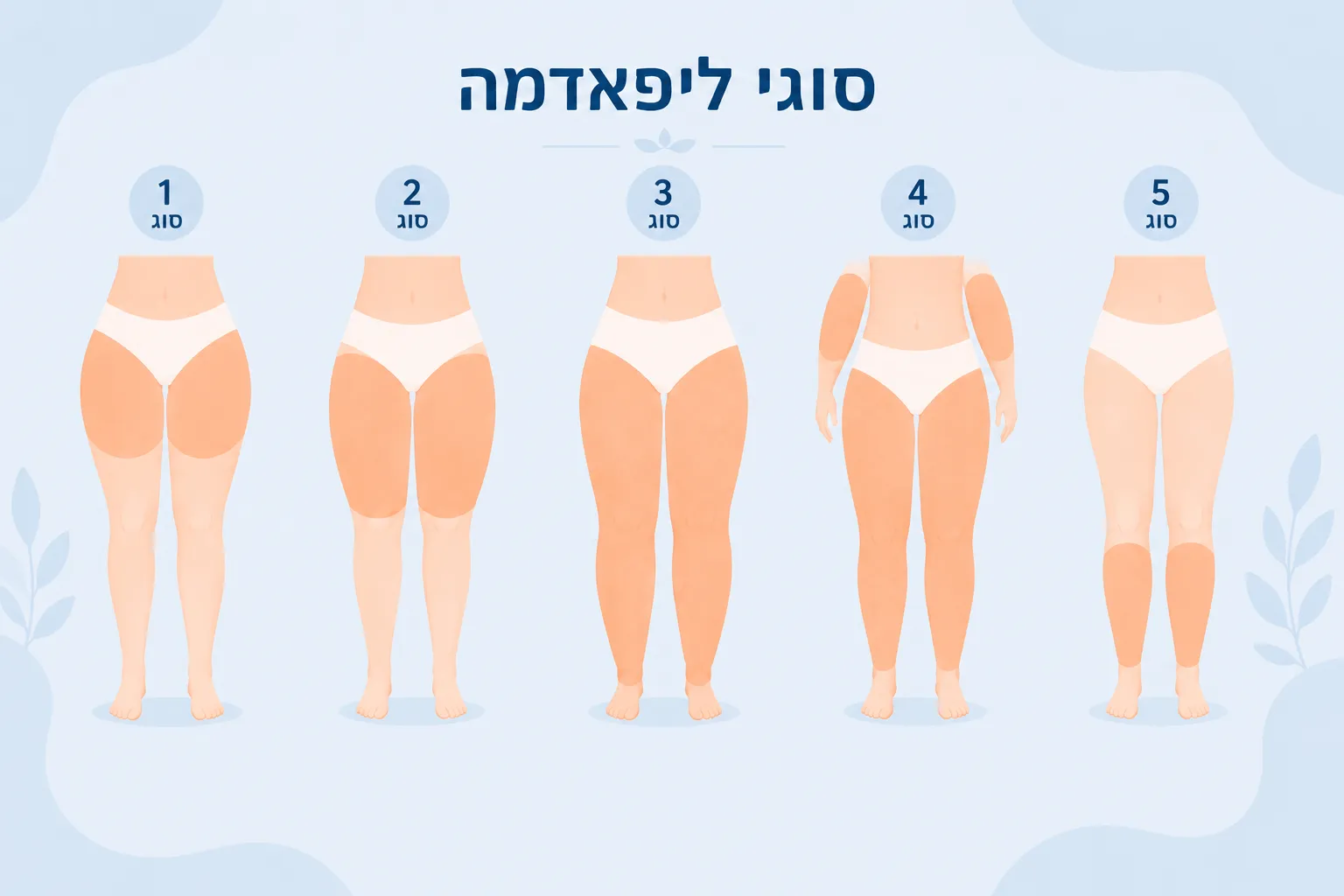
There are several types of lipedema, according to the body areas where fat tissue accumulates:
Type 1 — Fat accumulation in the pelvic area, buttocks, and upper thighs.
Type 2 — Fat accumulation from the pelvis to the knees.
Type 3 — Fat accumulation from the pelvis to the ankles.
Type 4 — Involvement of the arms in addition to the legs.
Type 5 — Lipedema manifested mainly in the calf area.
Many women experience a combination of several types at the same time, and sometimes the spread changes over the years. For a detailed breakdown of each type: Differences between types of lipedema – what does each type look like?.
Stages
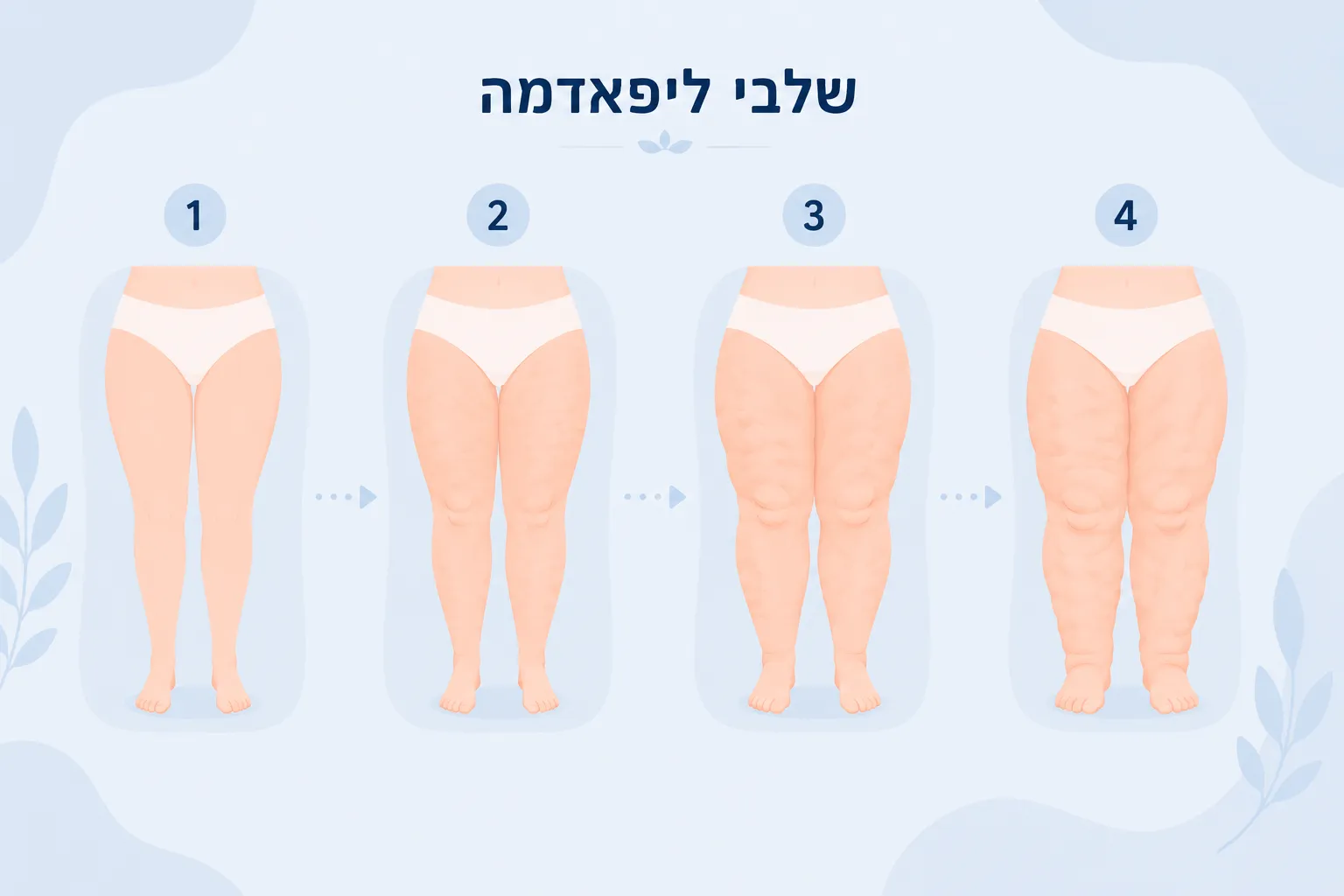
Lipedema is divided into several stages that describe disease progression over time:
Stage 1 — The skin still looks relatively smooth, but there is pain, swelling, or sensitivity, and sometimes subtle changes in fat tissue can be felt.
Stage 2 — The skin becomes less smooth and waves, lumpiness, or texture resembling more significant cellulite begin to appear.
Stage 3 — Fat accumulation becomes more significant and folds, prominent areas, and changes in leg structure may appear.
Stage 4 (Lipo-Lymphedema) — At this stage there is also damage to the lymphatic system, and significant edema sometimes appears.
Read more: Differences between the stages of lipedema
Causes
The exact cause of lipedema is still not fully known, but it appears to involve a combination of several factors:
Genetics
In many cases there is a family history of women with a similar body structure or similar symptoms, and therefore lipedema appears to have a significant hereditary component.
Hormones
Lipedema appears or worsens frequently around periods of hormonal change:
- Puberty
- Pregnancy
- After childbirth
- Use of hormonal contraceptives
- Perimenopause and menopause
Read more: The effect of hormones on lipedema
Nutrition and inflammation
Although nutrition does not cause lipedema, certain foods may worsen inflammation, swelling, and fluid retention.
Anti-inflammatory nutrition
Inflammatory foods worth limiting
The importance of eating protein
Drinking water
Stress and sleep
Some women report worsening during periods of stress, lack of sleep, or mental overload.
Read more: Lipedema and stress · Trauma and lipedema
Read more: Lipedema and sleep – why is it especially important?
Lifestyle
Prolonged sitting or standing may worsen swelling and a feeling of heaviness.
Read more: Lipedema and prolonged sitting – is it harmful?
Additional factors being researched today
- Weak or slow lymphatic system
- Chronic inflammation in the body
- Metabolic changes
- Environmental factors and lifestyle
Read more: Why do some thin women have lipedema?
Lipedema in men - does it really exist?
Possible complications
Without appropriate treatment or management, lipedema may affect quality of life and lead to certain complications — especially in more advanced stages. It is important to remember that not every woman will experience all symptoms or complications, and their severity varies from woman to woman.
Lipedema may lead to:
- Difficulty walking or moving: due to heaviness, pain, load on joints, or significant accumulation of fat tissue.
- Impact on self-image and mental health: many women describe feelings of frustration, shame, anxiety, or reduced self-confidence — especially after years of misdiagnosis or a feeling that the body "does not respond" to efforts.
- Lipo-lymphedema (Lipo-Lymphedema): in certain cases, especially in advanced stages, the lymphatic system may be damaged and lead to significant additional fluid accumulation and swelling.
- Joint and posture problems: load on the knees, pelvis, and ankles may cause pain, wear, or postural changes over time.
- Venous disease and circulation problems: some women with lipedema may also experience a tendency toward venous problems or a significant feeling of heaviness in the legs.
How is it diagnosed?
To date there is no blood test or single test that diagnoses lipedema unequivocally. In most cases, diagnosis is made by a doctor or therapist familiar with lipedema, through a combination of physical examination, medical history, and identification of characteristic features.
During diagnosis, the practitioner may consider fat distribution in the body, touch sensitivity and pain, fat tissue texture, easy appearance of bruises, and whether the feet or hands are not affected — a feature considered characteristic of lipedema.
Read more: Lipedema vs lymphedema, cellulite and obesity
👉 Future link: how to identify lipedema early?
Treatment approaches
There is no cure for lipedema, but there are many ways that can help reduce symptoms, improve quality of life, and sometimes also slow disease progression. Treatment usually focuses on reducing inflammation, improving fluid flow, easing pain, and supporting daily function.
Supporting the lymphatic system
The lymphatic system is responsible for draining excess fluid, waste, and inflammatory processes from the body. In women with lipedema, lymph flow may be less efficient — which may contribute to swelling, heaviness, and worsening symptoms. Therefore, one of the central treatment principles is supporting normal lymph fluid flow to reduce inflammation, swelling, and discomfort.
Common methods include lymphatic drainage, dry brushing, elevating the legs, and compression garments.
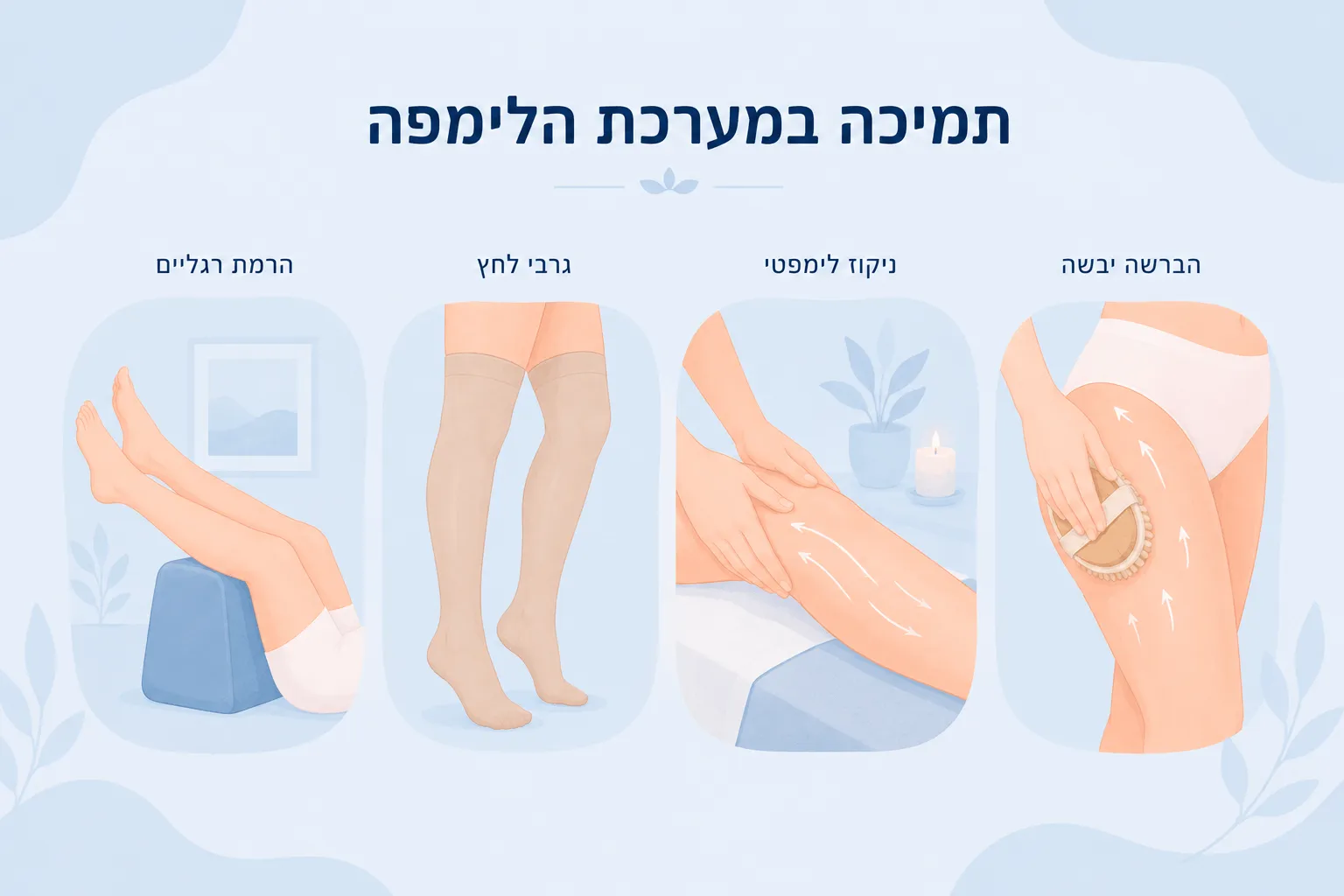
Read more: What is the lymphatic system · Dry brushing · Lymphatic drainage · Leg elevation · Compression garments
Anti-inflammatory nutrition
Although nutrition does not "cure" lipedema, many women report symptom improvement when they reduce inflammation-promoting foods and add anti-inflammatory foods. Adapted nutrition may help reduce swelling, improve energy, and provide general body support. Adequate protein intake and drinking water may also be especially important.
Physical activity
Movement and physical activity are considered an important part of lipedema management, because they may help blood and lymph flow, reduce a feeling of heaviness, and support overall health. However, not every workout suits every woman with lipedema — and sometimes excess load, overly intense training, or lack of recovery time may actually worsen pain, swelling, and inflammation. Therefore it is important to find balance between consistent movement and rest and recovery.
Read more: Training that helps and training that hurts
Devices and technologies
There are certain devices women with lipedema use as part of supportive treatment. Among others, some report relief through vibration plates or use of infrared light, which may help blood flow, tissue relaxation, and reducing discomfort — although effectiveness may vary from woman to woman.
Read more: Vibrating plate
👉 Future link: Infrared light for lipedema
Nutritional supplements
There are certain supplements that may help some women, according to personal condition and body needs. Some are intended to support reducing inflammation, blood and lymph flow, or blood vessel and tissue health. However, it is important to remember that not every supplement suits everyone, and sometimes it is recommended to consult a professional.
Read more: Dietary supplements that may help
Liposuction for lipedema
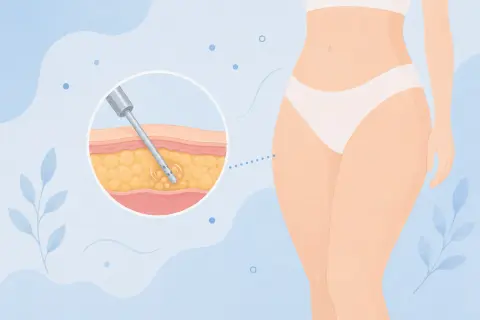
In some cases, dedicated liposuction for lipedema is also considered, aimed at removing part of the diseased fat tissue and reducing load, pain, and movement limitation. For some women this is a significant improvement in quality of life, but it is important to know that surgery does not suit everyone, and sometimes women report a certain return of symptoms or fat accumulation even afterward.
Read more: Liposuction for lipedema – what is important to know before and after?
Sources
- Standard of care for lipedema in the United States (Phlebology, 2021)US medical consensus on diagnosis and treatment.
- Unraveling lipedema (npj Metabolic Health and Disease, 2026)comprehensive current review of disease mechanisms.
- Lipedema: Clinical Features, Diagnosis, and Management (Archives of Plastic Surgery, 2025)clinical features, diagnosis and management.
- Cleveland Clinic – Lipedemaclinical overview: signs, causes and treatment.
- NHS – Lipoedemaofficial UK National Health Service information.
- Lipedema Foundationresearch foundation and patient resources.
Reader feedback
Did you find this article interesting?
Share




Comments
0 comments |Read and add your own comment
No comments yet - be the first.