
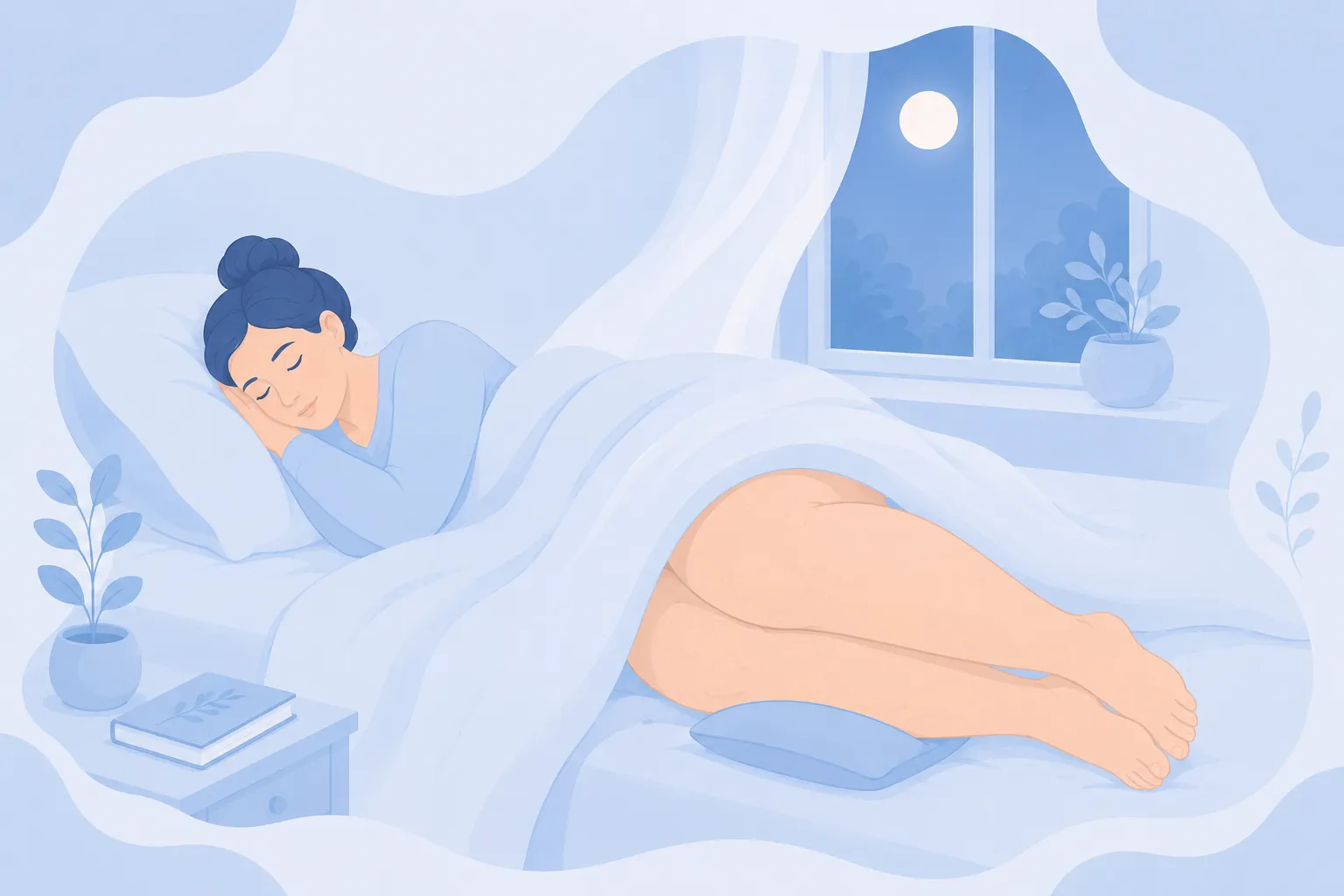
During sleep, the body does not just “rest.” This is the time when essential processes of tissue repair, hormonal regulation, immune system balance, and general recovery occur. When sleep is insufficient or of poor quality, the ability to cope with lipedema symptoms may also be impaired. Therefore, along with treatments and lifestyle changes, good sleep is one of the simplest habits that can contribute to quality of life.
Why is sleep especially important when you have lipedema?
Lipedema is a chronic disease that affects fat tissue and can cause pain, sensitivity to touch, a feeling of heaviness, and sometimes persistent fatigue. Although there is no proof that quality sleep can stop the progression of the disease or reduce the fat accumulation that is characteristic of it, studies show that sleep has a significant impact on various systems in the body related to coping with pain, inflammation, energy, and recovery.
In other words, sleep does not treat lipedema itself – but it can help the body cope better with the symptoms and provide more energy for daily functioning.
Sleep helps regulate inflammatory processes
During sleep, the body regulates a wide range of biological processes, including immune system activity and the inflammatory response. When there is a chronic lack of sleep, it has been found that levels of substances involved in inflammatory processes may increase, which may affect the sensation of pain and general well-being.
Lipedema is not defined as a classic inflammatory disease, but studies indicate that the fatty tissue characteristic of the disease is accompanied by local inflammatory changes. For this reason, quality sleep may support the body’s natural balance and help better cope with the symptoms.
Good sleep may reduce the sensation of pain
The relationship between sleep and pain has been studied extensively in recent years. When sleep is short or fragmented, the nervous system becomes more sensitive to stimuli, so existing pain may feel more intense.
On the other hand, after a good night's sleep, the brain is able to regulate the processing of pain signals more effectively. For people living with lipedema, who sometimes suffer from sensitivity to touch or pain in the legs and arms, this means that a quality night's sleep may help them cope better with pain during the day.
The body recovers during sleep
One of the most important functions of sleep is to allow the body to recover. During the night, hormones are released that help repair tissues, regulate various systems, and create the conditions necessary for recovery from the day's activities.
Although there is no proof that sleep "corrects" the fatty tissue in lipedema, it certainly provides the body with the conditions it needs to maintain the proper functioning of many systems, including the muscular, immune, and vascular systems.
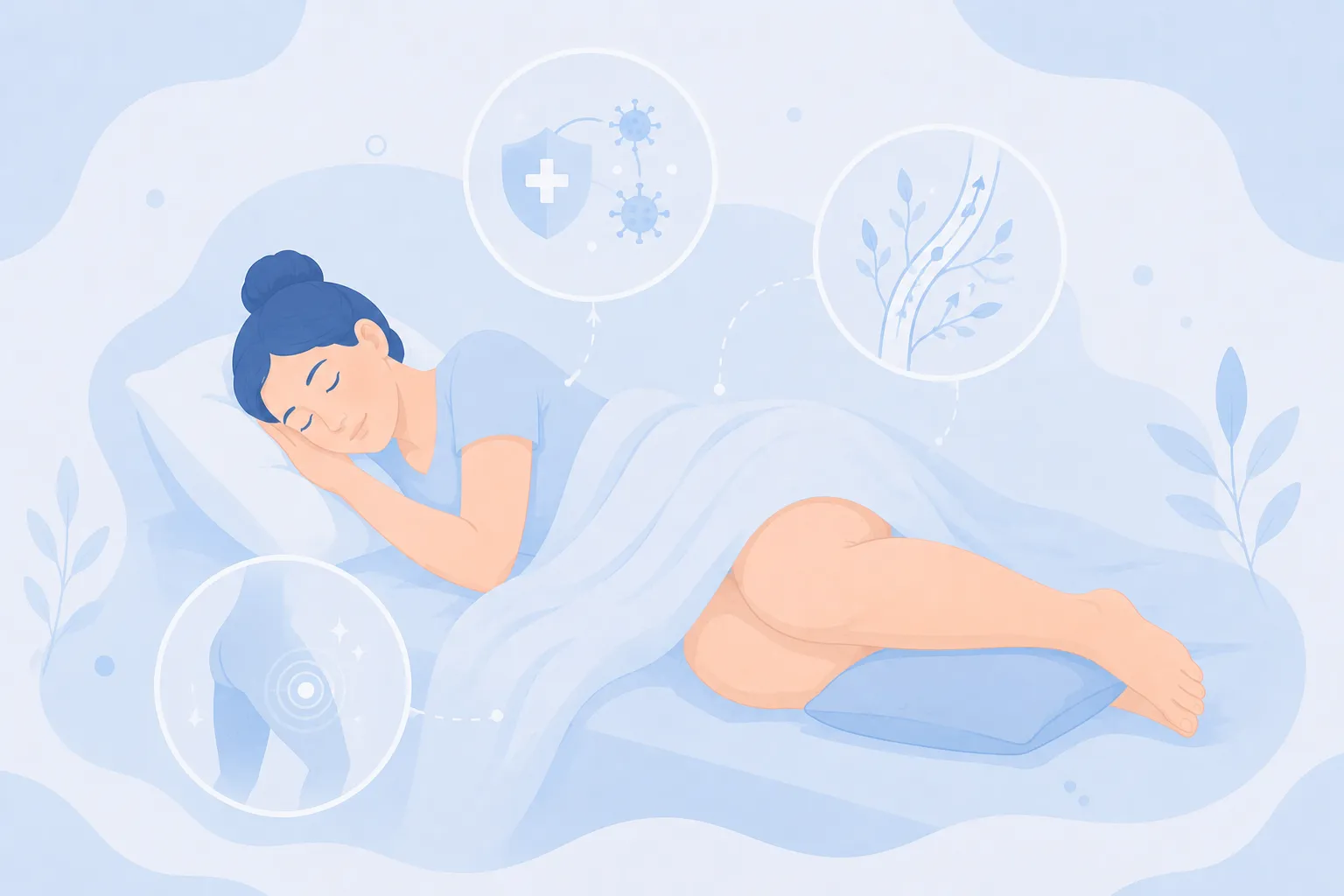
Sleep supports the proper functioning of the lymphatic system
The lymphatic system continues to function even during rest, and its role is to help remove fluids, waste, and various substances from the body's tissues.
There is currently no scientific evidence that sleep alone improves lymphatic drainage in people with lipedema, but quality sleep supports the proper functioning of all body systems, including the lymphatic system. When the body receives the rest it needs, it is able to perform its natural maintenance processes more efficiently.
If you want to better understand how this system works, we recommend that you also read the article What is the lymphatic system and what is its function?.
Good sleep helps you stick to treatment
Managing lipedema is a long-term process, which often includes a combination of exercise, proper nutrition, the use of compression stockings, lymphatic drainage, and other habits.
When sleep is inadequate, many people experience decreased concentration, increased fatigue, and less motivation to exercise or stick to their treatment routine.
On the other hand, after a night of quality sleep, it is easier to get up, move, exercise, and maintain healthy habits. So, even if sleep does not directly treat lipedema, it can certainly help you stick to the things that do contribute to managing the disease.
For more information on recommended physical activity, you can also read the article Exercises that help and exercises that hurt.
Can lipedema also interfere with sleep?
Although the main focus is on the effect of sleep on the body, it is worth knowing that sometimes lipedema itself may also affect the quality of sleep.
Some people living with lipedema report difficulty finding a comfortable position, sensitivity to the touch of bedding, pain that increases in the evening, or a feeling of heaviness in the legs that makes it difficult to fall asleep. However, not everyone with lipedema will experience sleep disturbances, so this should not be considered a necessary symptom of the disease.
How can you improve your sleep quality?
While there is no one solution that suits everyone, a few simple habits may help:
- Maintain a regular bedtime as much as possible.
- Keep your bedroom cool and comfortable.
- Do light walking or gentle stretching during the day, depending on your ability.
- Elevate your legs before bed or while resting, if this helps relieve the feeling of heaviness. You can read more about this in the article Leg Elevations.
- Avoid caffeine and heavy meals near bedtime.
- Consult with your healthcare team about using compression garments at night. In most cases, you should not sleep with regular compression stockings, unless you have received a personal recommendation for this.
In conclusion
Quality sleep is not a cure for lipedema, but it can certainly be a significant part of daily coping with the disease. It supports the body's recovery processes, may reduce the feeling of pain, helps maintain better energy levels and makes it easier to persist in habits that contribute to managing the disease.
If you have ongoing sleep difficulties, pain that wakes you up from sleep or fatigue that does not go away even after sufficient rest, it is recommended to share this with your doctor. Sometimes, additional factors can be identified that affect the quality of sleep and offer solutions that will help improve the quality of life.
Remember that alongside proper nutrition, physical activity and various treatments, good sleep is an integral part of maintaining overall health – and can be another important tool in dealing with lipedema.
Sources
- Sleep disturbance, sleep duration, and inflammation — systematic review and meta-analysis (Biological Psychiatry, 2016)the link between sleep disturbance and the inflammatory markers CRP and IL-6.
- Effects of experimental sleep deprivation on peripheral inflammation — updated meta-analysis (2025)updated evidence on inflammatory markers rising after sustained sleep loss.
- Sleep disruption and activation of cellular inflammation mediate heightened pain sensitivity — randomized clinical trial (2023)controlled trial linking fragmented sleep to increased pain sensitivity.
- Effects of sleep changes on pain-related health outcomes — systematic review of longitudinal studies (2018)long-term follow-up of sleep and pain in the general population.
- Sleep, cerebrospinal fluid, and the glymphatic system — systematic review (2022)fluid and metabolic waste clearance that increases during sleep.
- Health implications of lipedema — patient questionnaires and matched controls (2024)sleep problems as a symptom reported across all lipedema stages.
- NHS – Lipoedemageneral information on living with lipedema day to day.
Reader feedback
Did you find this article interesting?
Share





Comments
0 comments |Read and add your own comment
No comments yet - be the first.