
All About Lipedema
Information and practical tools.
Category
Basics: what lipedema is, how it is diagnosed, and disease stages.
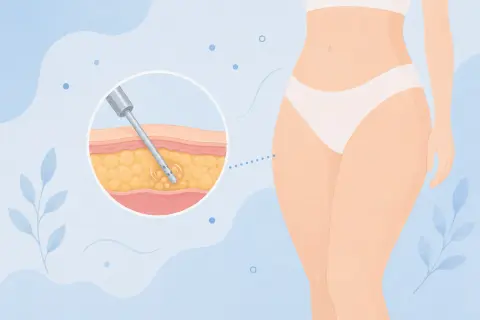
Liposuction for lipedema is not just a cosmetic liposuction. It is a medical procedure that aims to remove the fatty tissue that is characteristic of lipedema – tissue that can be painful, sensitive, fibrotic and difficult to reduce through weight loss and exercise. Unlike aesthetic liposuction, the goal is not only to change the appearance of the body, but also to reduce pain, swelling and a feeling of heaviness, improve mobility and quality of life, and in some cases also relieve the burden placed on the lymphatic system.

There's nothing like taking a hot shower after a long day. The warm water relaxes your muscles, relieves tension, and provides a sense of comfort that's hard to give up. But if you have lipedema, it's possible that this very indulgent habit is making the feeling of heaviness, swelling, or pain worse—even if you don't always make the connection.

If you have lipedema, you may have experienced a feeling of heaviness, pain, swelling, or discomfort in your legs after a day of computer work, a long commute, or hours of continuous sitting. For many living with lipedema, this is a familiar phenomenon that can affect daily functioning, especially when your routine includes office work, school, or extended travel.

When thinking about managing lipedema, most attention is focused on diet, exercise, compression stockings or lymphatic drainage. But there is another factor that is often forgotten despite its impact on the entire body – sleep quality. Sleep is not a treatment for lipedema and cannot cure the disease, but it plays an important role in how the body deals with pain, fatigue and recovery processes.
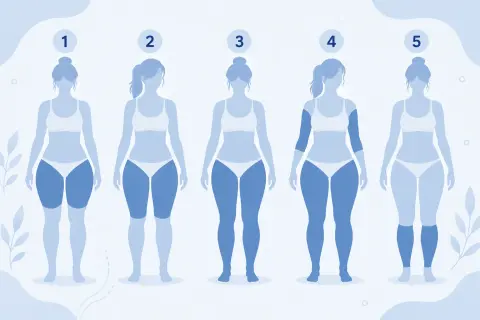
Lipedema does not look the same in every person. Some people only have their thighs affected, others have their calves or arms affected, and some experience a combination of several areas together. To describe the pattern of fat tissue distribution in the body, lipedema is commonly divided into five types.
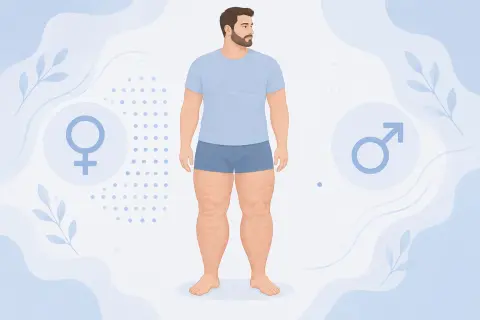
Lipedema is usually identified as a disease that affects women, so many people are surprised to learn that men can also develop it. In fact, lipedema in men is very rare, and only a small number of cases have been described in the medical literature. However, the fact that it is rare does not mean that it does not exist. In recent years, there has been increasing awareness that men can also suffer from the disease, especially when certain risk factors are present.

When most people hear the word "lipedema," they picture an overweight woman. Therefore, many women who are of normal weight or have a slim body build never even consider that the symptoms they are experiencing may be related to lipedema.
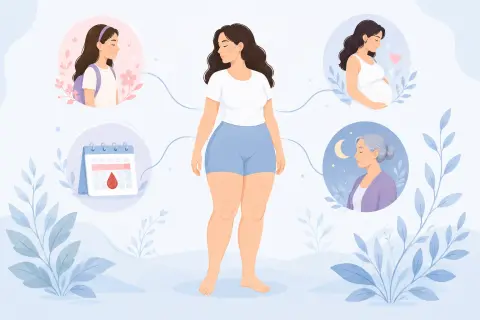
In this article, we will understand how hormones affect lipedema tissue, why certain periods in life are triggers, and what can be done to better cope with these changes.
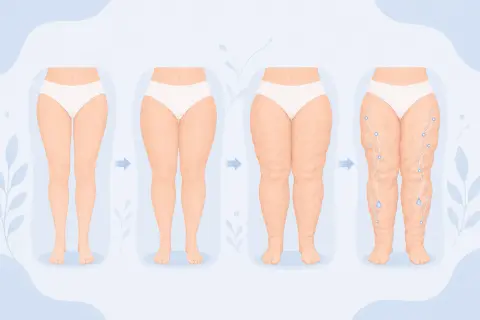
Lipedema doesn’t look the same for everyone. In some people, the changes in fat tissue are still relatively subtle, while in others they may be more pronounced. To describe these differences, lipedema is divided into four stages. Knowing the stages can help you better understand what’s happening in your body, identify changes over time, and better understand information found in diagnoses, research, and support communities.
Lipedema is a chronic, symmetrical build-up of fat, usually in the legs and sometimes the arms, typically accompanied by tenderness to touch, easy bruising and a feeling of heaviness. It is not the result of overeating, and it does not resolve with dieting — which is exactly why so many women spend years looking for an explanation.
This category is the starting point: what separates lipedema from ordinary obesity, from lymphedema and from cellulite, what the different stages and types look like, and why diagnosis is so often delayed.
What is still unknown: The precise cause of lipedema is still unknown, and no lab test or scan diagnoses it. Diagnosis is clinical, based on features and history — which is why it belongs with a professional familiar with the condition.