
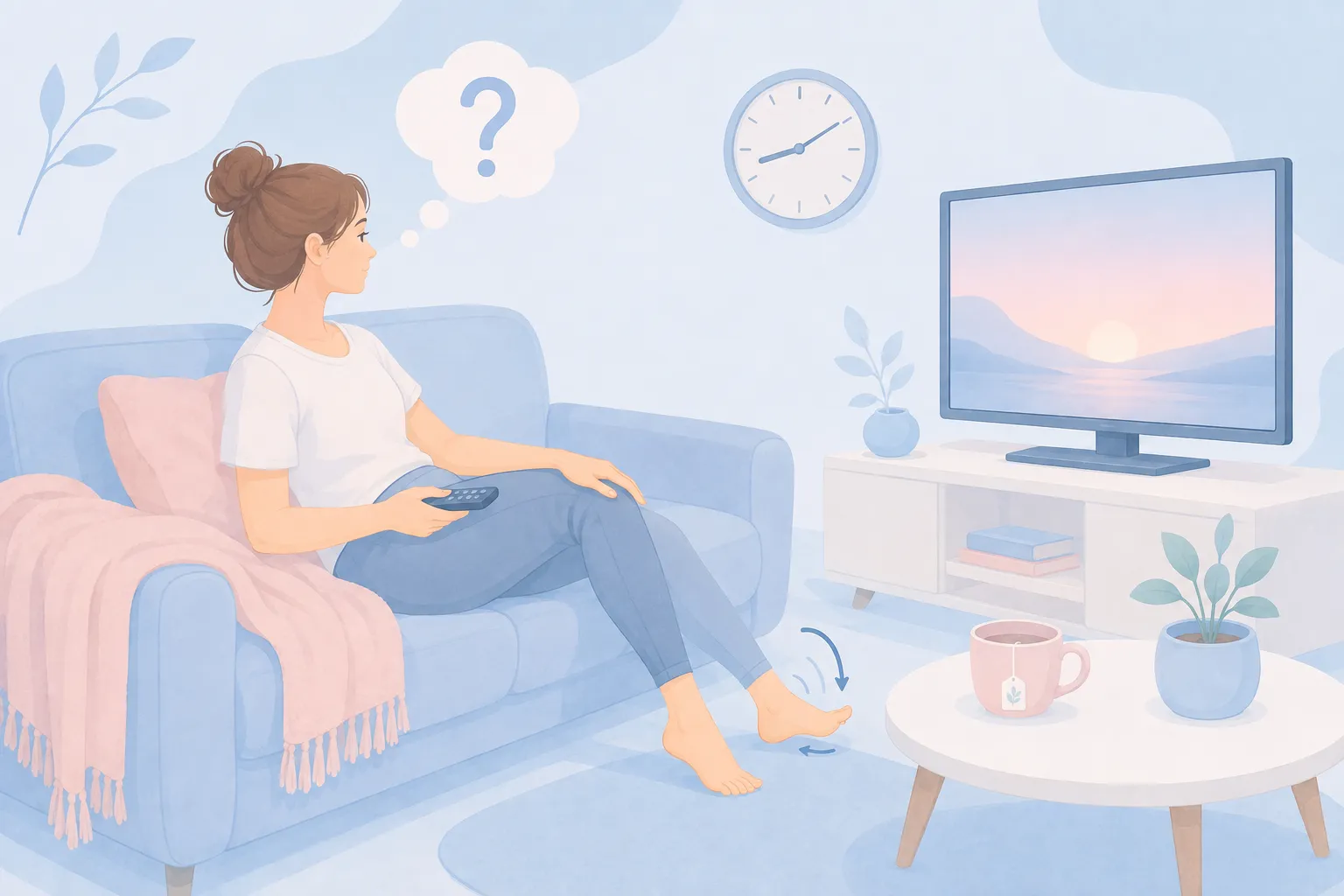
The good news is that prolonged sitting does not cause lipedema or create new fatty tissue. However, it can certainly temporarily worsen symptoms and make your day less comfortable. Understanding why this happens and adopting a few simple habits can help reduce the feeling of heaviness and allow for a more comfortable lifestyle even when you can’t avoid sitting.
Why does prolonged sitting affect lipedema?
To understand the connection between prolonged sitting and lipedema, it’s important to briefly familiarize yourself with how the body circulates blood and lymph fluids.
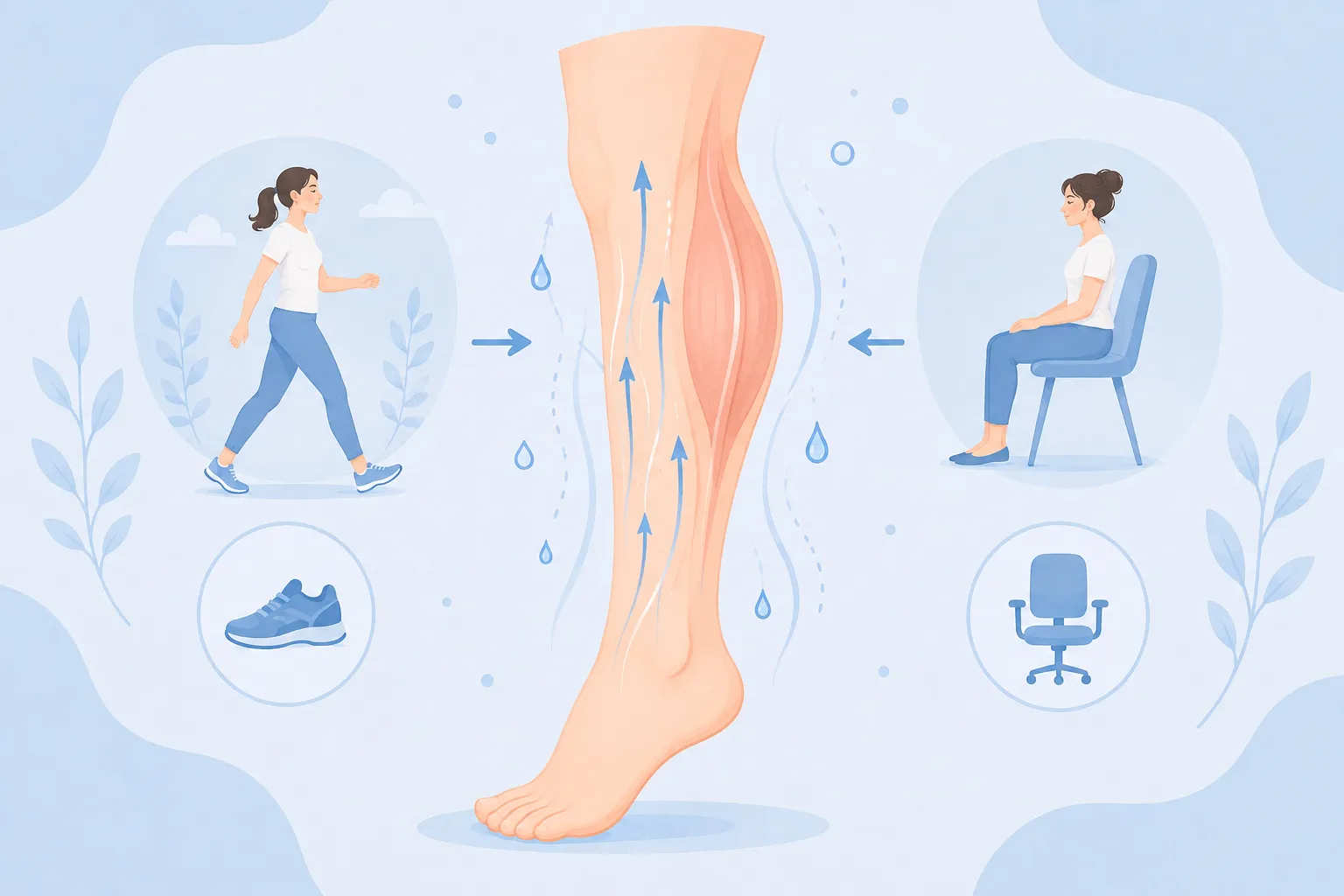
During walking or any movement of the legs, the calf muscles contract and relax repeatedly. This action helps push blood and lymph fluids upward, against gravity, back toward the heart. For this reason, the calf muscles are sometimes called the body’s “pump muscles.”
When you sit for a long time, your leg muscles are almost inactive. As a result, blood and lymph flow slows down and fluid can temporarily accumulate in the legs. Even in people without lipedema, prolonged sitting can cause a feeling of heaviness or slight swelling, but in those with lipedema, these sensations may be more noticeable.
This is because the fatty tissue characteristic of lipedema is more sensitive to pressure and pain, and sometimes there is also some impairment in fluid drainage. Therefore, even a temporary change in fluid flow can lead to more significant discomfort.
If you haven't read about the lymphatic system yet, we recommend that you also read the article What is the lymphatic system and what is its function?, which explains how it works and how it relates to lipedema.
It is important to emphasize: these sensations do not indicate that new fat has formed or that the disease has worsened. In most cases, this is only a temporary worsening of the symptoms.
What symptoms can occur after prolonged sitting?
Not everyone will experience the same symptoms, but many living with lipedema describe a temporary worsening after long hours of inactivity.
Common symptoms include:
- A feeling of heaviness in the legs.
- A dull ache or pressure.
- Swelling that is felt mainly towards the end of the day.
- Increased sensitivity to touch.
- A feeling of stiffness or tightness in the legs.
- Difficulty starting to walk immediately after getting up from a chair.
For some people, the sensations go away after a few minutes of walking, while for others it may take longer for their legs to feel light and comfortable again.
Does prolonged sitting worsen lipedema?
This is one of the most frequently asked questions on the subject.
To date, there is no research evidence showing that prolonged sitting alone causes lipedema to progress or creates new fatty tissue. In other words, a long day of work in front of a computer or a few hours of travel do not change the stage of the disease.
However, this does not mean that prolonged sitting has no effect at all.
When you stay in the same position for long hours, the flow of fluids in your legs is slower, which may increase the feeling of pain, heaviness and swelling. The longer you sit, the more noticeable the symptoms may be that day.
Therefore, the goal is not to completely avoid sitting – which is usually not practical – but to incorporate movement throughout the day to prevent a situation in which your legs remain motionless for many hours in a row.
Office work, study or work from home – should you be concerned?
The short answer is no.
Many people living with lipedema work in an office, study or work from home and lead a full life routine. There is no need to change jobs just because of the diagnosis.
However, it is worth being aware that long hours in front of a computer may temporarily worsen the feeling of discomfort. Especially when working from home, where there is not always a reason to get up to go to a conference room or to a coworker, it is very easy to stay in the same position for hours without noticing.
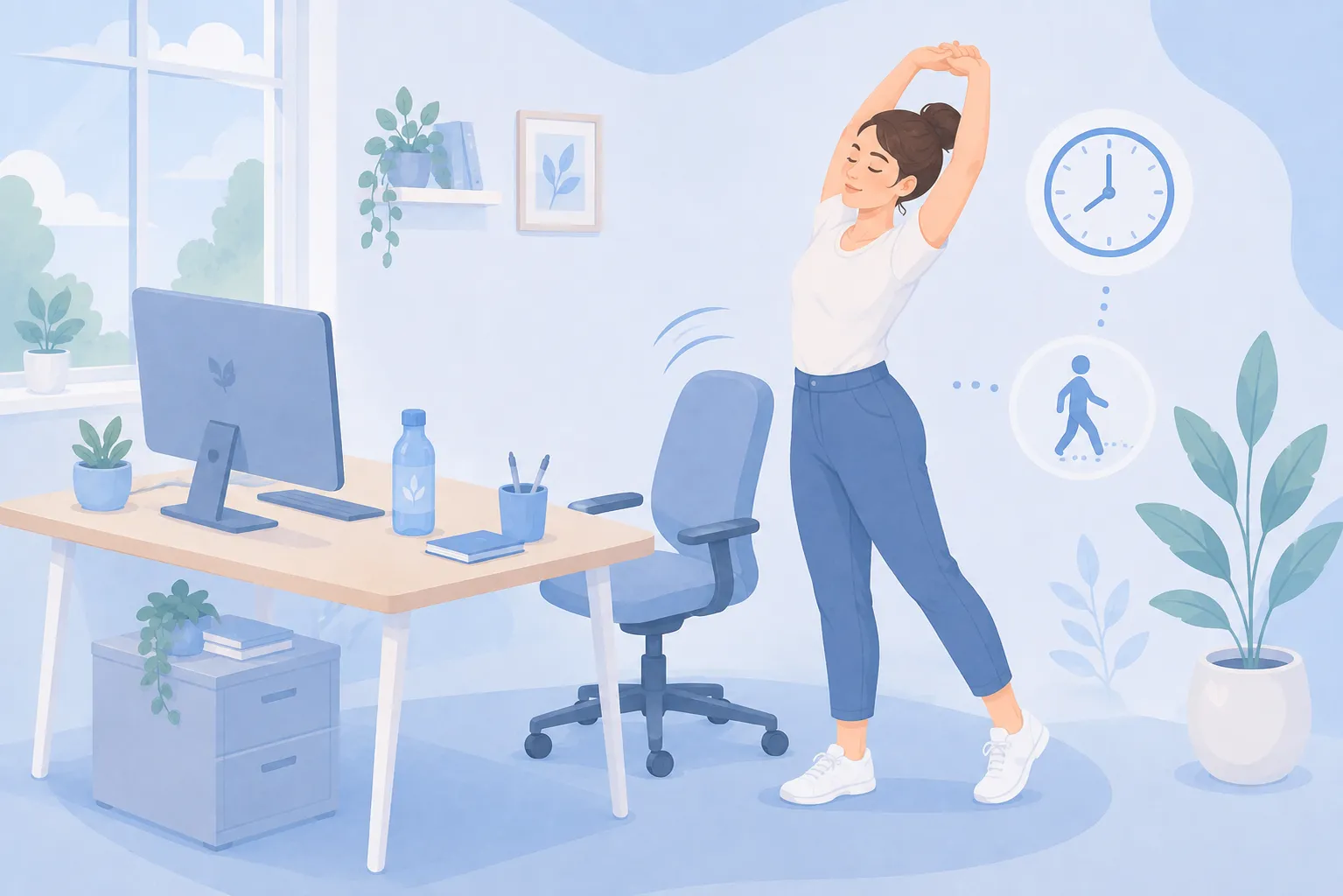
Therefore, it is recommended to make movement part of your routine: get up to fill a glass of water, answer a phone call while standing, do a short stretch or walk for a few minutes between tasks. Even very short breaks can help reactivate your leg muscles and improve your feeling.
Is one workout at the end of the day enough?
It’s easy to think that if you work out for an hour in the evening, you can sit still for the rest of the day. In reality, the body doesn’t work that way.
Regular exercise is an important part of dealing with lipedema, but it doesn’t completely eliminate the effects of sitting for long hours.
Even if you get a quality workout at the end of the day, it’s still a good idea to incorporate some movement throughout your workday. In fact, sometimes taking a few short walks throughout the day can contribute to your sense of well-being just as much as the workout itself.
More information about the recommended types of activity can be found in the article Training that helps and training that hurts.
What about long trips or flights?
Prolonged sitting doesn't just happen at work. Long car, train or bus journeys, as well as flights, also require prolonged sitting.
Many women with lipedema report that after long journeys their legs feel heavier, more swollen or more sensitive to the touch. Here too, the explanation is similar: when the legs do not move for a long time, the circulation of blood and lymph fluids becomes less efficient, which is why the symptoms may be more noticeable.
If possible, it is recommended to get up from time to time, walk for a few minutes or at least move your ankles, bend and straighten your knees and contract your calf muscles even while sitting. Such small movements do not replace walking, but they are preferable to complete immobility.
How can the effect of prolonged sitting be reduced?
It is not always possible to avoid prolonged sitting, but there are a number of simple habits that may help reduce the feeling of heaviness and discomfort:
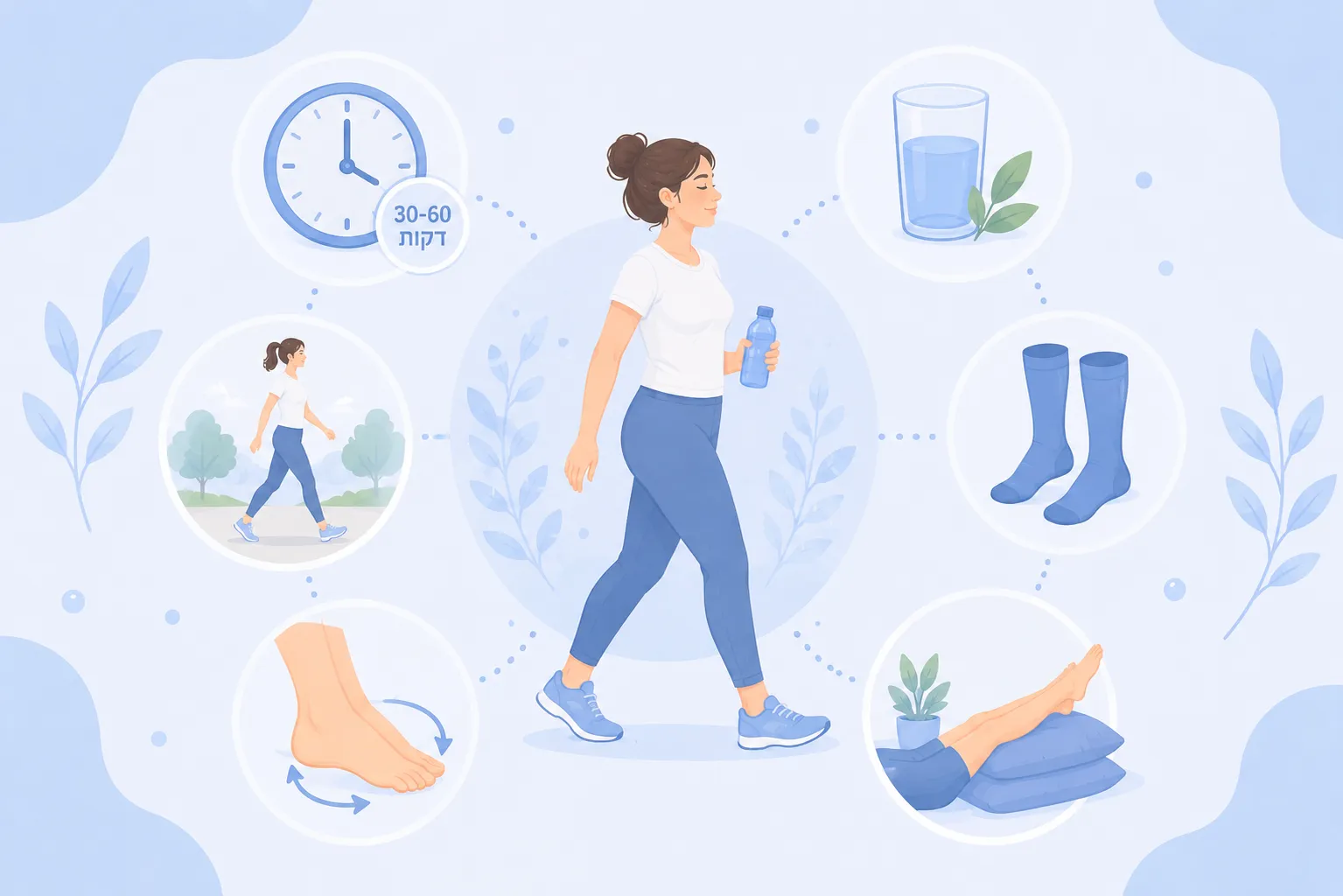
- Get up and walk for a few minutes every 30–60 minutes of continuous sitting.
- Perform ankle rotations or contract and release calf muscles even while sitting.
- Avoid sitting with your legs crossed for long periods of time as much as possible.
- Make sure to drink enough fluids throughout the day. You can read more about this in the article Drinking Water.
- If a professional has recommended it, use compression stockings in appropriate situations. More information can be found in the article Compression Stockings.
- After a long day of sitting, you can consider elevating your legs for a few minutes as needed. More on this topic can be found in the article Leg Elevations.
It is important to remember that you do not have to follow all the recommendations perfectly. Even small changes in your routine, when followed over time, can make a significant difference in your sense of comfort.
Is it better to stand than to sit?
After realizing that prolonged sitting is not ideal, some people think that the solution is to simply stand for long hours.
In fact, prolonged standing without movement is not the recommended option either.
When standing still without walking, the leg muscles do not contract and relax significantly, so even in this situation the "muscle pump" does not work optimally. As a result, prolonged standing may also cause fatigue in the legs and worsen the feeling of heaviness in some people.
Therefore, the goal is not to choose between sitting and standing, but to combine them and add movement throughout the day. Switching between sitting, standing, short walks and light stretching is usually the most comfortable and effective solution.
So what is important to remember?
Prolonged sitting does not cause lipedema and does not permanently worsen the disease, but it may certainly temporarily increase symptoms such as pain, heaviness, tenderness and swelling. This is mainly due to decreased movement in the leg muscles and a temporary slowdown in blood and lymph flow.
Fortunately, you don’t need to completely change your lifestyle to reduce the effects of prolonged sitting. Taking short breaks, drinking plenty of fluids, using compression stockings when recommended by a professional, and elevating your legs after a long day can help many people cope with their symptoms.
Ultimately, it’s not a question of sitting or standing, but of keeping your body moving throughout the day. Even a few minutes of walking or stretching every now and then can go a long way toward making your day more comfortable and enjoyable.
Sources
- Standard of care for lipedema in the United States (Phlebology, 2021)US medical consensus on lipedema diagnosis and treatment.
- Sedentary time and its association with risk for disease incidence, mortality, and hospitalization in adults (Annals of Internal Medicine, 2015)meta-analysis: prolonged sitting is linked to higher risk of disease and mortality, even in people who exercise.
- WHO guidelines on physical activity and sedentary behaviour (2020)World Health Organization recommendations on physical activity and reducing sitting time.
- NHS – Why we should sit lessNHS guidance on why to sit less and how to break up prolonged sitting.
- Cleveland Clinic – Lipedemaclinical overview: signs, causes and treatment.
- NHS – Lipoedemaofficial UK National Health Service information on lipedema.
Reader feedback
Did you find this article interesting?
Share

Comments
0 comments |Read and add your own comment
No comments yet - be the first.