
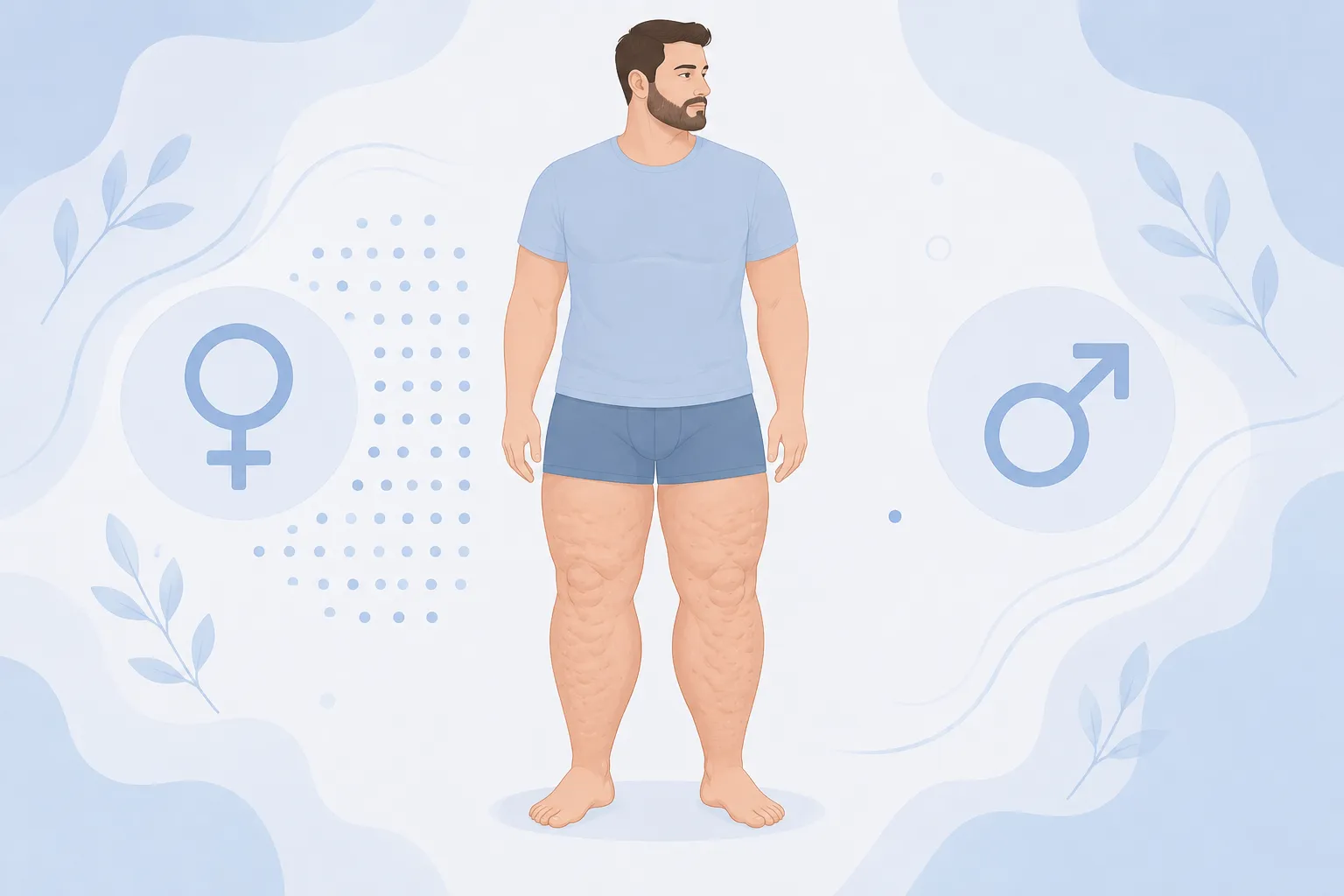
Because of its rarity, the road to diagnosis in men can be long and confusing. Sometimes symptoms are attributed to obesity, lymphedema, or other medical conditions, so the correct diagnosis is delayed. In this article, we will understand why lipedema almost always appears in women, in which cases it may also develop in men, what the typical symptoms are, and how these rare cases are diagnosed and treated.
Can men develop lipedema?
The short answer is yes – but it is an extremely rare phenomenon.
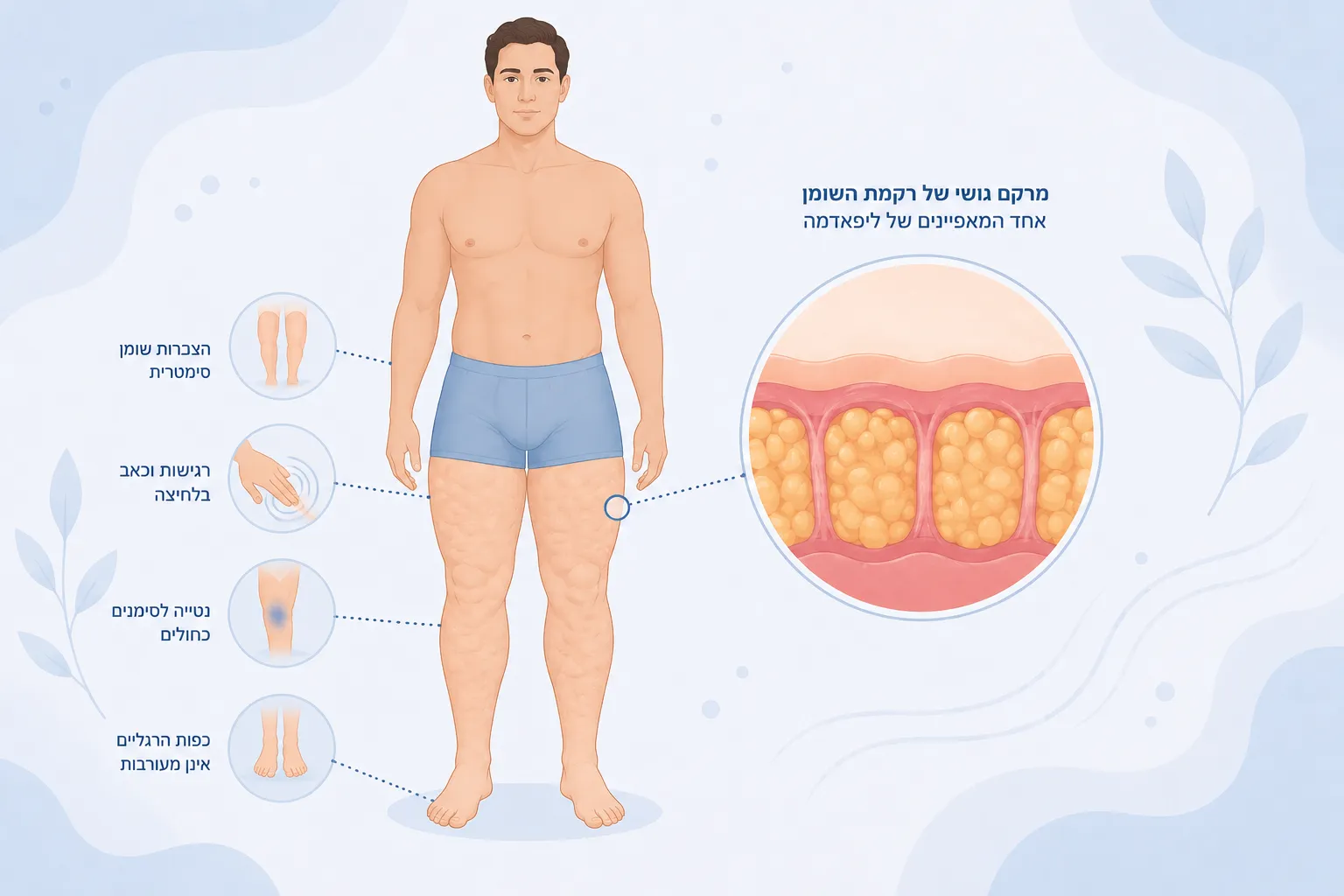
Lipedema is a chronic disease of adipose tissue, characterized by symmetrical fat accumulation mainly in the legs and sometimes also in the arms. The disease is often accompanied by pain, sensitivity to touch, a tendency to appear blue marks, and a lumpy texture under the skin. In most people with lipedema, the feet and hands remain uninvolved, creating a characteristic appearance.
Most people diagnosed with lipedema are women, but rare cases of men developing the disease have also been described in the medical literature. In many cases, the appearance of lipedema was found to be related to significant hormonal changes or certain medical conditions, and did not appear without a clear underlying cause as sometimes happens in women.
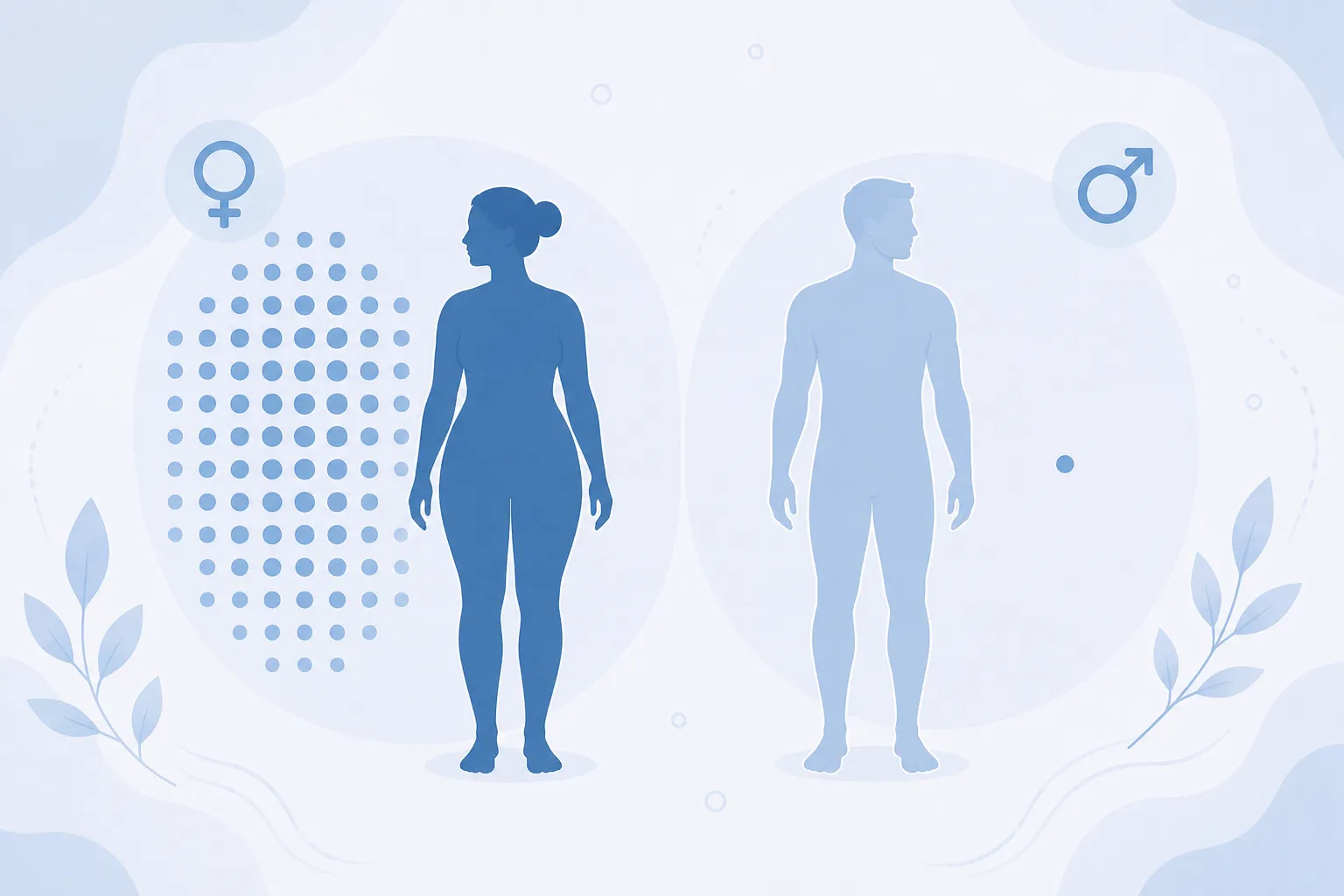
Why does lipedema almost always appear in women?
One of the most striking characteristics of lipedema is its connection to hormonal changes. In women, the disease often appears around periods when the body undergoes significant changes in hormone levels, such as puberty, pregnancy, or menopause.
Although the exact cause of lipedema is still unknown, researchers believe that the hormone estrogen plays an important role in the development of the disease. Since women produce much higher levels of estrogen than men, this may be one explanation for the disease being almost exclusively prevalent in women.
In men, estrogen levels are generally low and testosterone levels are higher, so the conditions for lipedema to develop are almost nonexistent. This is one of the reasons why the disease is so rare in the male population.
However, it is important to remember that research in this field is still developing, and therefore there is currently no definitive answer to the question of why a small proportion of men nevertheless develop lipedema.
In what situations may lipedema appear in men?
In most cases described in the medical literature, lipedema in men did not appear without a clear cause, but was related to conditions that affected the body's hormonal balance.
One of the main factors that has been linked to lipedema in men is an increase in estrogen levels or a violation of the balance between estrogen and testosterone. Since the disease is considered to be largely related to the influence of sex hormones, such hormonal changes may create conditions that allow its development in men as well.
Among the conditions described in the medical literature are:
- Excess estrogen or a disturbance in the balance between estrogen and testosterone.
- Low testosterone levels (hypogonadism).
- Chronic liver diseases, which may alter the metabolism of sex hormones and lead to a relative increase in estrogen levels.
- Gynecomastia (development of breast tissue in men), when it results from hormonal changes.
- Certain rare genetic conditions, which may affect the connective tissue or the hormonal system.
It is important to emphasize that this association does not mean that every man with one of these conditions will develop lipedema. Even in men with excess estrogen or a hormonal disorder, the disease is still very rare. It seems that in most cases a genetic predisposition or a combination of additional factors that are not yet fully understood is also required.
What are the symptoms in men?
When lipedema occurs in men, the symptoms are very similar to those described in women.
The most prominent symptom is symmetrical fat accumulation in both legs, and sometimes both arms. Unlike normal obesity, the fat is not distributed evenly throughout the body, but accumulates in certain areas, creating a disproportion between the upper and lower body.
In addition, people with lipedema may experience:
- Pain or a feeling of tenderness in the fatty areas.
- The appearance of slight blue marks even after minor bruises.
- A lumpy texture or feeling of "graininess" under the skin.
- A feeling of heaviness in the legs, especially after prolonged standing.
- Symmetrical involvement of both sides of the body.
One characteristic that may help distinguish lipedema from other conditions is that the feet are usually not affected by the disease, even when the legs themselves are enlarged.
Why is lipedema so difficult to diagnose in men?
Because lipedema in men is so rare, many doctors don’t even think of it as a first option. As a result, many men may receive other diagnoses before considering lipedema.
Conditions that may appear similar include:
- Obesity – Lipedema is a fatty tissue that is relatively resistant to weight loss, while in normal obesity, weight loss usually affects most parts of the body.
- Lymphedema – Both conditions cause swelling of the extremities, but lymphedema usually involves the feet, while lipedema usually leaves the feet unchanged.
- Chronic venous insufficiency – Can cause swelling in the legs, but the mechanism is completely different.
- General edema – Various medical conditions can cause swelling in the extremities that is not related to lipedema.
For more information on the differences between the different conditions, you can also read the article Lipedema or something else?.
How is lipedema treated in men?
Since the number of documented cases is relatively small, there are currently no specific treatment guidelines for men. Therefore, in most cases, treatment is based on the same methods that are also accepted in women.
The goal of treatment is to reduce pain, improve daily functioning, reduce the feeling of heaviness in the limbs, and maintain quality of life as much as possible.
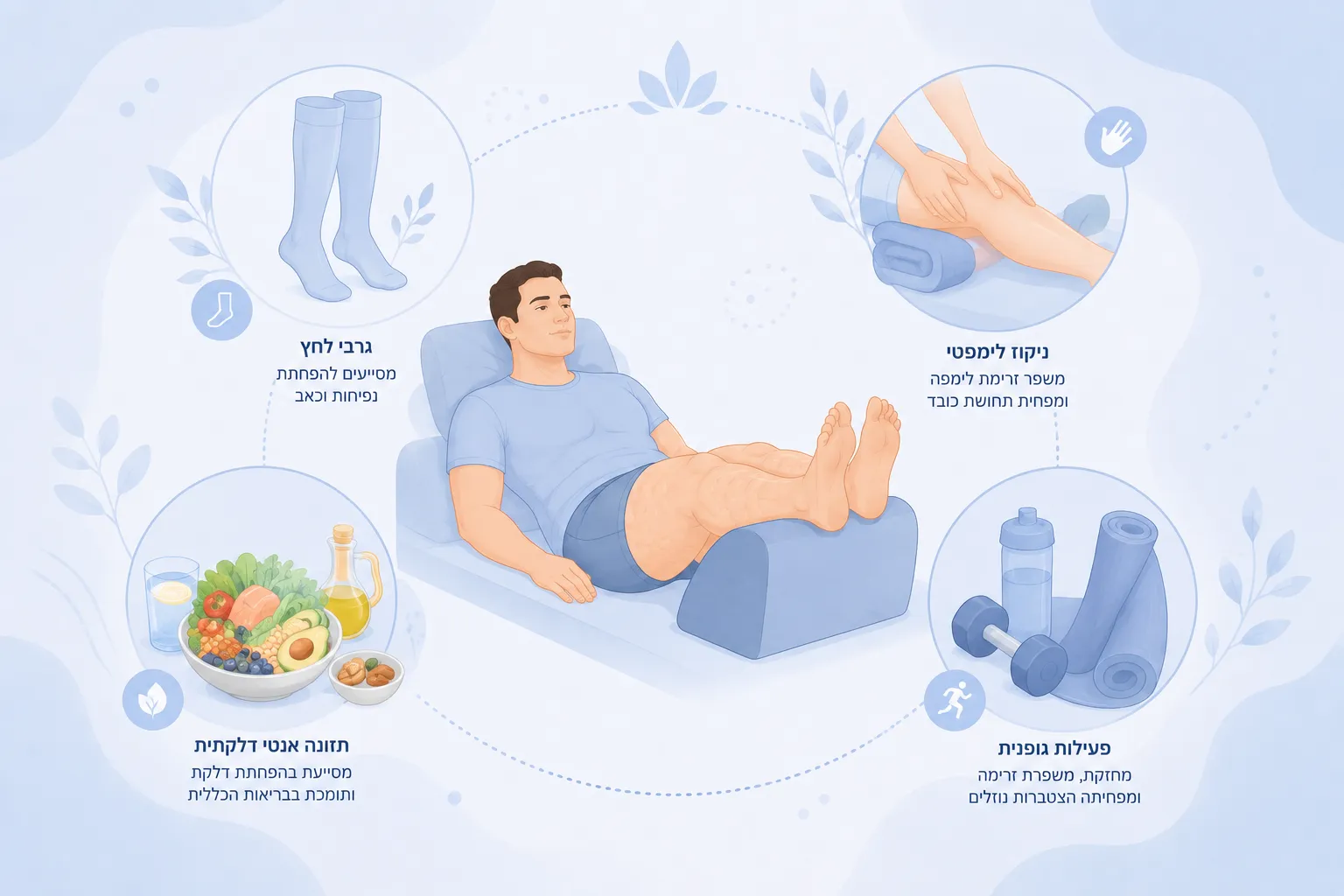
Conservative treatment may include:
- Exercise regular exercise adapted to individual ability.
- Anti-inflammatory diet as part of a healthy lifestyle.
- Use of compression stockings if necessary.
- Manual lymphatic drainage treatments to reduce the feeling of heaviness and swelling.
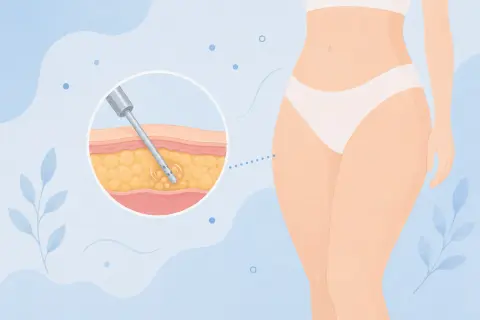
When symptoms are significant and impair quality of life, a specialist may also consider liposuction specifically for lipedema. Unlike conventional aesthetic liposuction, the goal of the surgery is to remove the pathological fat tissue while preserving the lymphatic vessels as much as possible, in order to reduce pain and improve function.
In cases where there is a significant hormonal disorder, treatment of the medical condition that caused it may be an integral part of the overall treatment plan, according to the recommendation of the attending physician.
What is still unknown?
Despite the progress in research on lipedema in recent years, knowledge about lipedema in men is still very limited. The number of documented cases is small, so it is difficult to draw unambiguous conclusions about the prevalence of the disease, the exact causes of its development and the course of its progression in men.
Most of the knowledge currently available is based on individual case reports and the understanding gained from studies conducted mainly in women. It may turn out in the future that lipedema in men is slightly more common than is currently thought, but is rarely diagnosed due to lack of awareness and its similarity to other medical conditions.
As more research is published and clinical experience is gained, we will better understand the risk factors, how to diagnose the disease earlier, and what the most effective treatment is for men.
Until then, it is important to remember that although lipedema in men is very rare, it does exist. Greater awareness among professionals and the public may help identify these rare cases earlier and allow for timely, appropriate treatment.
Sources
- Lipedema in men — retrospective case series of five patients (Cureus, 2025)the most recent case series of men with lipedema.
- Lipedema in a male patient — report of a rare case and review of the literature (2021)a detailed case report with a review of the existing literature.
- Impact of hormones on lipedema development — systematic literature reviewsystematic review of the hormonal role, including the rare male cases.
- Rare adipose disorders (RADs) masquerading as obesity (2014)differential diagnosis against other fat disorders that look similar.
- S2k guideline lipedema (JDDG, 2024)the clinical guideline for diagnosis and conservative treatment.
- Standard of care for lipedema in the United States (Phlebology, 2021)accepted principles of conservative care.
- Lipedema Foundationinformation and research resources for patients.
Reader feedback
Did you find this article interesting?
Share




Comments
0 comments |Read and add your own comment
No comments yet - be the first.