
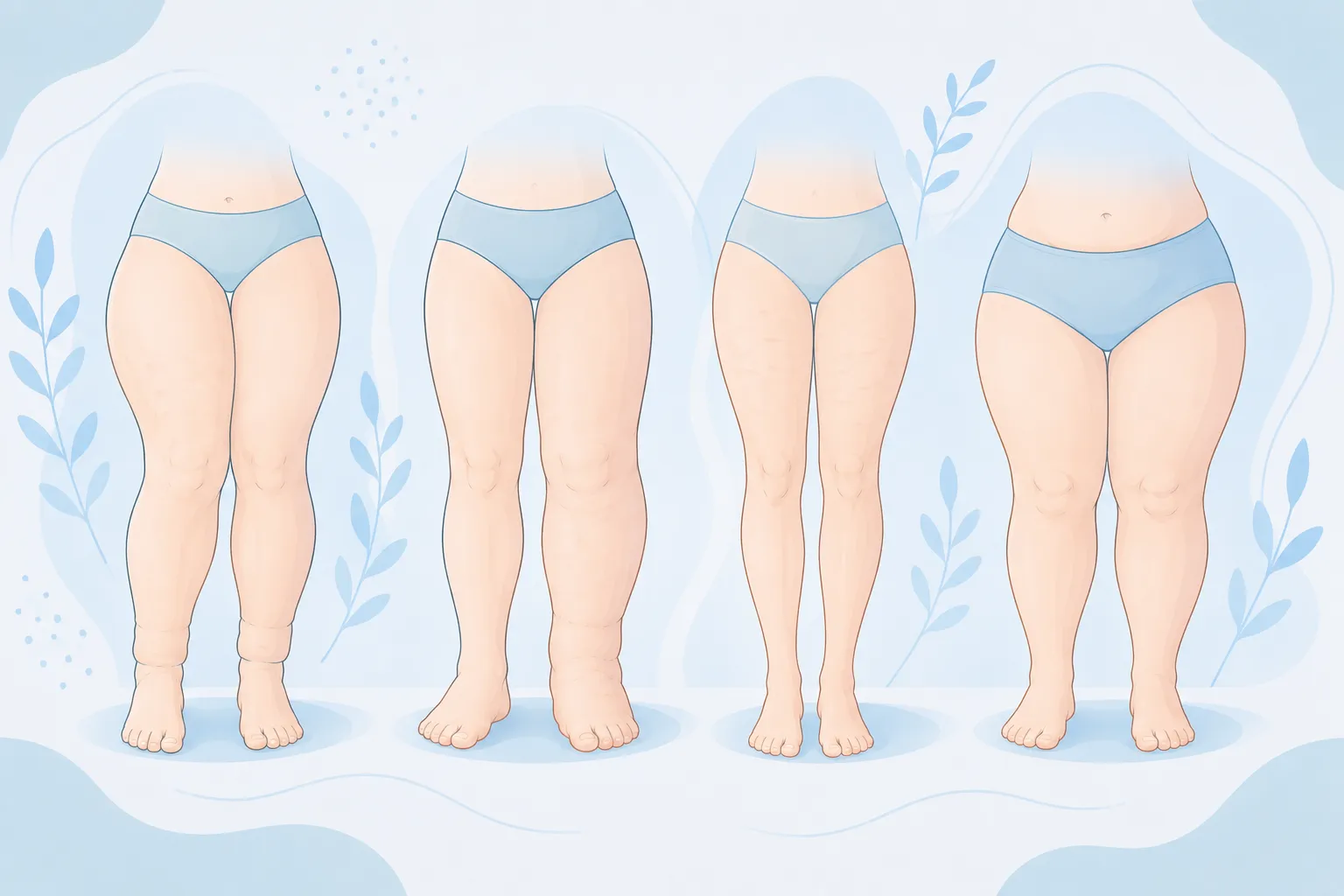
However, despite their superficial similarities, the biological cause behind each condition is very different. Lipedema is a disease of the fatty tissue that involves an abnormal accumulation of subcutaneous fat, and sometimes chronic inflammation and involvement of the lymphatic system. Lymphedema, on the other hand, is a disease of the lymphatic system itself. Cellulite is primarily related to the structure of the connective tissues beneath the skin, and obesity often involves an overall increase in body fat. Understanding the differences can help you better understand what may be relevant to what you or yours are experiencing—and what may not.
Why is lipedema so confusing?
One of the things that makes lipedema so easy to miss is that it shares characteristics with several different conditions at the same time. It can include swelling that resembles lymphedema, a skin texture that resembles cellulite, and an increase in circumference that can look like obesity. Therefore, it is important to look not only at how the body looks — but also at where the changes appear, how they feel, when they started, and how the body responds over time.
Lymphedema
Lipidema and lymphedema are often confused — and for good reason. Both can cause a feeling of heaviness in the limbs, swelling, and sometimes worsening over time. In addition, both have a certain connection to the lymphatic system, which is why many people assume that they are the same thing.
But in reality, these are two different conditions.
Lymphedema is a disease of the lymphatic system itself. The lymphatic system is responsible for draining fluids, waste, and proteins from tissues, and when it is not working properly — fluids can accumulate in the body and cause swelling. If you would like to understand more deeply how this system works, you can also read the article What is the lymphatic system and what is its function?
With lipedema, on the other hand, the source of the problem does not begin in the lymphatic system but in the adipose tissue. However, studies indicate that sometimes lipedema may also affect the lymphatic system over the years, and therefore in some cases secondary lymphatic damage can also develop.
One difference that can be particularly noticeable is the area where the swelling begins.
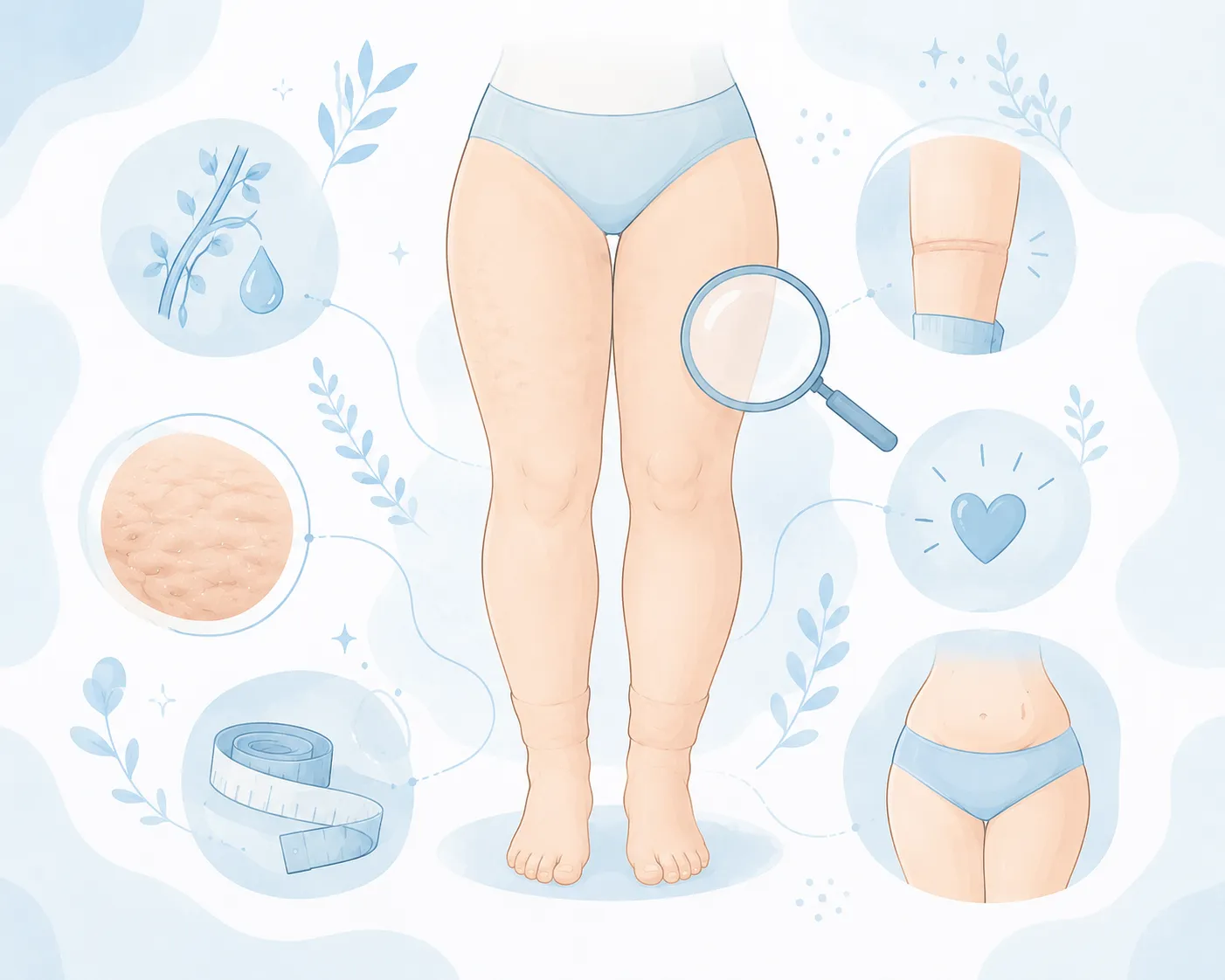
In lymphedema, the swelling often begins in the foot itself and on the dorsum of the foot, and sometimes the toes also become swollen. People with lymphedema sometimes have difficulty wearing regular shoes or feel that the shoe suddenly presses on the foot area as well.
In lipedema, on the other hand, the feet often remain relatively narrow — and the change begins above the ankle. This is why many people with lipedema describe the appearance of a “step” in the ankle area or a feeling that the calf is large but the foot itself remains relatively small.
Another characteristic that can help understand the difference is symmetry. Lipedema tends to be very symmetrical — meaning that both legs or both arms are affected in a relatively similar way. In lymphedema, on the other hand, one side is often more significantly affected than the other.
The sensation itself is also different. People with lipedema often describe pain, tenderness, or the feeling of small lumps under the skin, while with lymphedema the skin may feel tight, hard, or thickened.
Important to know: Sometimes the two conditions can occur together, a condition called Lipo-Lymphedema.
Cellulite
Many people live for years feeling that they “just have cellulite,” only to realize later that it may be something more.
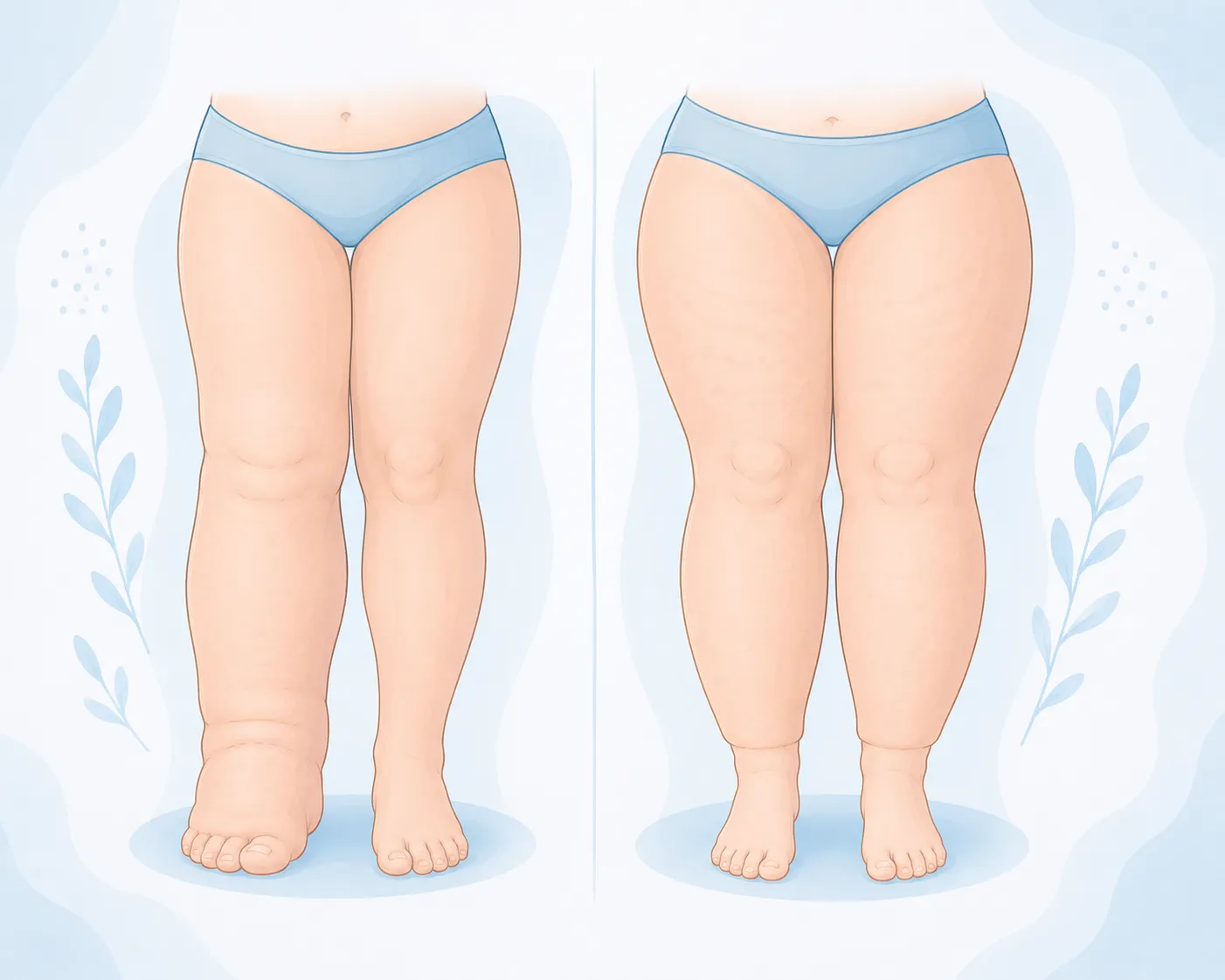
The confusion between cellulite and lipedema occurs mainly because of the texture of the skin. Both conditions may have a lumpy or what is sometimes called an “orange peel” appearance.
But that’s about where the similarities end.
Cellulite is a very common condition, caused mainly by the structure of the connective tissues under the skin, which creates a pull of the skin inward alongside normal fat distribution. Therefore, it is mainly perceived as an aesthetic phenomenon.
Lipedema, on the other hand, is not just about texture — but about deeper changes in the fat tissue itself. Many people describe a feeling of sensitive, heavy, sometimes painful or lumpy fat to the touch, and not just an external change in appearance.
If you only have cellulite, you will usually not also have:
- A significant feeling of heaviness in the legs
- Pain or tenderness when pressed
- A tendency to bruise easily
- A feeling that your legs get tired or swell throughout the day
Another important thing to understand is that it is absolutely possible to have both cellulite and lipedema at the same time, which is why sometimes people are sure for years that it is “just an aesthetic issue.”
Obesity
This is perhaps one of the most common confusions — and sometimes the most emotionally painful.
Many people with lipedema have heard for years phrases like: “Just lose weight,” “It’s just full legs,” or “It’s just your body type.” Sometimes, even when a person loses weight, there is still a feeling that something is “not right.”
Although obesity also increases the amount of fat in the body, the distribution pattern is usually different.
In obesity, fat is usually distributed more generally throughout the body — including the abdomen, back, face, and upper body, depending on genetics and hormones.
Lipedema, on the other hand, often shows a noticeable disproportion: a relatively small upper body compared to larger legs or arms.
One of the things people with lipedema describe over and over again is:
“I’m losing weight — but my legs barely change.”
Normal fat tends to respond better to diet and weight loss, while lipedema fat may be more resistant to change, which is why many people feel that their body is reacting in an “illogical” way.
There are also some everyday characteristics that people with lipedema tend to recognize in themselves:
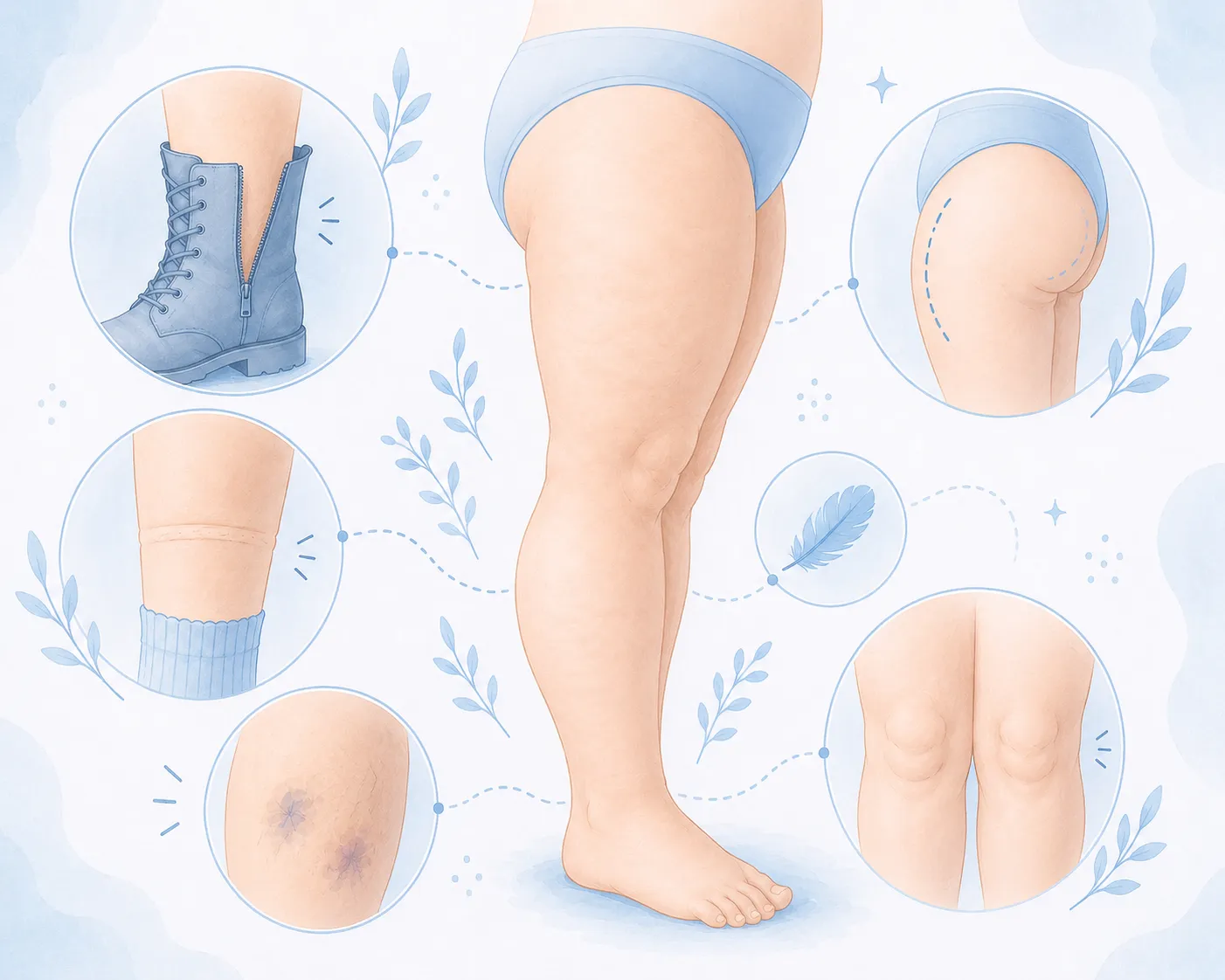
- Deep marks from tight socks, tights, or clothing
- Difficulty finding boots that go over the calf or ankle area
- A feeling of heaviness in the legs, especially at the end of the day
- Relatively mild appearance of blue marks
- Tenderness or pain to the touch
Some people with lipedema also have characteristic patterns of fat accumulation, such as a rounded or more prominent appearance in the anterolateral area of the thighs, which sometimes creates a kind of curve resembling a C-shape. In addition, some people recognize a characteristic fat accumulation around the knee area, where the knee appears less defined and is sometimes hidden by the layer of fat around it.
It is important to know: Lipedema and obesity are not mutually exclusive. It is possible to have lipedema at a normal weight, and it is also possible to live with lipedema alongside obesity. You can also read more about the subject in the articles Why do some thin women have lipedema? and Why do regular diets not affect lipedema?
If while reading you felt that "this sounds exactly like me"
Getting to know the characteristics of lipedema can be a significant first step on the way to understanding the body — especially if for years you have felt that something simply does not fit with the explanation of "overweight", "just cellulite" or normal swelling.
This article does not replace a medical diagnosis, but if you have identified quite a few of the characteristics described here yourself, it may be worth delving further into What is Lipedema, Characteristics of Lipedema or How to Identify Lipedema Early? to better understand whether this may match what you or you are experiencing.
Sources
- Differential diagnostics of lipedema and lymphedema: a practical guideline (Der Hautarzt, 2018)practical guide to telling the conditions apart.
- Lipedema: Clinical Features, Diagnosis, and Management (Archives of Plastic Surgery, 2025)distinguishing clinical signs and the diagnostic process.
- Lipedema and obesity: a narrative review and treatment protocol (JPRAS Open)separating lipedema from obesity, including where they overlap.
- Lipedema and the evolution to lymphedema with the progression of obesity (2020)the relationship between lipedema and lymphedema.
- Lymphatic Education & Research Network (LE&RN)international organization for lymphatic diseases.
- NHS – Lipoedemadistinguishing features and when to seek assessment.
Reader feedback
Did you find this article interesting?
Share




Comments
0 comments |Read and add your own comment
No comments yet - be the first.