
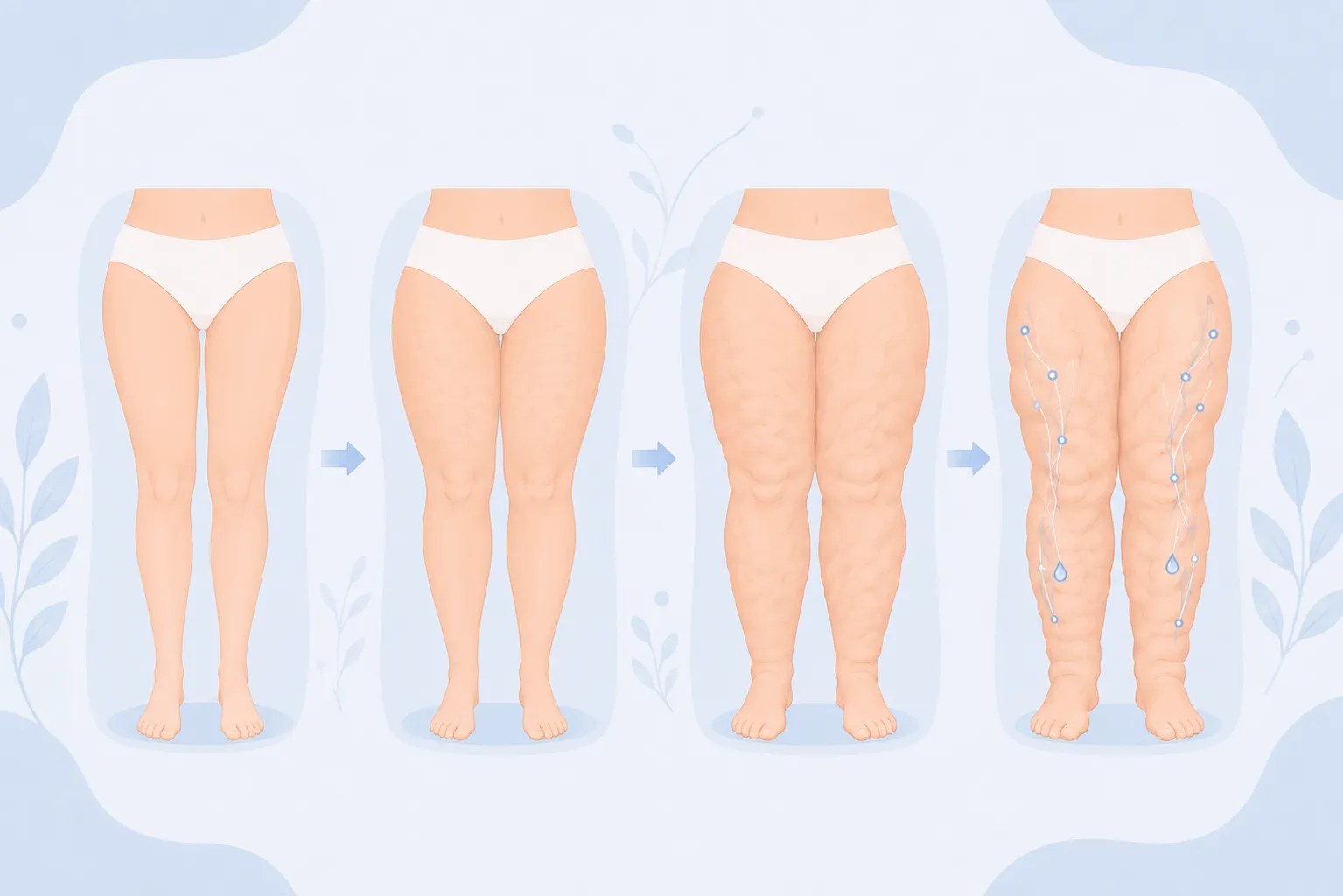
If you’ve recently heard of lipedema stages 1, 2, 3, or 4 and wondered what the difference is, it’s important to know that these are mainly descriptions of changes in the fatty tissue and skin. The stages don’t tell the whole story, and they don’t necessarily reflect the level of pain, discomfort, or impact of lipedema on daily life.
Why is lipedema divided into stages?
The stages are designed to describe how fatty tissue may change over time.
The stages are based primarily on the appearance of the skin and underlying tissue, and on changes that can be seen or felt. They don’t measure pain, tenderness, movement limitations, or emotional impact, so they only represent part of the overall picture.
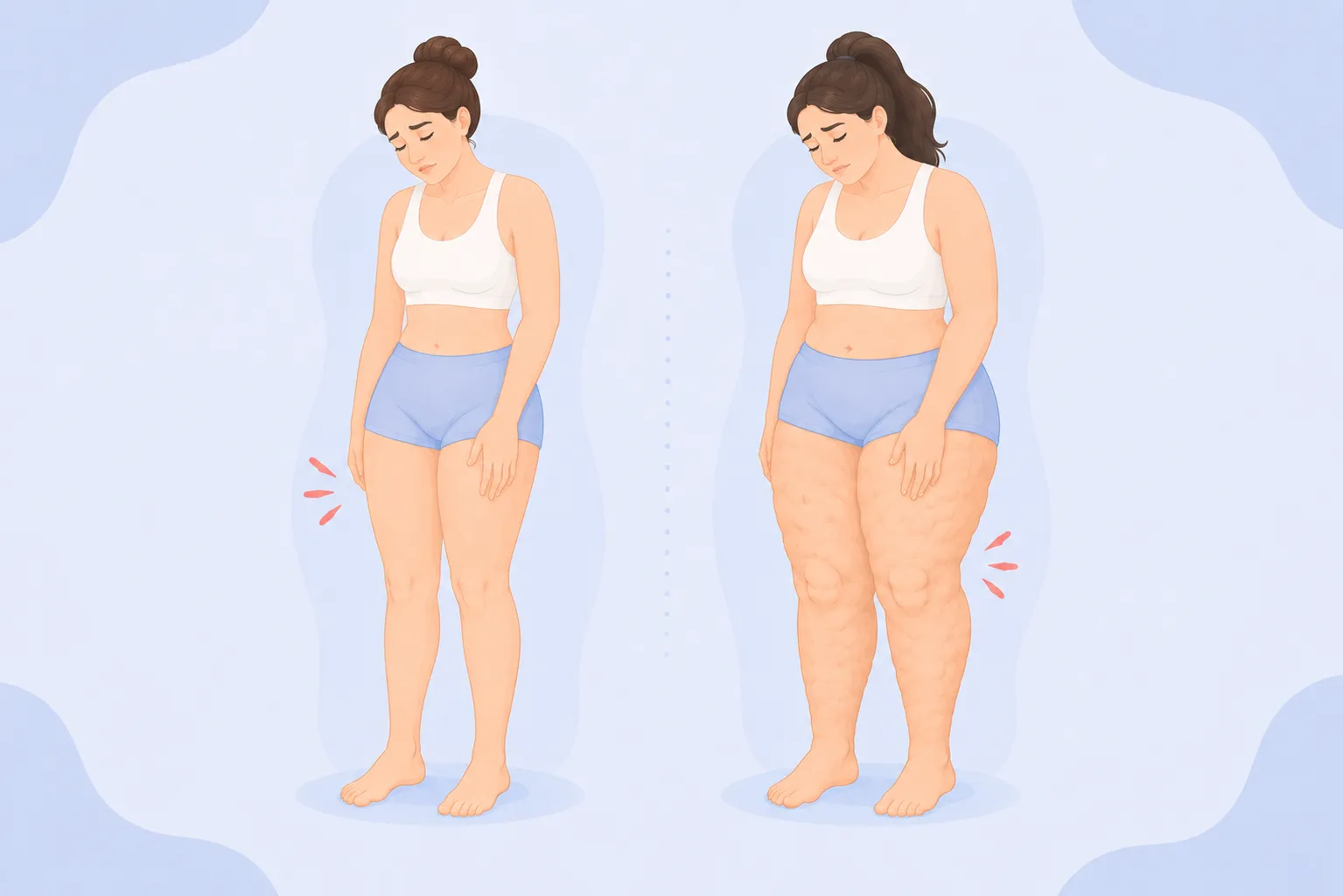
This is also why two people with lipedema at the same stage may experience the disease completely differently.
Important to know: Stages don’t always reflect the severity of symptoms
A common mistake is to think that a higher stage always means a more severe condition.
In practice, some people report pain, tenderness, and bruising at very early stages, while others only discover lipedema when more noticeable changes in the appearance of their legs or arms begin to appear.
Therefore, it is important to see the stages as a descriptive tool that helps to understand the condition of the tissue, and not a single measure of the severity of lipedema or its impact on quality of life.
Stage 1 – When the skin still looks relatively smooth
This is the earliest stage of lipedema.
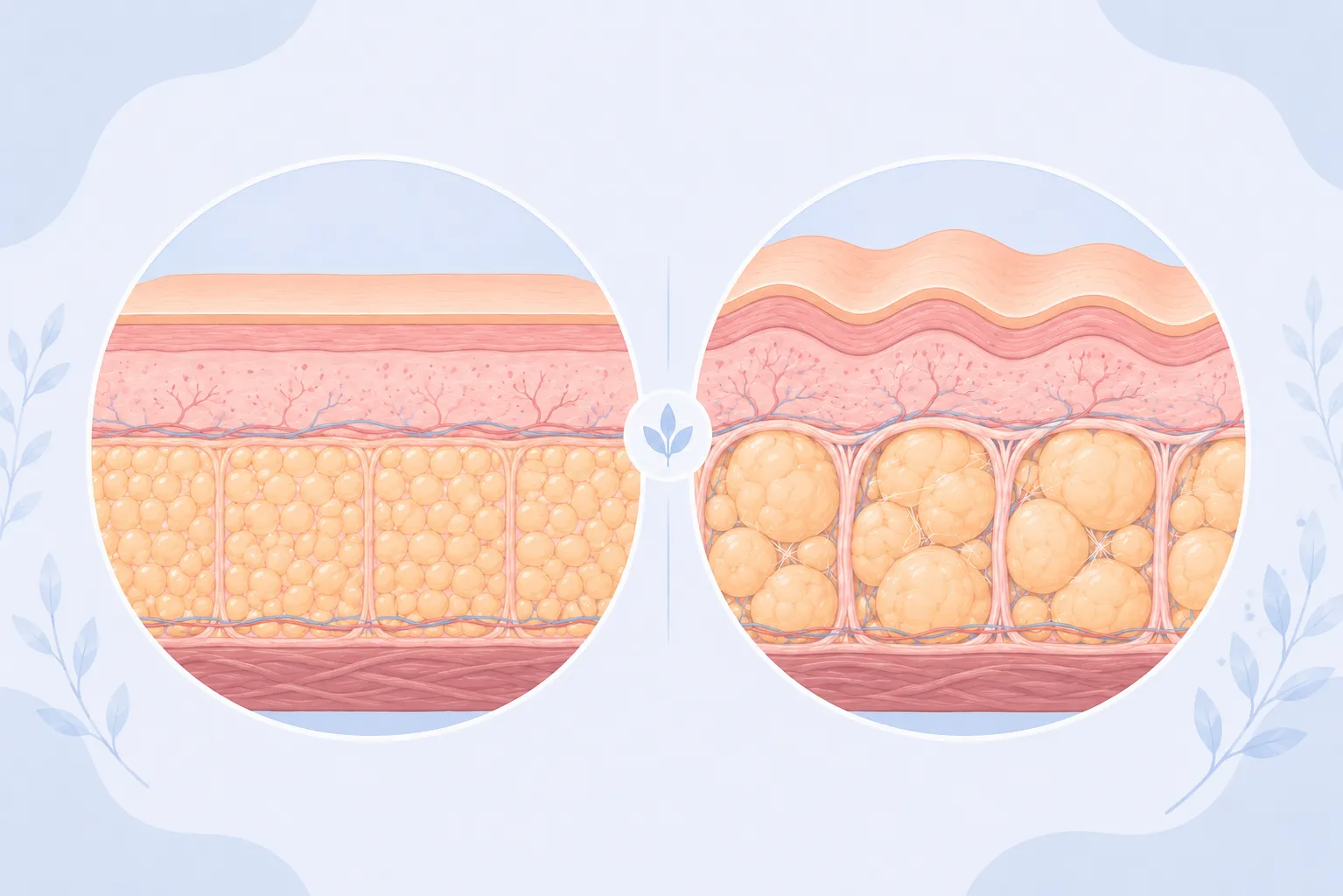
At this stage, the surface of the skin usually still looks relatively smooth, so it is not always easy to recognize that it is lipedema. However, changes in the fatty tissue may already be occurring beneath the surface.
Some people report a feeling of small grains under the skin, sometimes the size of a grain of rice or a pea. In addition, sensitivity to touch, a tendency to bruise, and a feeling of heaviness in the legs may appear.
Common characteristics:
- Relatively smooth skin
- Soft adipose tissue
- Small granules that can sometimes be felt by palpation
- Bruises that appear easily
- Tenderness or pain when pressed
At this stage, it is relatively easy to confuse lipedema with a natural body structure or normal weight gain. If the subject is new to you, you may also be interested in reading How to recognize lipedema early?.
Stage 2 – Appearance of lumps and changes in skin texture
In the second stage, changes in adipose tissue become more pronounced.
The skin surface may appear less smooth and in some cases resemble the texture of an orange peel. When palpated, larger lumps can sometimes be felt, and the tissue may begin to become stiffer.
This is a stage where many people begin to realize that the gap between the upper and lower body is increasing, and that there is a phenomenon that is not explained solely by body weight.
Common features:
- Less uniform and smooth skin
- Wavy or bumpy appearance
- Larger lumps in the tissue
- More pronounced feeling of heaviness
- Worsening pain or tenderness in some people
Stage 3 – Larger fat deposits and change in body shape
In the third stage, the fat tissue may form larger bulges and folds.
The shape of the legs or arms may change significantly, and sometimes areas are formed where the fat tissue protrudes beyond the normal contours of the body.
It is important to remember that even at this stage, there are large differences between different people. Not everyone in stage 3 will experience the same symptoms or the same impact on daily functioning.
Common Features:
- Larger fat deposits
- Folds and bulges of tissue
- More pronounced change in limb structure
- Stiffer tissue to the touch
- Difficulty moving in some people
Many people at this stage combine various tools that may help manage symptoms, such as compression stockings, Lymphatic drainage, walking or strength training, depending on individual needs and recommendations received.
Stage 4 – Lipolymphedema
The fourth stage of lipedema is known as lipolymphedema.
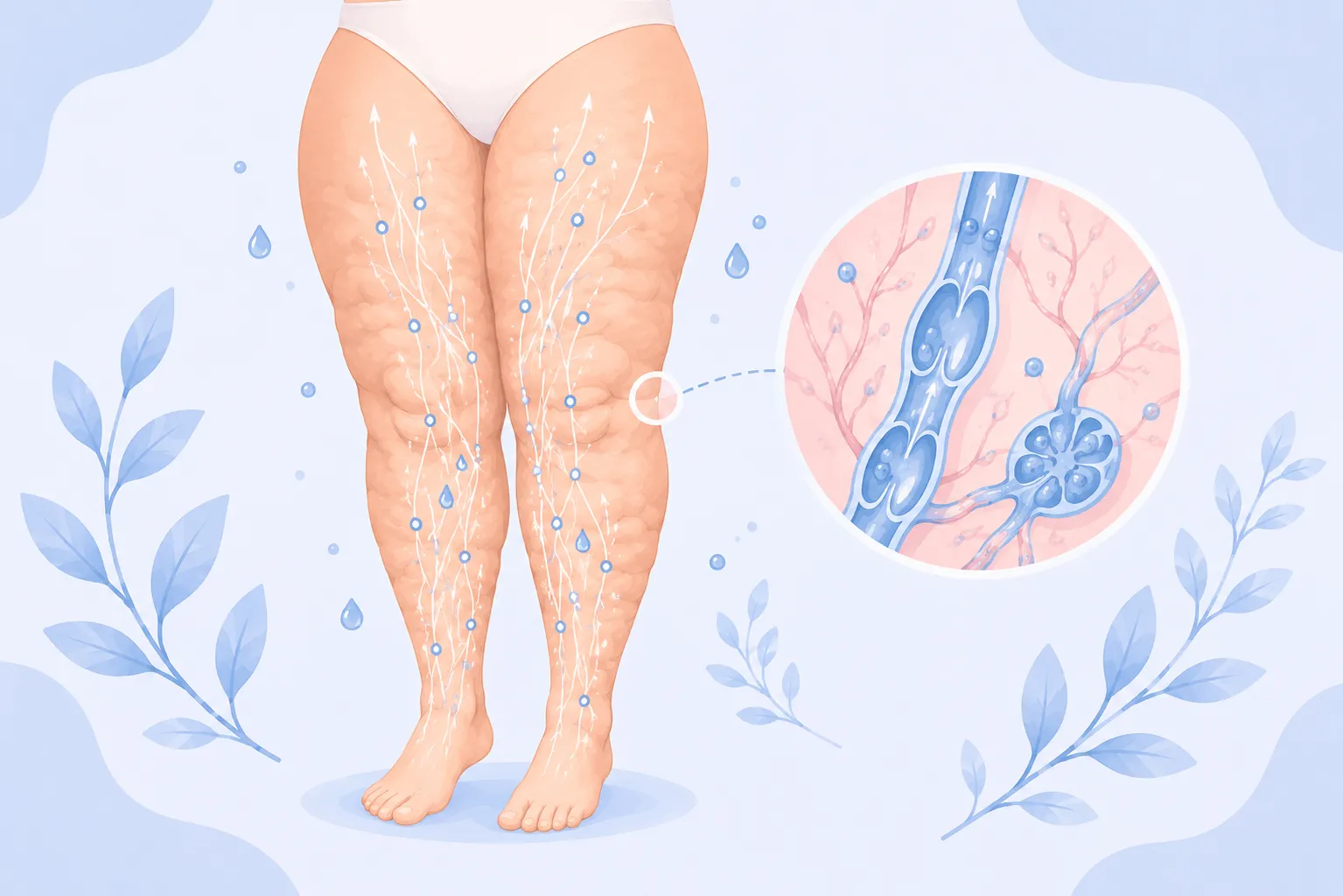
At this stage, in addition to the accumulation of fat typical of lipedema, there is also a more significant involvement of the lymphatic system. As a result, additional swelling may occur caused by the accumulation of fluid in the tissues.
While the previous stages mainly describe changes in adipose tissue and skin texture, stage 4 also adds greater difficulty in removing fluid through the lymphatic system. This can lead to a feeling of increased heaviness, more pronounced swelling, and sometimes a more significant impact on mobility and daily activities.
Common features:
- More significant swelling in the extremities
- Fluid accumulation in addition to fat tissue
- Increased feeling of heaviness
- Greater difficulty moving in some people
- Lymphatic system involvement
It is important to know that there is currently some disagreement among some experts about the definition of lipolymphedema as a separate stage. The reason for this is that lymphatic system involvement may also occur in earlier stages of lipedema. Despite this, lipolymphedema is still commonly referred to as the fourth stage of the disease in many places.
If you are not familiar with the lymphatic system, it is recommended to also read What is the lymphatic system and what is its function?.
Is all lipedema necessarily progressive?
Not necessarily.
Lipedema is considered a disease that may progress over the years, but the rate of progression varies greatly from person to person.
Some people report significant changes throughout their lives, while others remain at the same stage for many years. Factors such as genetics, hormones, and lifestyle may influence the rate of change, but it is currently impossible to predict with certainty how lipedema will develop in each person.
Therefore, it is important to focus less on the stage number and more on listening to your body and managing your symptoms. Many people choose to combine tools such as anti-inflammatory diet, Drinking water, Pilates and Lipedema and Stress as part of their daily routine.
What is really important to remember?
The stages of lipedema are intended to help describe the changes that may occur in fatty tissue over time, but they do not define you and do not necessarily predict how you will feel in the future.
You can be in the early stages and experience significant symptoms, or you can be in the more advanced stages and still lead an active and full life. Everyone has a slightly different experience with lipedema, so it’s important to look at your body and not just the number attached to the stage.
The better you understand the disease and its characteristics, the easier it is to make informed decisions, identify changes over time, and feel less alone in the process.
Sources
- Lipedema: Clinical Features, Diagnosis, and Management (Archives of Plastic Surgery, 2025)detailed description of the stages and types.
- Standard of care for lipedema in the United States (Phlebology, 2021)how stages and types are defined in clinical guidance.
- S2k guideline lipedema (JDDG, 2024)current classification and stage-based treatment recommendations.
- Lipedema and the evolution to lymphedema with the progression of obesity (2020)the transition to lipo-lymphedema in advanced stages.
- Lipedema: A Review of the Literature (2014)classic review of clinical features across stages.
- Cleveland Clinic – Lipedemaaccessible description of how the condition progresses.
Reader feedback
Did you find this article interesting?
Share





Comments
0 comments |Read and add your own comment
No comments yet - be the first.