
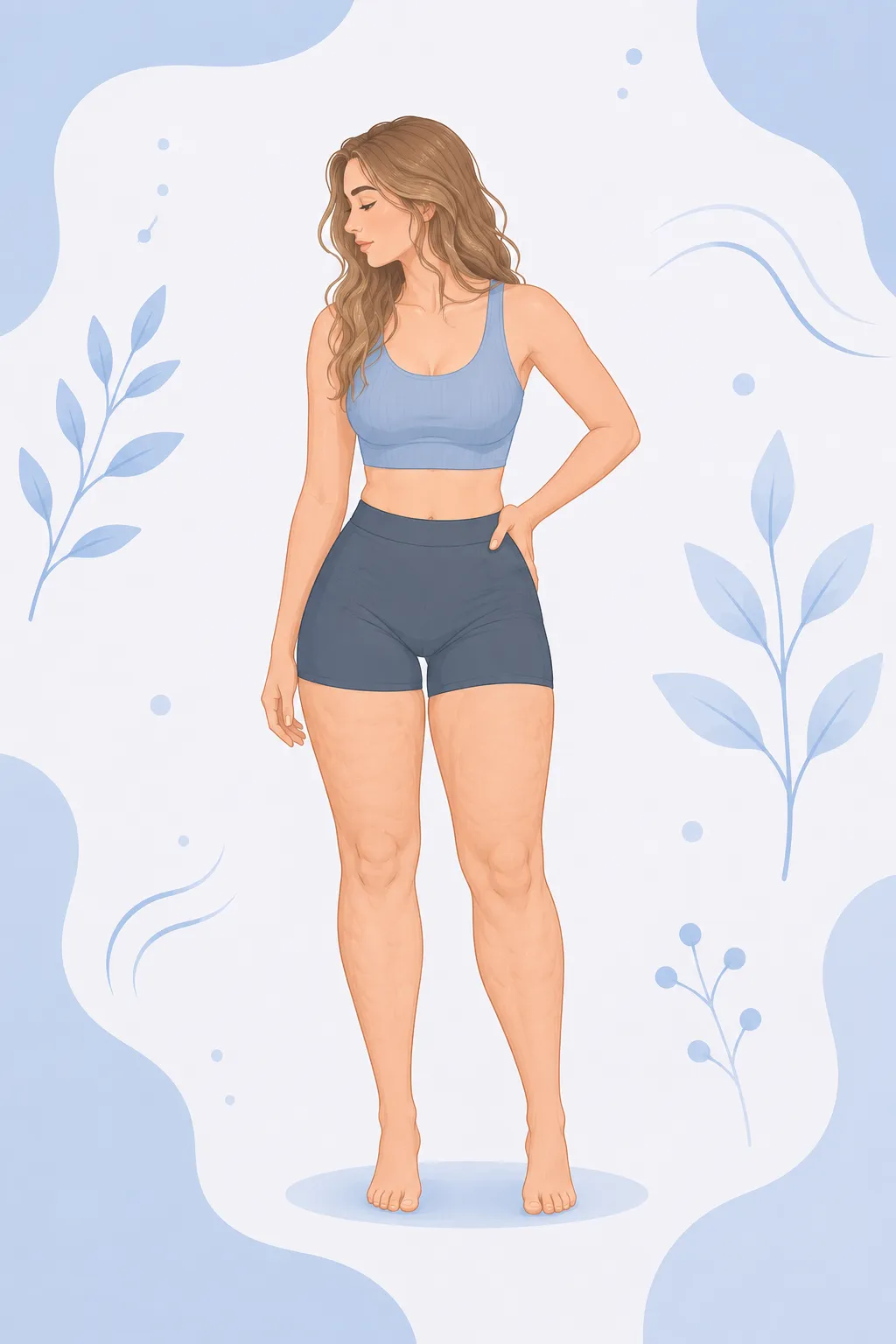
In fact, lipedema can also occur in very thin women. In fact, some women discover the disease precisely because the rest of their body is thin, while their legs or arms are disproportionate. In this article, we will explain how this is possible, why weight does not determine whether they have lipedema, and which signs can help identify the disease even in women who are not overweight.
Lipedema is not a disease of excess weight
One of the most common misconceptions is that lipedema is caused by obesity.
In fact, lipedema is a chronic disease of adipose tissue, and not the result of overeating or lack of exercise. In women with lipedema, fat cells in certain areas of the body behave differently from normal fat cells. In addition to the accumulation of fat, there are also changes in the connective tissue, small blood vessels and the functioning of the lymphatic system.
Therefore, a woman can be completely thin and still develop lipedema in the thighs, calves or arms. In other words, lipedema is not determined by the number on the scale, but by the changes that occur in the adipose tissue.
If you haven't read it yet, we recommend starting with the article What is Lipedema, which explains in depth how the disease develops.

So why can you be thin and still suffer from lipedema?
The answer is that the total weight of the body does not reflect the way fat is distributed.
Lipedema is not related to the amount of fat in the entire body, but to the abnormal accumulation of adipose tissue in certain areas. Therefore, a woman can have a narrow waist, a flat stomach and a thin upper body, but at the same time suffer from lipedematous fat accumulation in the legs or arms.
In some women, the fact that the rest of the body is thin makes the disproportion more noticeable. In others, the changes are more subtle and therefore difficult to detect at an early stage.
This is also why it is possible to find women with a completely normal BMI, and even very thin women, who are diagnosed with lipedema.
What does lipedema look like in thin women?
In thin women, lipedema may look slightly different than in overweight women.
In the early stages of the disease, the disproportion may be relatively subtle, but it is still noticeable that the lower body or arms do not match the rest of the body. Many women say that they have difficulty finding pants that fit both the waist and hips, or that they have to choose a larger size just because of their legs.
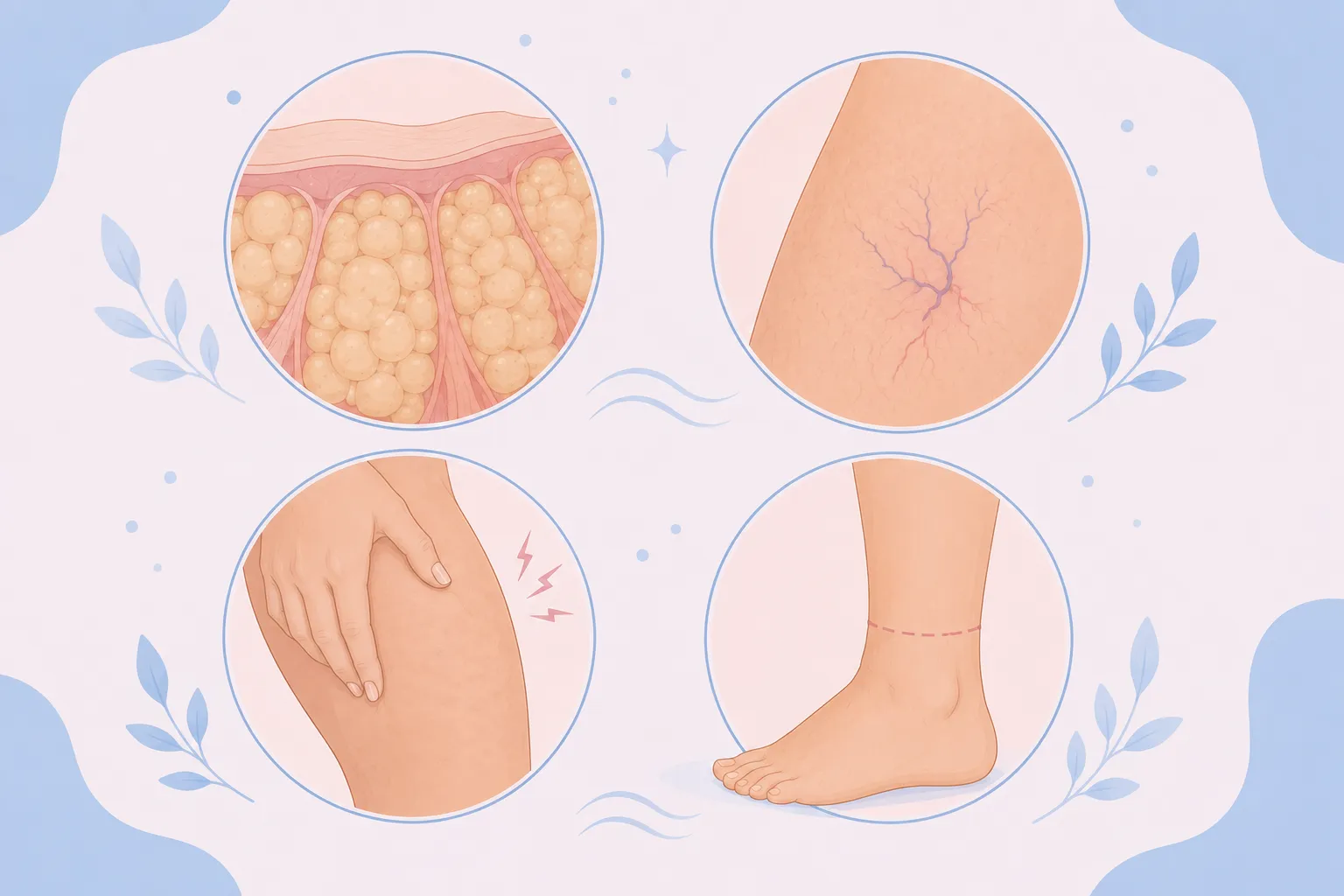
Beyond the appearance, other symptoms may also appear:
- Pain or sensitivity to touch.
- A feeling of heaviness in the legs, especially at the end of the day.
- A tendency to bruise.
- Symmetrical fat accumulation in both legs or both arms.
- A lumpy fat texture or the feeling of small "lumps" under the skin.
- Feet that remain relatively thin, while the calves thicken above the ankle.
It is important to remember that these symptoms do not diagnose lipedema on their own, but a combination of several of them certainly warrants contacting a professional who is familiar with the disease.
Why might thin women not believe they have lipedema?
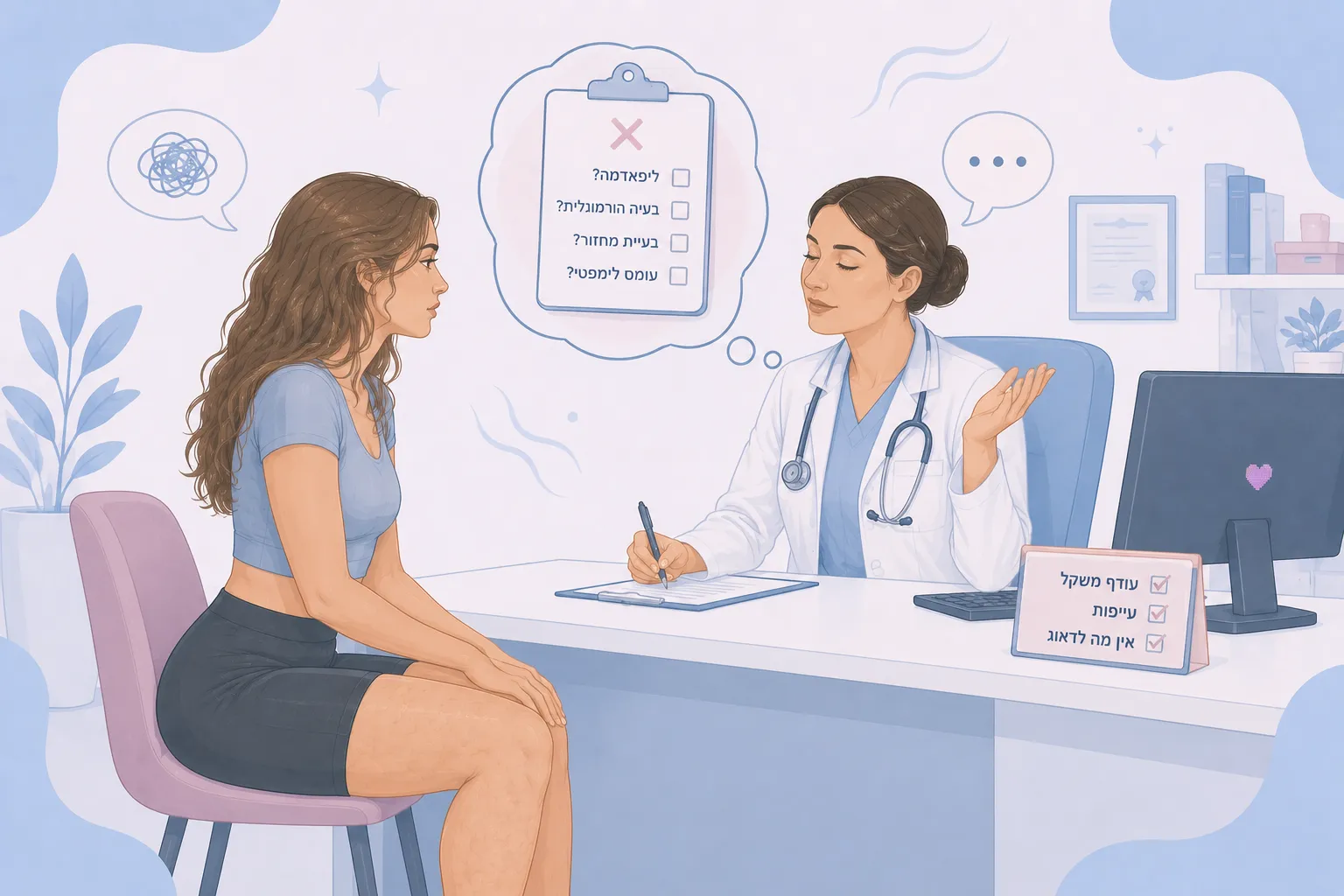
Many women only know lipedema in the context of being overweight. Therefore, when they are thin, they tend to dismiss this possibility from the start.
The environment may also reinforce this feeling. Women often hear statements like "it's just your body shape," "you have feminine hips," or "you're skinny, you have nothing to worry about." When the pain and heaviness are not visible, it's easy for others to think that it's just an aesthetic issue.
The result is that many women continue to feel for years that something is wrong with their body, but do not seek a diagnosis because they are convinced that lipedema cannot occur in them.
Why are thin women sometimes diagnosed late?
Unfortunately, lipedema is still not well-known, even among professionals.
When a thin woman complains of pain, a feeling of heaviness, or disproportion, it is sometimes attributed to genetic body shape, hormonal changes, or simply natural variation between people.
In addition, in the early stages of lipedema, the changes may be relatively subtle, and therefore even professionals who are familiar with the disease may not recognize it immediately.
Early diagnosis can shorten years of confusion, and allow for a better understanding of the source of symptoms and ways to deal with the disease.
Is lipedema easier in thin women?
Not necessarily.
There is a myth that the thinner the woman is, the "easier" the lipedema is. In reality, the severity of the disease is not determined solely by the amount of fat that can be seen.
Some thin women suffer from significant pain, high sensitivity to touch, and a feeling of heaviness on a daily basis, even though their disproportion seems relatively small. On the other hand, some women with more pronounced lipedema experience less pain.
In other words, the external appearance does not always reflect the severity of the disease or the extent of its impact on quality of life.
Does weight loss eliminate lipedema?
One of the experiences repeatedly described by women with lipedema is that they manage to lose weight, but the disproportion remains.
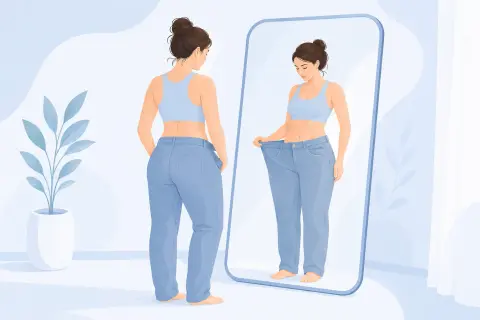
The face, waist, and abdomen become narrower, while the legs or arms change much less. For some women, it is only after losing weight that you can first notice how pronounced the difference between body parts is.
Weight loss is still important for overall health and may reduce the burden on the body, but it does not cure lipedema or eliminate the fatty tissue characteristic of the disease.
You can read more about this in the article Why Regular Diets Don't Affect Lipedema.
Does obesity cause lipedema?
According to current scientific knowledge, there is no proof that obesity itself causes lipedema.
However, being overweight may worsen symptoms and add burden to the lymphatic system and joints. Therefore, maintaining a healthy body weight may help manage the disease, but it is important to remember that even completely thin women can develop lipedema.
When should you seek diagnosis?
If you are thin or of normal weight, but you detect a clear disproportion between body parts, pain, sensitivity to touch, a tendency to hemorrhages or an unexplained feeling of heaviness, you should consider contacting a professional who is familiar with lipedema.
Even if you are not sure that it is lipedema, a professional diagnosis can provide answers, rule out other conditions and give you a better understanding of your body.
Sources
- Standard of care for lipedema in the United States (Phlebology, 2021)diagnostic criteria that are not based on BMI or body weight.
- Metabolic alterations in women with lipedema compared with lifestyle-induced overweight (Biomedicines, 2025)a metabolic profile that differs from ordinary excess weight.
- Lipedema: Progress, Challenges, and the Road Ahead (Obesity Reviews, 2025)prevalence estimates and rates of misdiagnosis worldwide.
- NHS – Lipoedemathe condition is not caused by excess weight and occurs at normal weight too.
- Cleveland Clinic – Lipedemagenetic background and family inheritance patterns.
- Unraveling lipedema (npj Metabolic Health and Disease, 2026)current review of disease mechanisms and research gaps.
Reader feedback
Did you find this article interesting?
Share




Comments
0 comments |Read and add your own comment
No comments yet - be the first.