
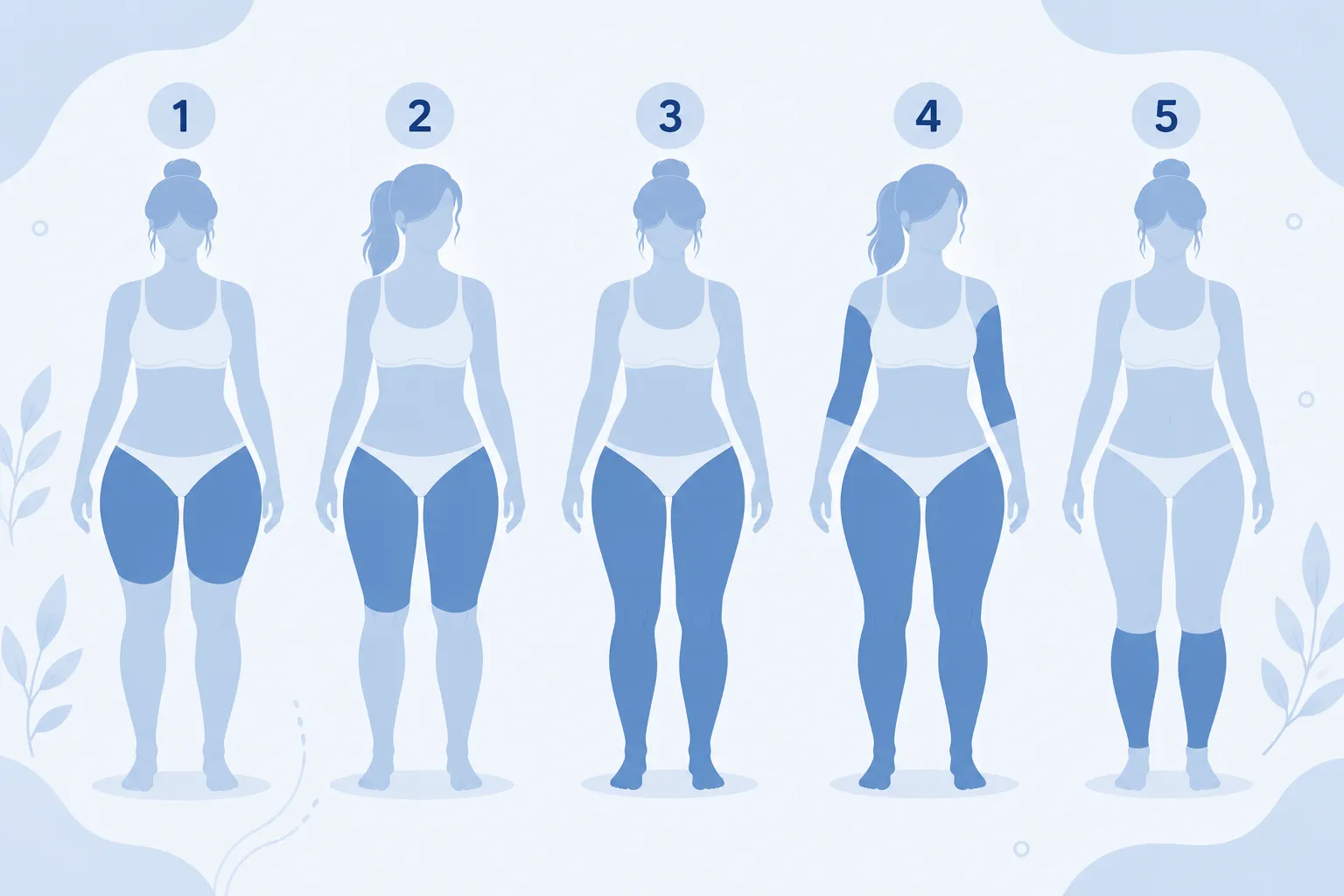
Knowing the types of lipedema can help you better understand how the disease manifests itself in the body, identify the pattern of fat distribution, and better understand information found in studies, diagnoses, and support communities.
What is the difference between types of lipedema and stages of lipedema?
If you have heard the terms "type 1," "type 2," or "type 5" of lipedema, it is important to know that they do not describe the severity of the disease, but rather the areas of the body where the fatty tissue characteristic of lipedema appears.
Unlike Differences Between Lipedema Stages, which describe how adipose tissue changes over time, types of lipedema Describe the location of the fat accumulation in the body.
Therefore, two people can have the same type of lipedema but at a completely different stage of the disease, or be at the same stage but with different types of lipedema.
Why is lipedema divided into types?
The division into types is intended to create a uniform language that describes in which areas of the body lipedema appears.
It helps doctors, therapists and researchers describe the pattern of distribution of fat tissue clearly, and also allows people with lipedema to better understand how the disease manifests itself in them.
It is important to remember that the types do not grade the disease from mild to severe, but only describe the location of the accumulation of fat tissue.
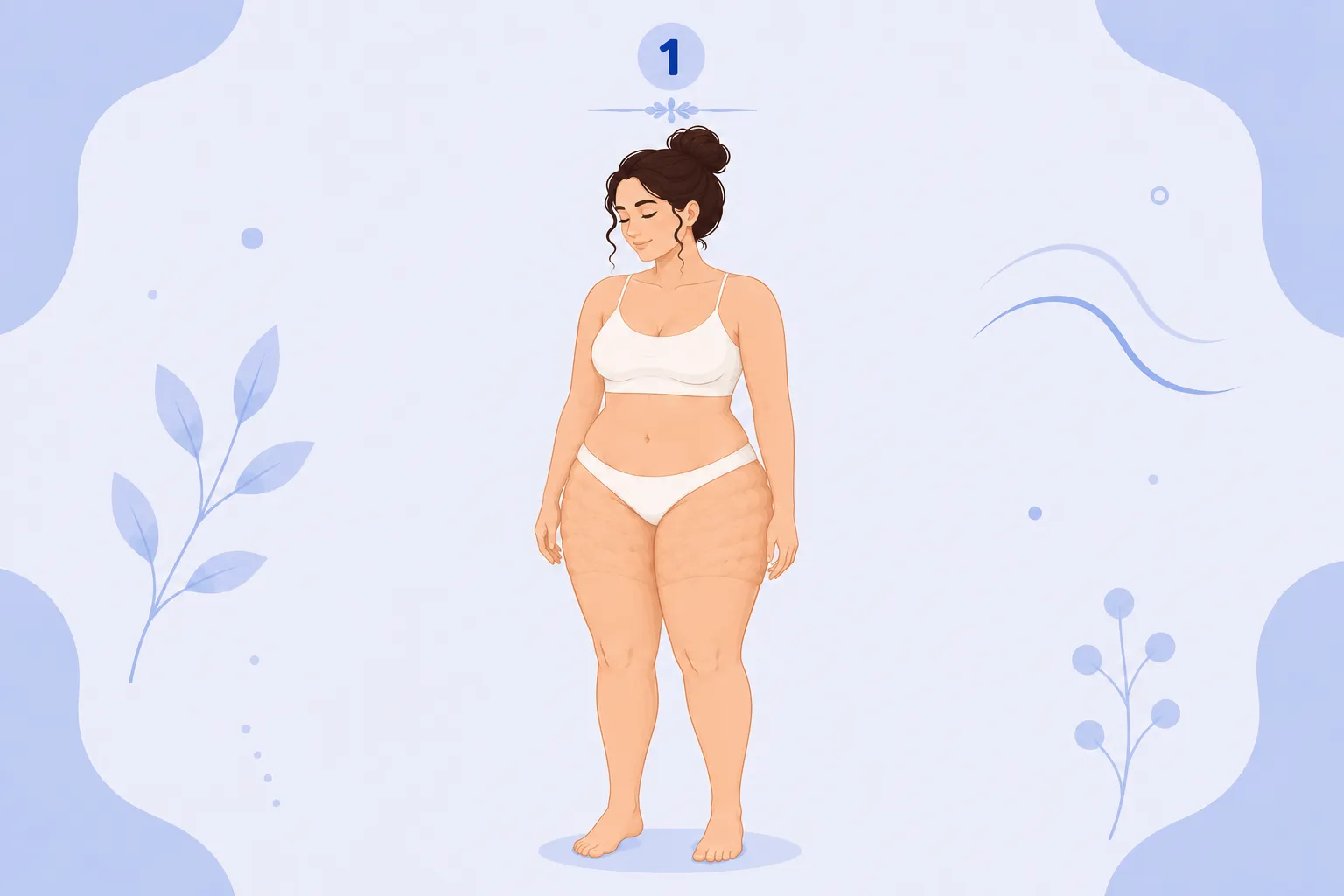
Type 1 – Fat accumulation in the pelvic, buttocks and thigh area
In this type, the fat tissue is concentrated mainly in the pelvic, buttocks and upper thigh area. The calves are usually not affected, so sometimes the difference between the upper and lower body seems relatively subtle.
In some cases, it is easy to confuse this type with a natural body shape or weight gain, especially when lipedema is in its early stages.
Common features:
- Fat accumulation in the pelvis, buttocks, and thighs
- Calves without significant involvement
- Sensitivity to touch in some people
- Bruises easily
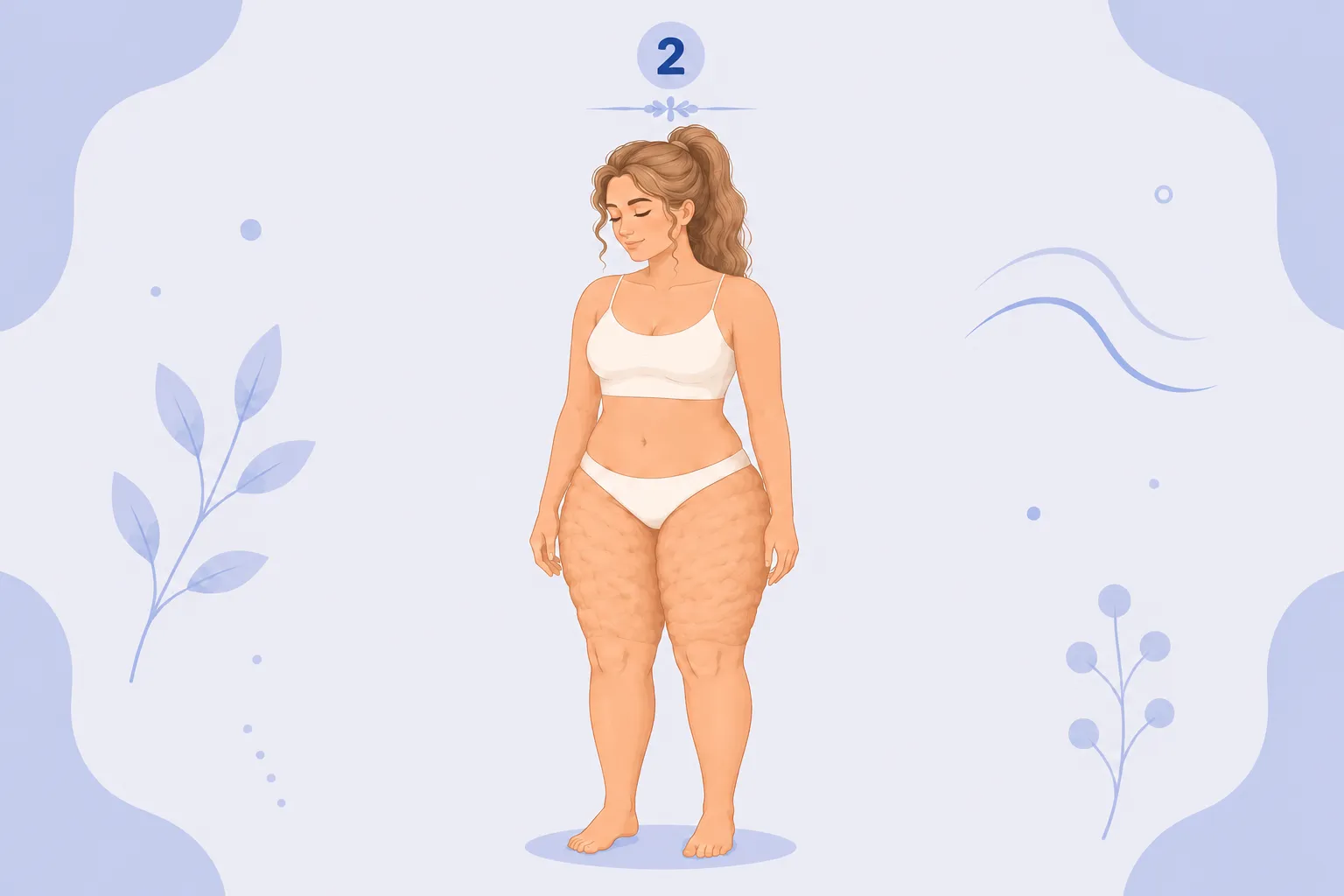
Type 2 – Fat accumulation from the pelvis to the knees
In this type, the fatty tissue extends slightly further down and reaches the knees.
The affected area includes the pelvis, buttocks, thighs and knees, but the calves are usually not yet involved.
This is a type in which the disproportion between the upper and lower body may be more pronounced.
Common features:
- Fat accumulation up to the knees
- Fuller knees
- A feeling of heaviness in the legs
- Tenderness or pain in the fatty areas
Type 3 – Fat accumulation from the pelvis to the ankles
In this type, the fatty tissue extends along the entire length of the leg – from the pelvis to the ankles. The calves are also affected, and sometimes the entire leg appears to have a more uniform volume.
Some people have difficulty finding boots or pants that fit the shape of their legs.
This is one of the most common types of lipedema.
Common features:
- Fat accumulation along the entire leg
- Involvement of the calves
- Feeling of heaviness in the legs
- Sensitivity to touch in some people

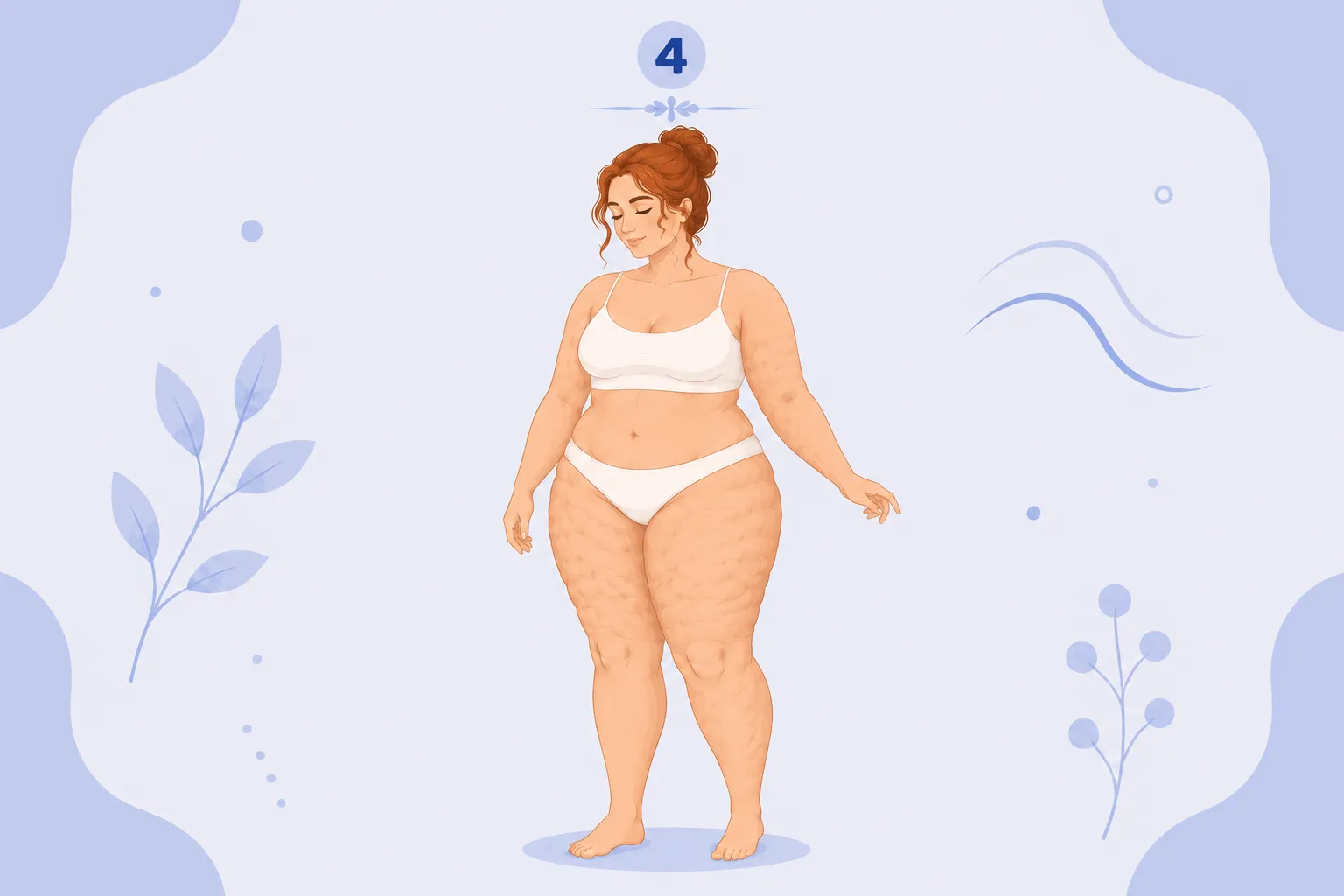
Type 4 – Involvement of the arms in addition to the legs
In this type, in addition to lipedema in the legs, there is also involvement of the arms.
The fatty tissue in the arms can be sensitive to touch, appear symmetrically and create a feeling of heaviness in the upper body as well.
It is important to know that not everyone who suffers from lipedema in the legs will also develop lipedema in the arms.
Common features:
- Fat accumulation in the arms
- Sensitivity in the arms to touch
- Feeling of heaviness in the upper body as well
- Appears in addition to one of the types of lipedema in the legs
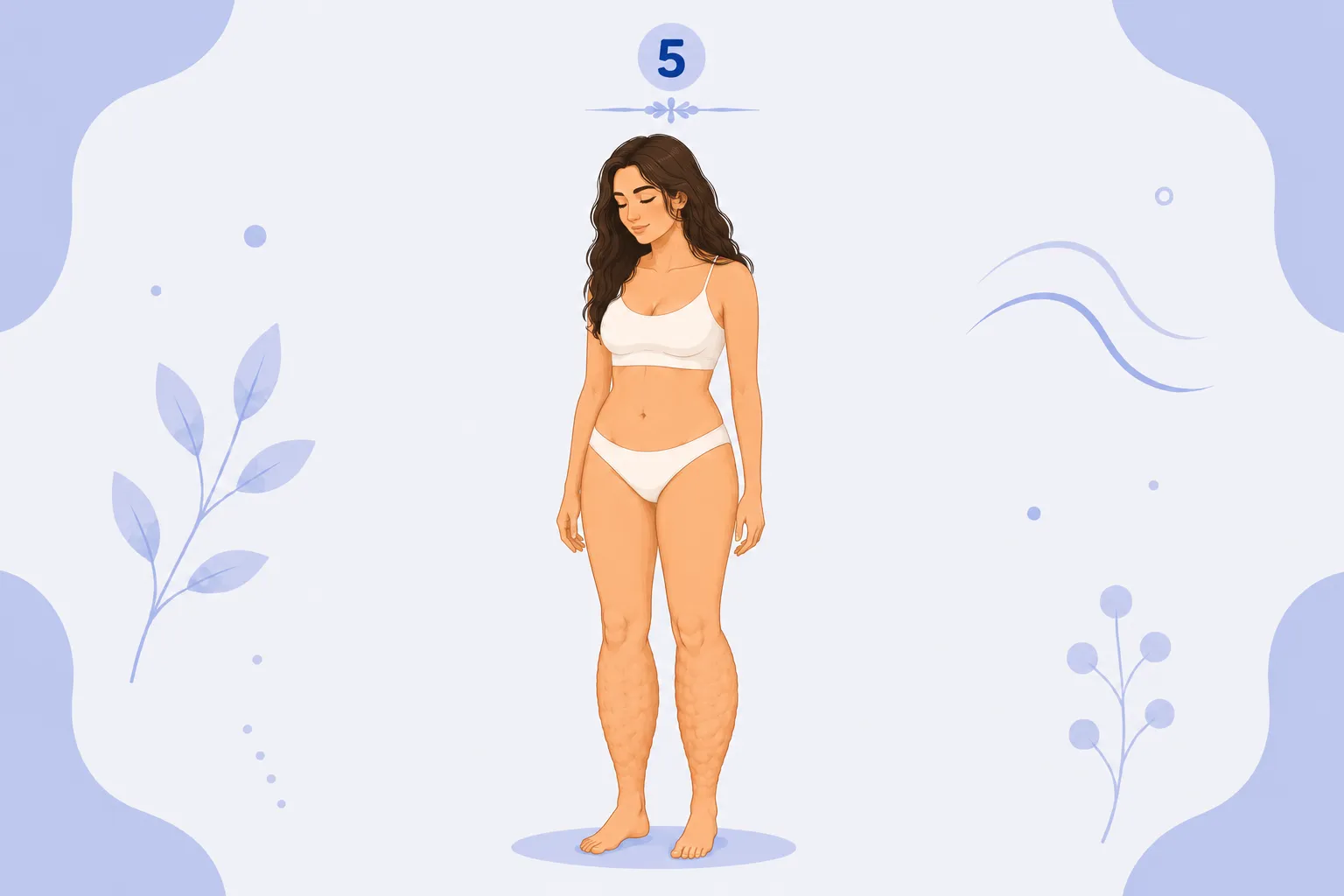
Type 5 – Lipedema focused on the calves
In this type, most of the fat accumulation is in the calves, while the thighs are hardly affected. Therefore, it sometimes looks different from the classic picture of lipedema.
Since this is a lesser-known type, it may take time before the possibility of lipedema arises.
Common characteristics:
- Fat accumulation mainly in the calves
- The thighs are hardly affected
- Tenderness and heaviness in the calves
- Sometimes more difficult to diagnose
Is it possible to have more than one type?
Yes.
In practice, many people do not fit perfectly into just one of the five types. Sometimes characteristics of several types are present together, and over the years the pattern of fat distribution may change and expand to other areas of the body.
Therefore, the classification into types is intended to help describe how lipedema is distributed, but it does not fully define each person's personal experience.
What is really important to remember?
Not every person with lipedema will fit perfectly into one of the five types. The human body is diverse, and lipedema can also look slightly different from person to person.
Lipedema types are a tool designed to describe the pattern of fat tissue distribution in a uniform and clear way, and not to create rigid boundaries that every person must fit into.
If you are not sure or sure which type you or you belong to, there is no need to try to forcefully fit all the characteristics. In many cases, there is overlap between types, and the most important thing is to know your body, pay attention to changes over the years, and get a professional diagnosis if necessary.
The better you understand how lipedema manifests itself in the body, the easier it is to understand medical information, communicate with professionals, and feel more confident in the diagnosis and coping process.
Sources
- Lipedema — pathogenesis, diagnosis, and treatment options (Deutsches Ärzteblatt International, 2020)review covering the classification of lipedema by where the fat accumulates.
- S2k guideline lipedema (JDDG, 2024)the German clinical guideline for diagnosis and classification.
- Lipedema World Alliance Delphi consensus-based position paper on definition and management (2023 congress)international expert consensus on defining the condition.
- Standard of care for lipedema in the United States (Phlebology, 2021)diagnostic criteria and description of distribution patterns.
- Lipedema (StatPearls, 2023)clinical review of the features and the body areas involved.
- Lipedema Foundationinformation and research resources for patients.
Reader feedback
Did you find this article interesting?
Share




Comments
0 comments |Read and add your own comment
No comments yet - be the first.