

The truth is that there is currently no single supplement that is considered a “solution to lipedema,” but there are quite a few supplements that are of interest to researchers and people with lipedema because of their possible connection to inflammation, swelling, the lymphatic system, blood vessels, hormones, pain, or the body’s recovery. Some people feel a difference from them, some less so – and the goal of this article is simply to sort things out: which supplements come up again and again in the context of lipedema, why are they even talked about, and what might be worth getting to know.
A moment ago – supplements are an addition, not the basis
Before we start talking about supplements, it’s important to put something on the table: even the most “promising” supplement usually won’t do much on its own.
For many people with lipedema, it's the basics that make the biggest difference over time – anti-inflammatory diet, enough Protein, movement that suits your body, good sleep, less stress, and drinking water. Supplements, at best, can be another layer of support.
If you haven't read it yet, it's also worth getting to know The Importance of Eating Protein, Lipedema and Sleep: Why Is Sleep Especially Important for Dealing With Lipedema?, and Lipedema and Stress.
Anti-inflammatory Supplements
If there's one thing that comes up over and over again when talking about lipedema, it's inflammation. Researchers still don't understand the whole picture, but some believe that chronic low-grade inflammation may have some connection to lipedema in some people. Because of this, many of the first supplements people check out are related to the anti-inflammatory world.
Omega-3 – probably one of the most well-known supplements on the list. It has been studied quite a bit in the context of inflammation, and some people report less heaviness, tenderness, or pain.
Curcumin – The active ingredient in turmeric. It is mainly interesting for its anti-inflammatory potential, although it is important to know that not every supplement is absorbed in the same way.
Boswellia and ginger – Herbal supplements that sometimes come up around pain and inflammation.
Quercetin, Resveratrol, NAC, Alpha Lipoic Acid, and Green Tea Extract (EGCG) – Supplements that some people are investigating because of their possible connection to antioxidants, inflammation, and metabolism.
Want to dive deeper? We expanded further in Anti-Inflammatory Supplements for Lipedema.
Swelling, Heaviness and the Lymphatic System
If you have lipedema, there is a good chance that you are already familiar with the feeling of heaviness, tenderness or swelling. Because of this, quite a few people are starting to be interested in supplements that may be able to provide more support to the body – especially around the lymphatic system and blood vessels.
If you still haven’t managed to understand how this system even works, it is worth reading What is the lymphatic system and what is its function? first.
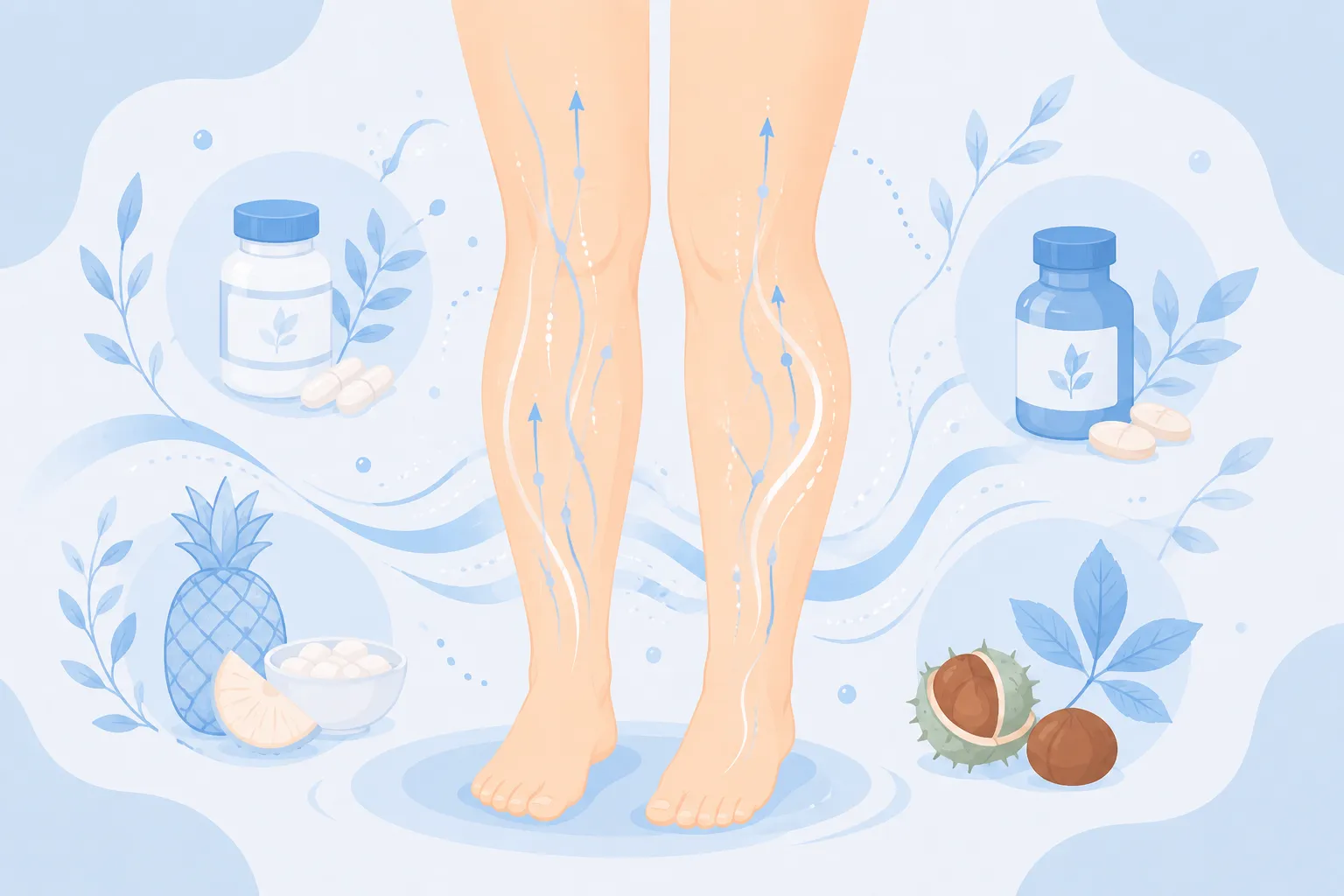
Diosmin + Hesperidin – among the most interesting supplements when talking about a feeling of heaviness in the legs, blood circulation and blood vessels.
Pycnogenol – an extract that is being studied around blood circulation and microcirculation.
Horse Chestnut and Butcher’s Broom – herbal supplements that sometimes come up in the context of swelling or a feeling of heaviness.
Rutin, Bioflavonoids, and Grape Seed Extract – may be of interest due to their possible connection to blood vessels and capillaries.
Bromelain (an enzyme from pineapple) and Papain (an enzyme from papaya) – some use them in the hope of supporting swelling.
In addition to supplements, many people also combine lymphatic drainage, dry brushing, leg elevations, and compression stockings.
Supplements for strength, muscle, and energy
This may come as a surprise, but one of the most important things worth talking about with lipedema is maintaining muscle mass.
Quite a few people with lipedema feel that at some point they begin to avoid movement, sometimes because of pain, a feeling of heaviness, or frustration. But for many people, movement that suits their body – especially strength training, walking, swimming, Pilates, or cycling – can actually help with overall well-being.
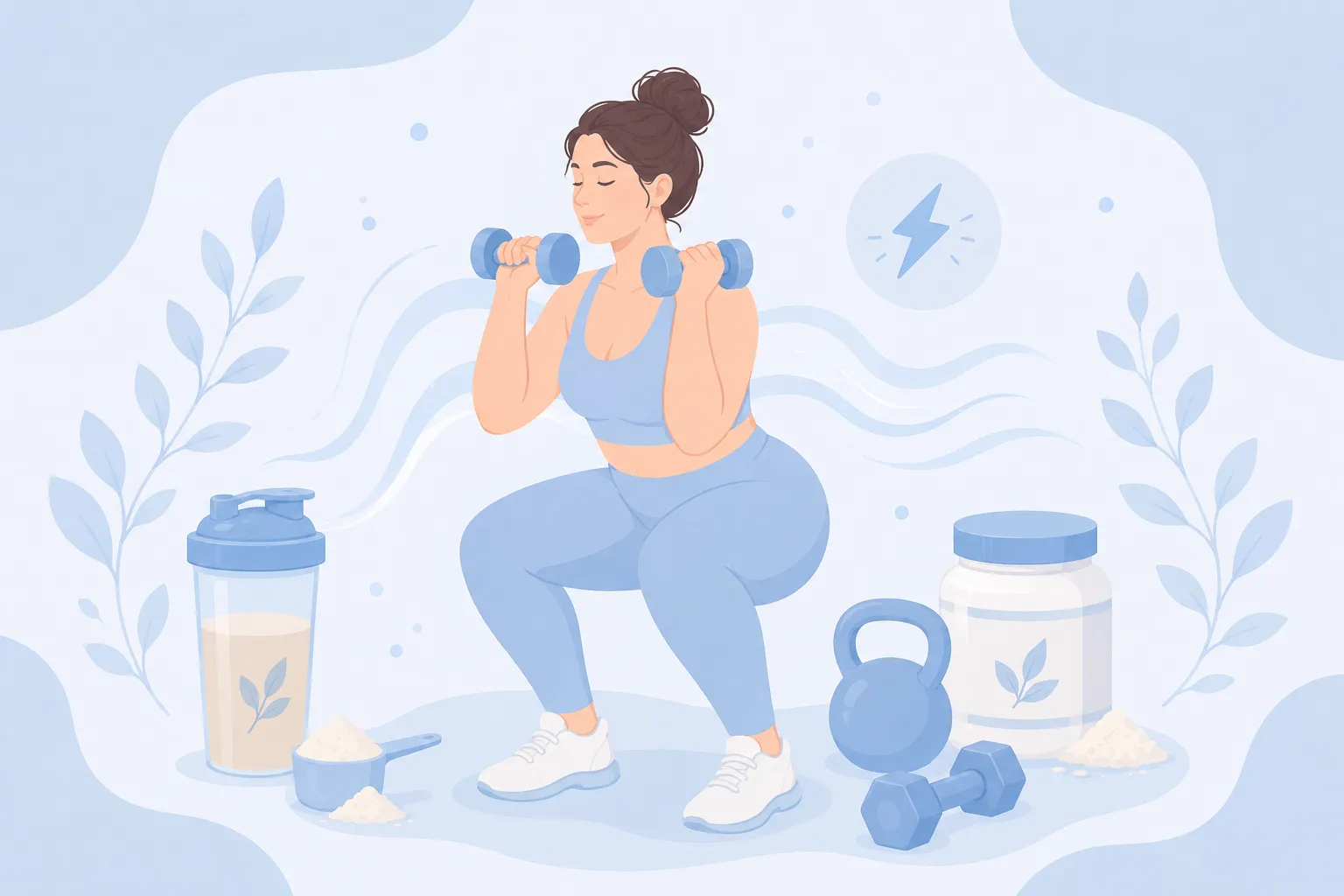
Creatine – a well-known supplement from the fitness world that may help with strength, performance, and muscle mass maintenance. For some people, this may be especially relevant if combined with strength training. For some people, it may cause a slight feeling of bloating, so the reaction to it can be individual.
Protein powders – not mandatory, but may help if it is difficult to get enough protein from food alone. If this is a topic that interests you, we expanded on it in The Importance of Eating Protein.
CoQ10 – a supplement that some people are interested in around energy and fatigue.
Berberine, chromium, and dietary fiber – sometimes come up around satiety, sugar balance, and metabolic support.
You can also read more about Training that helps and training that hurts, Walking, Swimming, Pilates, Biking and Yoga.
Hormones
If you've noticed that lipedema started or worsened around puberty, pregnancy, menstrual changes or pills – you're definitely not alone. Therefore, some people are also interested in supplements related to the hormonal world.
DIM and Calcium D-Glucarate – supplements that some people are looking into for estrogen balance.
Vitex and Evening Primrose Oil – sometimes come up in the context of hormones and menstruation, but are not suitable for everyone.
Inositol – may be of particular interest if there is also another hormonal issue such as PCOS.
You can read more in The Effect of Hormones on Pregnancy Cycle and Pills.
Basic Vitamins
Sometimes it is the least flashy things that are worth checking first.
Vitamin D, magnesium, vitamin C, B12, zinc or iron (if there is a deficiency) may be just as important as any expensive and intriguing supplement. A simple deficiency can sometimes affect energy, recovery or general feeling.
So where do you even start?
After such a long list, it is easy to feel like you don’t really know where to start – and that is completely understandable. You don’t have to start taking ten supplements at once, and you don’t have to try everything.
Sometimes the best approach is to start simple: understand what is most relevant to you, check for basic deficiencies, and focus first on the basics – nutrition, exercise, sleep, and stress. And if you decide to add a supplement? Do it gradually and see how your body responds.
If you want to understand which supplements are considered particularly interesting in the context of lipedema – continue to the article The Ten Most Effective Supplements for Lipedema.
Sources
- Current evidence-based clinical nutritional approaches in lipedema — scoping review (Nutrition Reviews)what is evidence-supported and what is not, supplements included.
- Standard of care for lipedema in the United States (Phlebology, 2021)what conservative care includes and how well established it is.
- Tools for measuring the effectiveness of conservative treatment in lipoedema — scoping review (2022)why the effectiveness of conservative treatments is hard to measure.
- S2k guideline lipedema (JDDG, 2024)what the clinical guideline does and does not recommend.
- Lipedema: Progress, Challenges, and the Road Ahead (Obesity Reviews, 2025)research gaps in non-surgical treatments.
- Lipedema Foundationcurrent research resources for patients.
Reader feedback
Did you find this article interesting?
Share


Comments
0 comments |Read and add your own comment
No comments yet - be the first.