
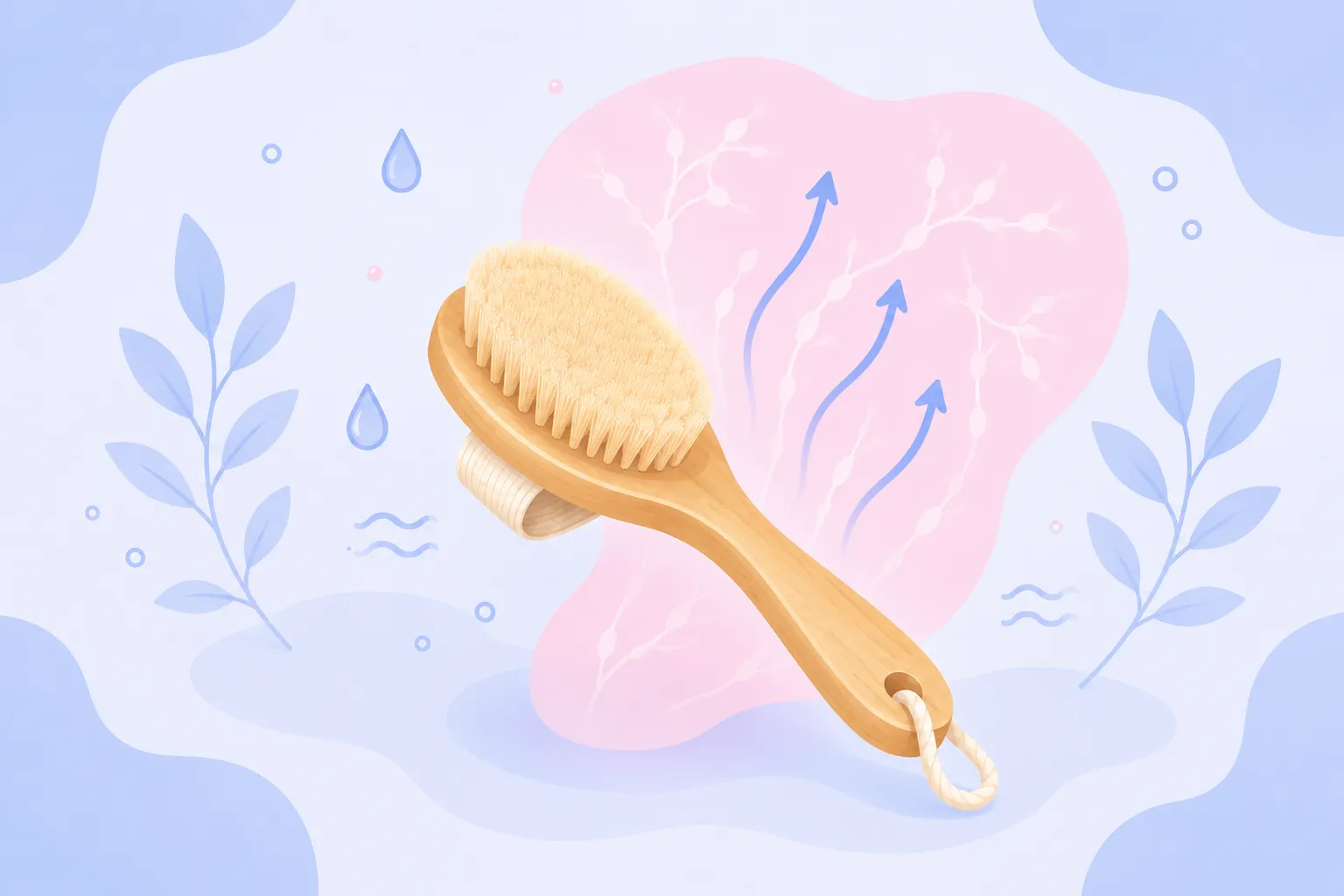
Dry brushing is attributed to Ayurvedic medicine — an ancient healing tradition from India thousands of years old — in which touch and massage techniques were used as part of body care. In recent years, dry brushing has also become popular among people with lipedema because of its simplicity and the fact that it can be done at home.
What is dry brushing?
Dry brushing is a technique in which a body brush is used on dry skin, usually for a few minutes before showering.
The brushing creates gentle exfoliation and removes dead skin cells, but that is not the only reason people with lipedema are interested in it. Many incorporate it into their routine because they feel it contributes to lightness, comfort, and a sense of flow in certain areas of the body.
Some believe the gentle movements of dry brushing may support superficial lymphatic flow and promote a refreshed feeling. If you have not yet read about the connection between lipedema and the lymphatic system, you may also want to read What is the lymphatic system and what does it do?.
Why do people with lipedema like dry brushing?
Possible support for lymphatic flow
One of the main reasons dry brushing is popular in lipedema is the idea of gently stimulating the lymphatic system.
That is why the strokes are often directed toward the lymph nodes — mainly toward the groin and armpits — similar to certain principles of lymphatic drainage.
Dry brushing does not replace professional treatment, but many people see it as a simple addition that can be incorporated at home.

A lighter feeling and reduced heaviness
Many women with lipedema report that after dry brushing their legs feel lighter and less "heavy," especially at the start of the day or after long hours of standing.
Softer, smoother skin
Dry brushing removes dry skin and dead cells, so many people feel their skin looks and feels smoother afterward.
This can be especially nice for people who wear compression garments regularly, as they can sometimes cause dryness or skin sensitivity.
How to dry brush correctly
1. Choose an appropriate brush
It is best to choose a body brush with natural bristles that are relatively soft, especially if there is sensitivity or pain to touch.
A brush that is too stiff may be less comfortable, especially with lipedema.
2. Do it on dry skin before showering
Dry brushing is usually done on dry skin, before showering.
5 to 10 minutes is usually enough.
3. Use gentle strokes
The goal is gentle stimulation of the skin — not scrubbing.
There is no need to press hard. If the skin feels irritated, sensitive, or uncomfortable, it is worth reducing pressure.
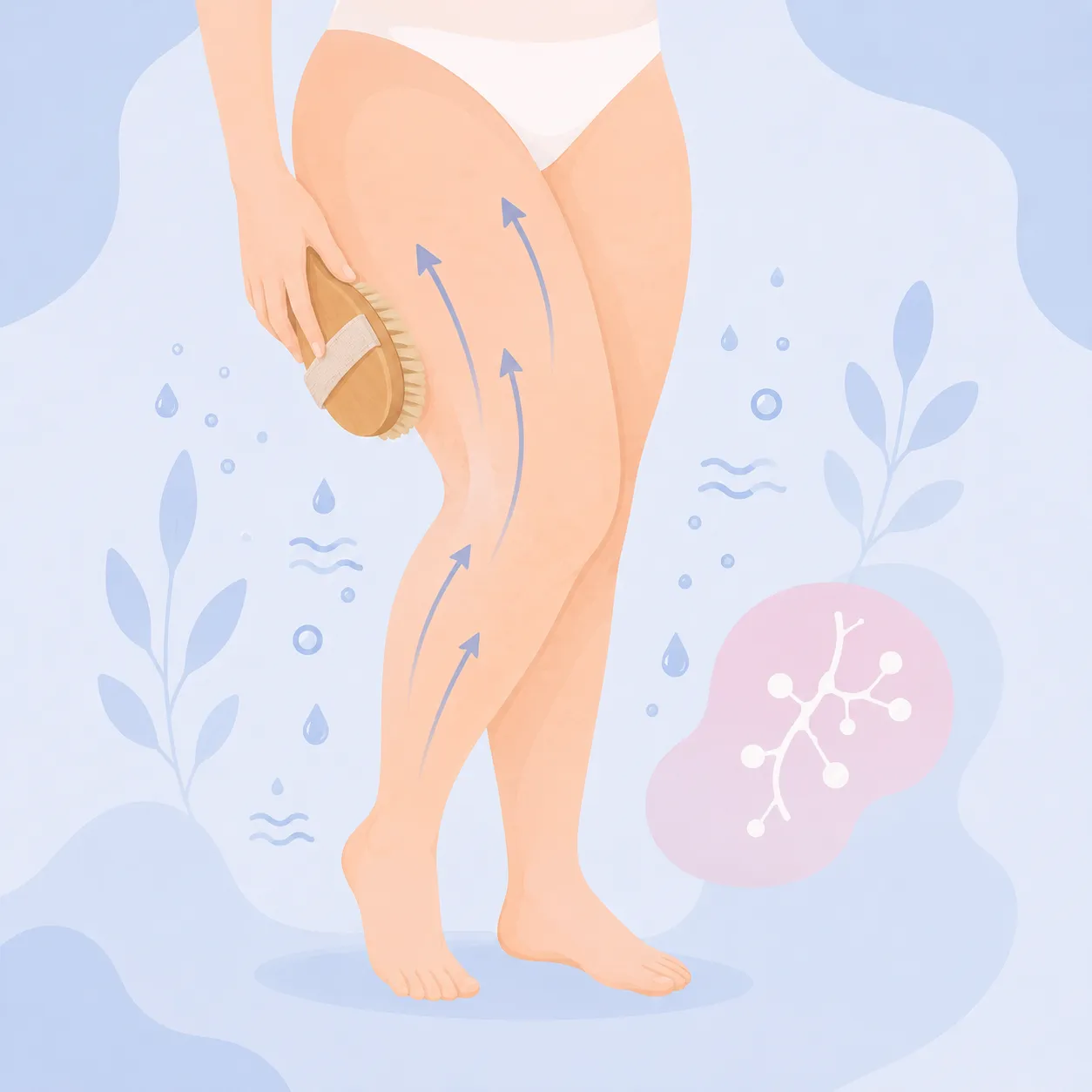
4. Brush toward the lymph nodes
It is common to use gentle upward strokes toward the lymph nodes:
- On the feet and calves — toward the knees and then toward the groin
- On the thighs — toward the groin and pelvis
- On the hands — from the palms toward the armpits
- On the upper arms — toward the armpit
- On the abdomen — gentle circular movements
The goal is to brush toward the center of the body and the lymph nodes, not downward.
Gentle is usually better.
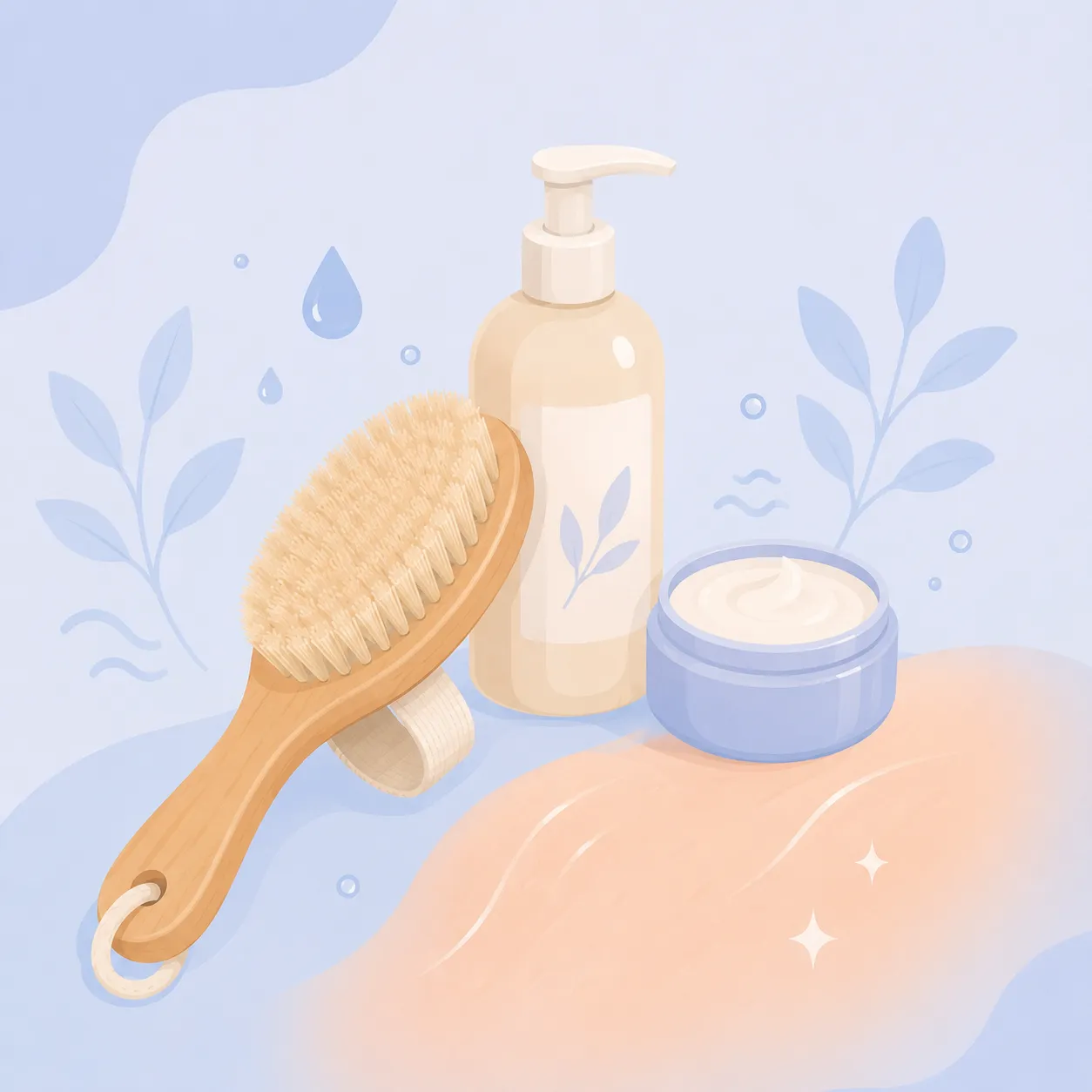
5. Finish with moisture
After showering, it is recommended to apply moisturizer or body oil to help the skin stay soft and comfortable. The water temperature in the shower itself matters too: Hot or cold shower? Which is better for lipedema?.
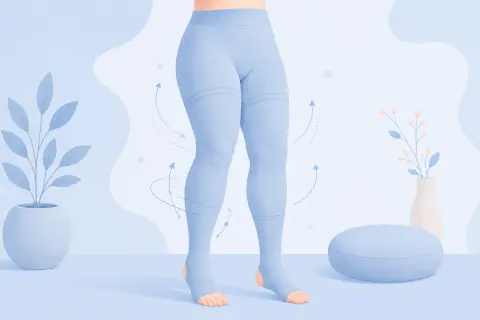
This can be especially important for people who wear compression garments regularly.
How often should you do it?
There is no one answer that fits everyone.
Some people enjoy dry brushing every day, while others prefer a few times a week. If it is your first time, you can start gradually and see how your body feels.
When is it better to avoid it?
Dry brushing is not recommended on broken skin, rash, active infection, sunburn, or very irritated areas.
If a particular area in lipedema is especially sensitive or painful, it is better to work gently or skip it.
You can find a dry brushing brush here that is suitable for gentle use with lipedema.
Sources
- Cleveland Clinic – The truth about dry brushingwhat is and is not scientifically supported about dry brushing.
- Complete decongestive therapy versus intermittent pneumatic compression in lipedema — RCT (Lymphatic Research and Biology, 2021)for comparison: drainage methods that have been tested in controlled trials.
- Cleveland Clinic – The lymphatic systemhow lymph actually moves through the body.
- Standard of care for lipedema in the United States (Phlebology, 2021)which conservative treatments are evidence-supported.
- Tools for measuring the effectiveness of conservative treatment in lipoedema — scoping review (2022)measurement limitations in supportive treatments.
- Lymphatic Education & Research Network (LE&RN)information on the lymphatic system and self-care.
Reader feedback
Did you find this article interesting?
Share



Comments
0 comments |Read and add your own comment
No comments yet - be the first.