
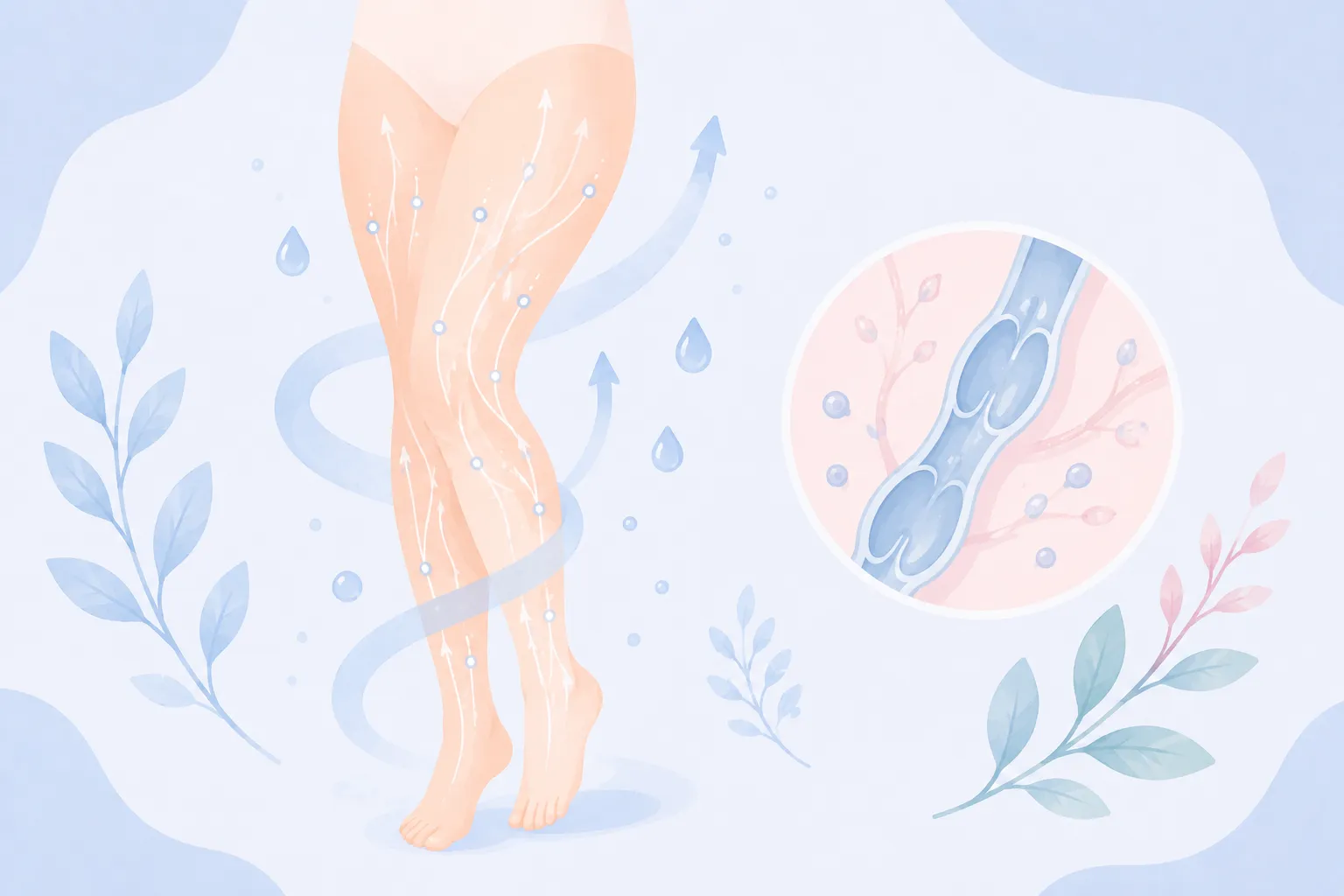
In the context of lipedema, the lymphatic system is especially interesting because some people experience swelling, a feeling of heaviness, or fluid retention — and in more advanced stages of lipedema, there may sometimes also be involvement of the lymphatic system.
What is the lymphatic system?
The lymphatic system is a network of lymph vessels, lymph nodes, and lymph fluid that works alongside the blood system.
During the day, some fluid leaves the blood vessels into the surrounding tissues. The lymphatic system helps collect some of this fluid and return it to blood circulation, thereby helping maintain normal fluid balance in the body.
In addition, the lymphatic system participates in processes related to the immune system and helps the body cope with bacteria, viruses, and various substances.
The lymphatic system consists of several main parts:
Lymph vessels
A network of thin tubes running through the body that collect lymph fluid from tissues.
Lymph fluid
A clear fluid containing water, proteins, immune cells, and additional substances the body transports and filters.
Lymph nodes
Small structures that act like "filtering stations," helping identify substances the body does not need and activating immune system responses.

What does the lymphatic system do?
The lymphatic system has several important roles:
Clearing excess fluid
During the day, fluid naturally accumulates in body tissues. The lymphatic system helps collect some of it and return it to blood circulation, thereby helping maintain normal fluid balance.
When lymph flow is less efficient, some people may experience more swelling, a feeling of heaviness, or fluid retention.
Supporting the immune system
The lymphatic system is part of the body's immune system. Lymph nodes help filter bacteria, viruses, and various substances, and many immune cells pass through this system.
Clearing substances and waste products
The lymphatic system participates in clearing proteins, cellular waste, and additional substances from tissues.
Participating in fat absorption
Some lymph vessels in the digestive system also participate in absorbing certain fats from food.
For this reason, some people with lipedema find that certain nutrition also affects a feeling of swelling or heaviness. You can read more in the articles Anti-inflammatory nutrition, Anti-inflammatory foods, Foods worth reducing and The importance of eating protein.

What would happen if the lymphatic system did not exist?
Without the lymphatic system, the body would struggle to maintain normal fluid balance.
Fluid would accumulate in tissues, which could cause significant swelling, and the body would struggle more to clear various substances and cope with infections.
Although most people do not need to think about the lymphatic system day to day, it works constantly behind the scenes and contributes to normal body function.
What is the connection between the lymphatic system and lipedema?
Lipedema is not considered a disease of the lymphatic system, but a chronic disease of adipose tissue. However, there is a certain connection between the two.
Many people with lipedema experience swelling, a feeling of heaviness, or worsening throughout the day — symptoms that may also be related to fluid flow in tissues.
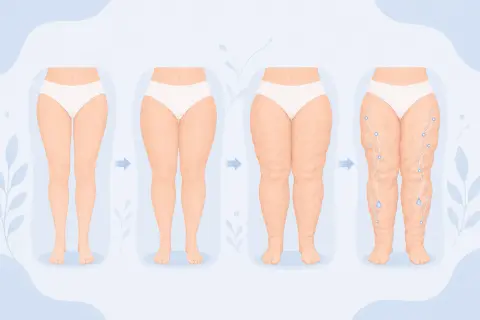
In addition, in more advanced stages of lipedema, some people may also develop damage to the lymphatic system. This condition is called lipo-lymphedema (Lipo-Lymphedema), in which there is a combination of lipedema and more significant accumulation of fluid.

What drives the lymphatic system?
Unlike the blood system, in which the heart acts as a pump that circulates blood through the body, the lymphatic system has no central "pump" of its own.
Lymph flow is mainly influenced by body movement, muscle contraction, breathing, and pressure changes inside the body. Therefore, daily movement is considered especially important for normal lymphatic system function.
Movement and muscle contraction
When muscles work — for example while walking, climbing stairs, swimming, or moderate physical activity — they help push lymph fluid through lymph vessels.
This is also one of the reasons some people feel better after a short walk or gentle movement, compared to a full day of sitting or prolonged standing.
Many people with lipedema report a feeling of heaviness or swelling that worsens after long hours without movement.
👉 Future link: lipedema and prolonged sitting
Breathing
Breathing also plays an important role in lymph flow. During deep breathing, pressure changes occur inside the chest and abdomen, which may help lymph fluid movement in the body.
Adapted physical activity
Moderate, consistent physical activity may support blood and lymph flow, reduce a feeling of heaviness, and improve overall function.
However, it is important to know that not every workout suits every person with lipedema. In some people, too much load or especially intense training may sometimes worsen pain, fatigue, or swelling.
👉 Future link: helpful and harmful workouts
How can you support the lymphatic system?
There are several approaches people with lipedema incorporate as part of symptom management to reduce a feeling of heaviness, swelling, and discomfort, and to support lymph flow.
It is important to remember: not every method suits every person, and the level of impact may vary from person to person.
Lymphatic drainage
Lymphatic drainage is a type of gentle manual treatment aimed at encouraging lymph flow through gentle, targeted massage techniques.
Some people report a feeling of relief, less swelling, or less heaviness after treatment, while in others the effect is less noticeable.
👉 Future link: lymphatic drainage
Compression garments
Compression stockings or certain compression garments are designed to apply gentle pressure on the legs or affected areas.
In some people they may help with a feeling of support, reduce heaviness, or contribute to managing swelling throughout the day.
👉 Future link: compression garments
Elevating the legs
Some people with lipedema report a certain relief in feelings of heaviness or swelling after elevating the legs, especially at the end of a long day of standing or sitting.
👉 Future link: elevating the legs
Dry brushing
Dry brushing is a method in which a soft brush is used on the skin in certain movements. Some claim it may encourage blood and lymph flow, although research evidence on its effectiveness is currently limited.
Drinking water
Drinking enough water is important for overall body function, and some people feel better when they maintain adequate hydration throughout the day.
👉 Future link: drinking water
Nutrition and lifestyle
Some people with lipedema report that anti-inflammatory nutrition, reducing ultra-processed foods, adequate protein intake, movement, and good sleep help them feel less swollen or heavy throughout the day.
👉 Future links:
Anti-inflammatory nutrition
Anti-inflammatory foodsFoods to limit
The importance of eating protein
Lipedema and sleep
The connection between stress and lipedema
Reader feedback
Did you find this article interesting?
Share

Comments
0 comments |Read and add your own comment
No comments yet - be the first.