
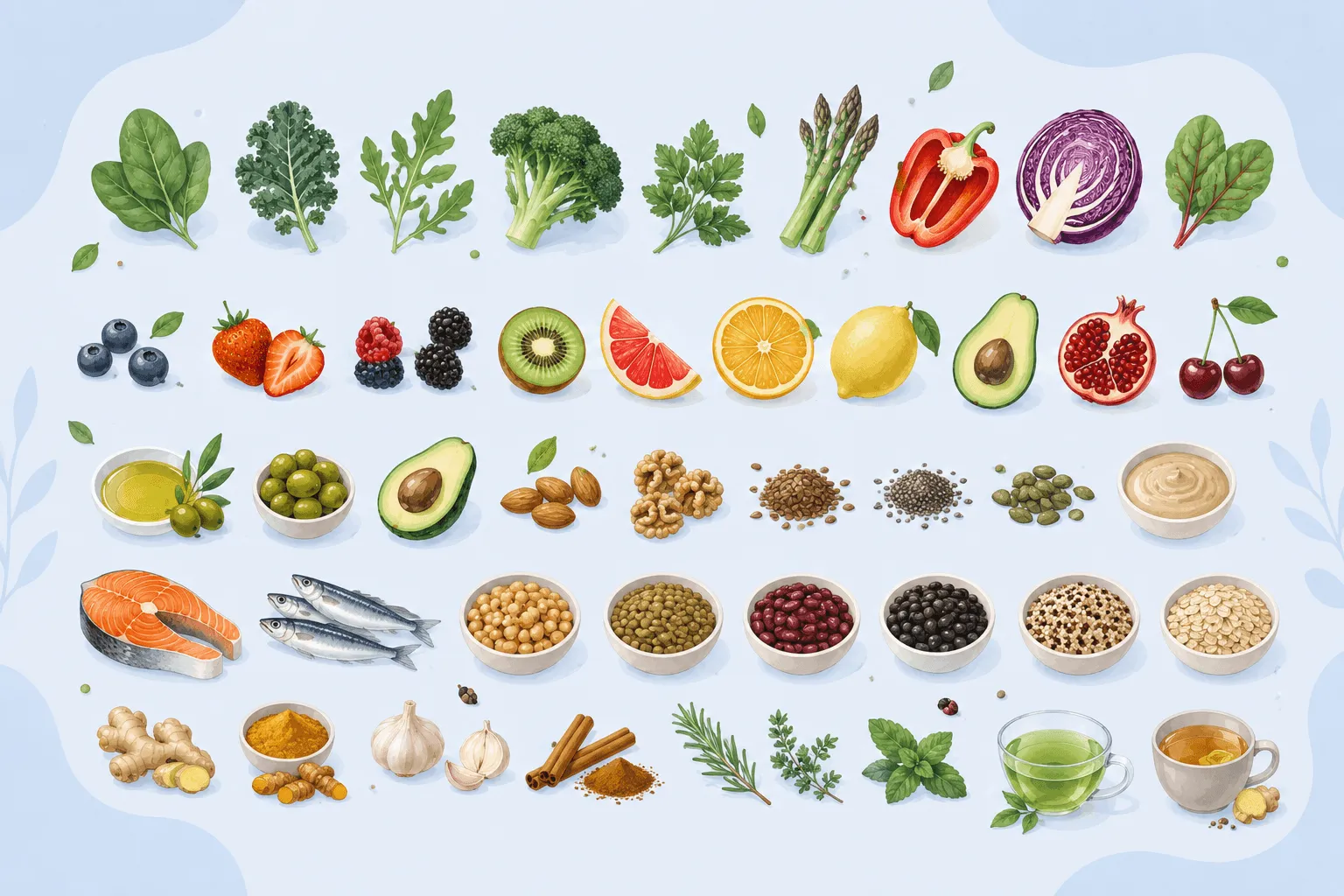
What is anti-inflammatory nutrition?
Lipedema is considered a chronic disease that involves, among other things, low-grade inflammation in adipose tissue. Although nutrition does not cure lipedema, many women report that certain dietary changes help them with pain, swelling, heaviness, and fluid retention. In addition, balanced nutrition can support energy, satiety, and maintaining a healthy body weight.
What do anti-inflammatory foods have in common?
Anti-inflammatory foods tend to be rich in antioxidants, dietary fiber, vitamins, minerals, and healthy fats. Many also contain polyphenols — plant compounds that may help cope with oxidative stress and inflammatory processes in the body.
Usually, these foods will be less processed, rich in natural components, and more supportive of blood sugar balance and lasting satiety.
Anti-inflammatory vegetables
Why can vegetables help with lipedema?
Vegetables form an important foundation in anti-inflammatory nutrition thanks to high content of dietary fiber, antioxidants, and plant components that may support reducing oxidative stress and inflammatory processes in the body.
Green vegetables
- Spinach
- Kale
- Arugula
- Romaine lettuce
- Curly lettuce
- Iceberg lettuce
- Swiss chard
- Bok choy
- Beet greens
- Watercress
- Celery
- Cucumber
- Squash
- Zucchini
- Asparagus
- Green beans
- Parsley
- Cilantro
- Mint
- Dill
- Basil
Cruciferous vegetables
- Broccoli
- Cauliflower
- White cabbage
- Purple cabbage
- Napa cabbage
- Brussels sprouts
- Kale
- Kohlrabi
- Arugula
- Radish
- Daikon
Colorful vegetables
- Carrot
- Sweet potato
- Pumpkin
- Butternut squash
- Beet
- Tomatoes
- Cherry tomatoes
- Red pepper
- Orange pepper
- Yellow pepper
- Green pepper
- Chili pepper
- Yellow squash
Allium family vegetables
- Garlic
- Green garlic
- White onion
- Red onion
- Green onion
- Leek
- Shallot
Anti-inflammatory fruits
Why can fruits help with lipedema?
Certain fruits are especially rich in antioxidants and vitamin C, which are important for supporting body tissues and blood vessel health.
Berries
- Blueberries
- Raspberries
- Blackberries
- Strawberries
- Currants
- Unsweetened cranberries
Vitamin C-rich fruits
- Kiwi
- Orange
- Clementine
- Mandarin
- Grapefruit
- Lemon
- Lime
- Pomelo
- Pineapple
- Guava
- Strawberries
Other fruits with anti-inflammatory potential
- Pomegranate
- Cherries
- Avocado
- Green apple
- Red apple
- Pear
- Peach
- Nectarine
- Plum
- Apricot
- Figs
- Purple grapes in moderation
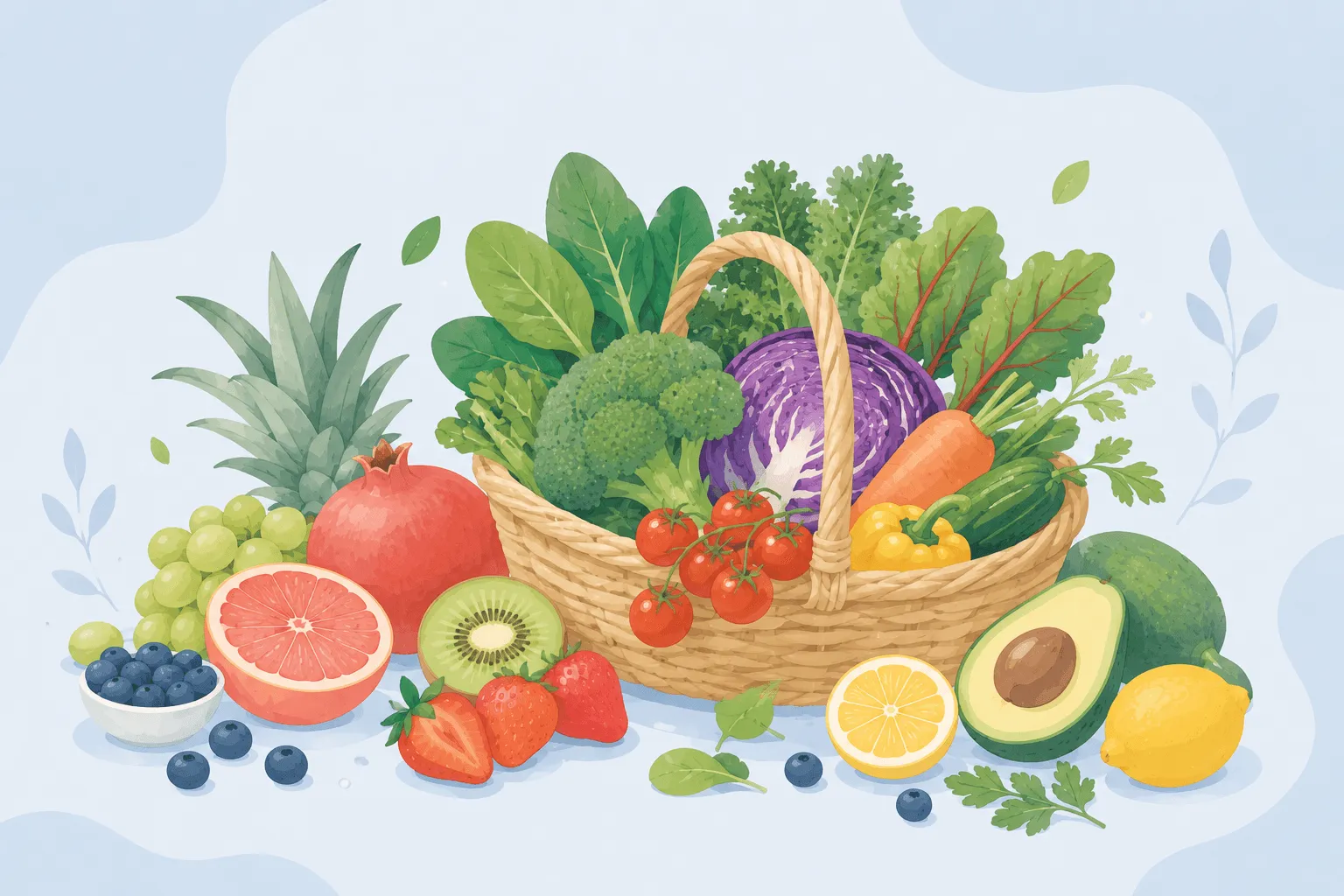
Healthy fats
Why can healthy fats help with lipedema?
Certain quality fats contain fatty acids and components that may support balancing inflammatory processes in the body and help with satiety.
- Extra virgin olive oil
- Avocado
- Green olives
- Black olives
- Raw tahini
- Almonds
- Walnuts
- Hazelnuts
- Pecans
- Pistachios
- Chia seeds
- Ground flax seeds
- Pumpkin seeds
- Sunflower seeds
- Sesame
- Natural almond butter without additives
Fish and omega-3 sources
Why can omega-3 help with lipedema?
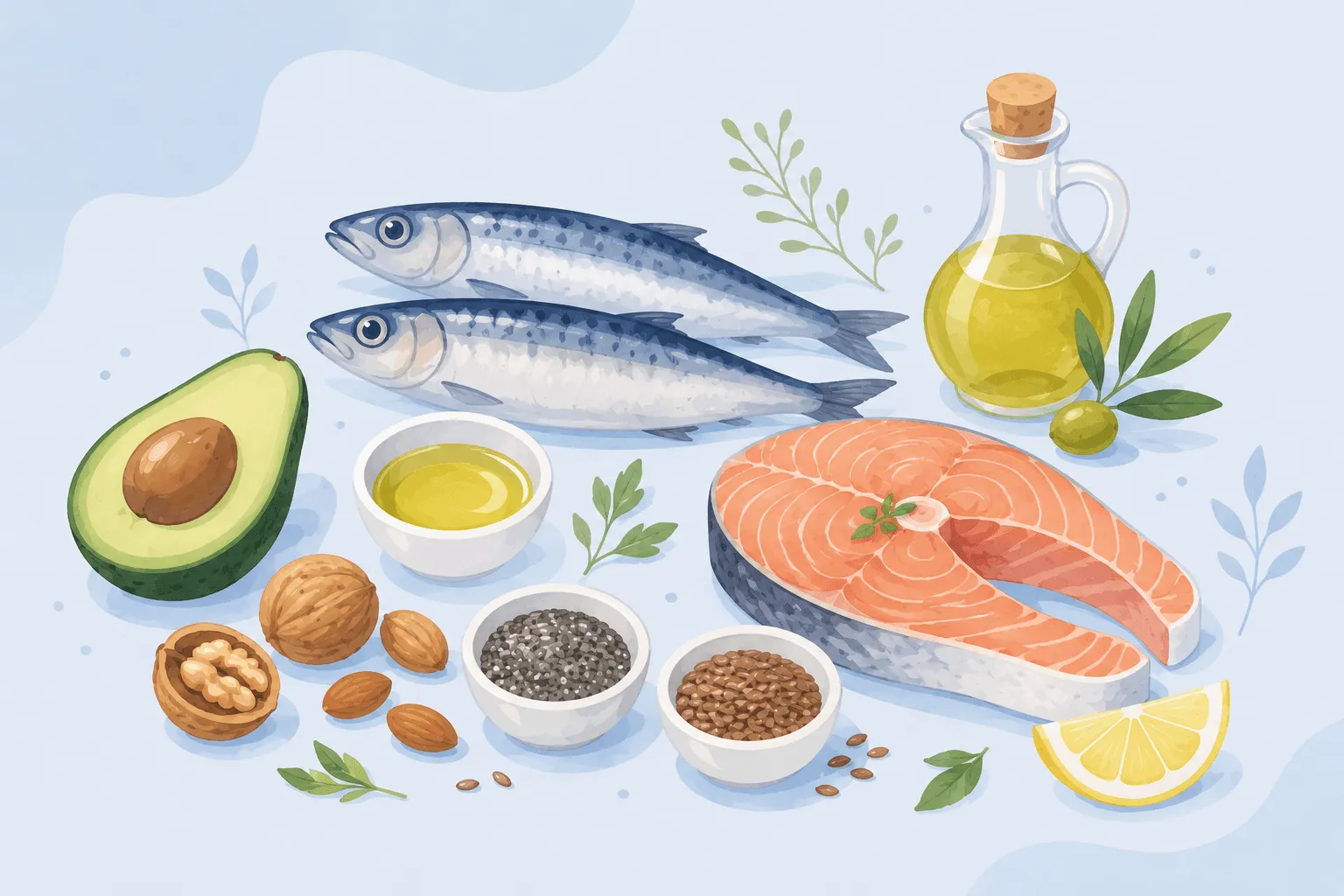
Omega-3 has been widely researched in the context of supporting balance of inflammatory processes in the body, and therefore many incorporate rich sources as part of anti-inflammatory nutrition.
- Salmon
- Sardines
- Mackerel
- Herring
- Trout
- Anchovies
- Tuna
Plant-based omega-3 sources
- Chia seeds
- Ground flax seeds
- Walnuts
Anti-inflammatory spices and herbs
Why can spices help with lipedema?
One of the great advantages of spices and herbs is that they are easy to incorporate into almost any meal, and they contain plant components with anti-inflammatory potential.
Spices
- Turmeric
- Ginger
- Cinnamon
- Garlic
- Cumin
- Paprika
- Smoked paprika
- Za'atar
- Curry
- Cardamom
- Cloves
- Black pepper
- Cayenne pepper
- Chili
Herbs
- Parsley
- Cilantro
- Mint
- Basil
- Dill
- Oregano
- Thyme
- Rosemary
- Sage
- Chives
Legumes
Why can legumes help with lipedema?
Legumes are rich in dietary fiber and protein, contribute to satiety, and may help balance blood sugar levels.
- Green lentils
- Black lentils
- Red lentils
- Chickpeas
- White beans
- Black beans
- Kidney beans
- Peas
- Edamame
- Fava beans
- Cowpeas
Complex carbohydrates
Why is it important not to fear carbohydrates?
Anti-inflammatory nutrition is not necessarily low in carbohydrates. Complex carbohydrates are richer in dietary fiber and can be part of a balanced diet.
- Oats
- Quinoa
- Buckwheat
- Brown rice
- Barley rice
- Red rice
- Sweet potato
- Baked or boiled potato
- Millet
- Amaranth
Anti-inflammatory beverages and additions
- Green tea
- Matcha
- Ginger tea
- Turmeric tea
- Hibiscus tea
- Mint infusion
- Water with lemon
- Water with ginger
- Quality cocoa in moderation
- Dark chocolate 70% and above in moderation
Want to know which foods may actually increase inflammation in some women with lipedema? Also read the article:
Inflammatory foods worth limiting with lipedema
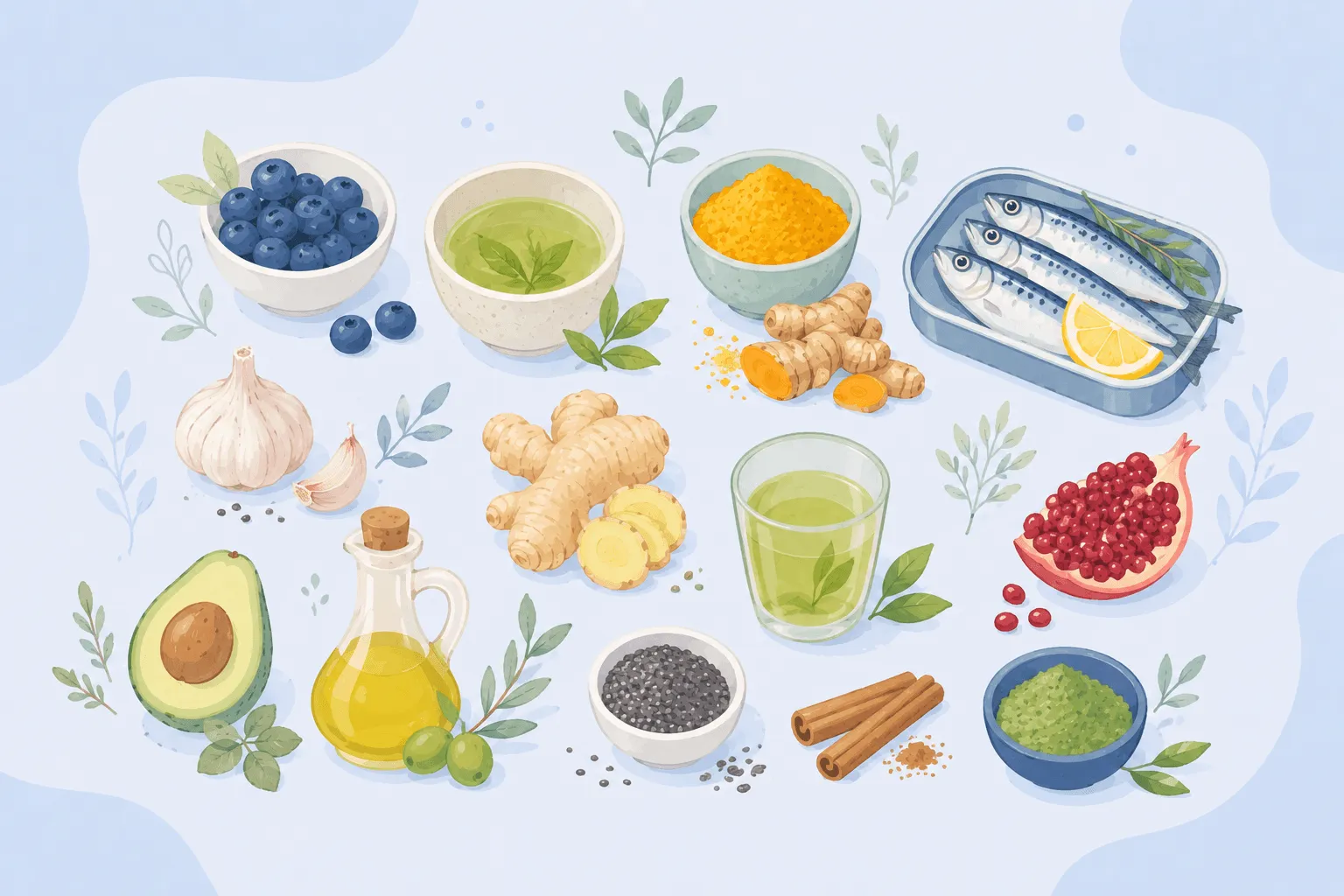
How many anti-inflammatory foods is it recommended to eat per day?
There is no magic number, but it is recommended to aim to include several different anti-inflammatory components throughout the day.
For example: colorful vegetables, a quality protein source, a good fat such as olive oil or avocado, spices such as turmeric or ginger, and fruits rich in antioxidants.
Many women with lipedema aim to include at least 5–10 different anti-inflammatory components per day — for example a green vegetable, a colorful vegetable, an omega-3 source, an anti-inflammatory spice, an antioxidant-rich fruit, and a quality fat. The goal is not to eat perfectly, but to build over time a diet based more on natural, nourishing foods.
Sources
- Harvard Health – Foods that fight inflammationfoods with a demonstrated anti-inflammatory effect.
- Anti-inflammatory potential of a Mediterranean-style ketogenic diet in women with lipedema (Nutrients, 2025)effects on body composition and inflammatory markers in lipedema.
- Current evidence-based clinical nutritional approaches in lipedema — scoping review (Nutrition Reviews)review of dietary approaches including the Mediterranean pattern.
- The efficacy of ketogenic diets as a nutritional intervention in lipedema — systematic review (Nutrients)summary of results across the studies conducted.
- Ultra-processed food consumption and systemic inflammatory biomarkers — scoping review (Nutrients, 2025)the other side: what raises systemic inflammation.
- Standard of care for lipedema in the United States (Phlebology, 2021)the role of nutrition within overall care.
Reader feedback
Did you find this article interesting?
Share





Comments
0 comments |Read and add your own comment
No comments yet - be the first.